Before I came to Cali I knew from glancing at a few videos on Youtube that they danced a very different style of salsa from what I had learned in Ireland and Japan. Add to that the fact that some people who had actually been to Cali before had told me that I wouldn’t get to far dancing the way I did and you’d be right in thinking that I was a little worried about strutting my stuff on the dance floors of Cali.
With the world famous “Feria de Cali” (a week-long party that begins right after Christmas) just around the corner and for the benefit of those of you who haven’t had the opportunity to visit the world capital of salsa, I’ve found a few videos showing just what salsa caleña (in it’s many forms) looks like. Enjoy.
Here’s a great example of what the local dancers call Salsa Cabaret which is basically salsa caleña on steroids (as many twists, flips and displays of showmanship as possible).
Here’s another lightning fast cabaret performance.
Here’s some great footwork from the 2 time world champions Ricardo and Viviana (pity about the awful commentary)
Here’s a solo performance that shows the level that some caleños achieve with their footwork.
On the other end of the scale here’s an example of how salsa is danced in Cali on the streets at a typical neighborhood party.
and here’s another example of a style of street salsa that has become very popular recently.
Finally here’s one of the most famous videos of Cali club style dancing (although this is much more professional than what you normally find).
I hope you liked them. Watching them has really put me in the mood for a rumba tonight.
Keep dancing folks.
********************************************************************** If you like this article please share it with your friends via the Facebook or Twitter buttons below and if you use Stumbleupon please give it a “Thumbs Up”. I’d really appreciate it 😉
Dancing with great partners really keeps you on your toes!
I dance well!
I am far from being a great dancer but I get by. I stay on the beat, I use a variety of moves to keep things interesting, I adapt my dance to the level and style of my partner, I avoid stepping on toes and probably most importantly I haven’t dropped anyone on their face in months!
What this adds up to is that at times I can begin to “believe” that I’m good. Don’t mistake me, there’s nothing wrong with confidence, in fact it’s essential for all aspects of dancing. From actually getting you out on the dance floor in the first place to allowing you to feel comfortable doing things outside of your comfort zone which is the only way to improve; confidence is essential.
Over-confidence on the other hand can be detrimental to your progression. Thinking you are the Shiz-nit (I’ve always wanted to use that word) may make you FEEL like a great dancer but it doesn’t MAKE you one at all.
Searching for Swing
Case in point: I recently took advantage of a 4-day weekend with a little trip to Bogota to give the salsa scene there another try after a mediocre experience there a few months back. I went out dancing two nights and had two very different experiences. Both nights I went out with some very talented Caleña dancers as partners (I’ll admit I didn’t hold out much hope for the local dancers) so for the experiments sake let’s say that that factor was fixed.
The first night we went out we strolled around a particular nightlife hot spot in Bogota looking for a little rumba. We tried two places, “Quiebra Canto” first and then “Salsa Camará”. In both places I can unfortunately say that I was the best dancer there. Now before everyone turns there nose’s up and scoffs at the cocky Irishman who’s full of himself, allow me to clarify. What I’m saying is that the standard was very low!
My dance partners and I were the main source of visual entertainment that night, both because we danced well and because we danced a lot, which can’t be said for the other couples there. I’m not criticizing the other couples though; they were social dancers and were content with having a little wiggle on the dance floor every 6 songs or so… and that’s fine!
I, however, am not interested in just “a little wiggle” on the dance floor. I want to be good! After some great dances with my partners we left the club and as we were doing so I thought to myself: “I really don’t want to be in a place where I’M the best dancer”. The next morning, all I could think was that Bogota is missing some “swing”, the word dancers use here to describe a combination of feeling, emotion, musicality and skill when dancing.
Eye Opener
The second night was a very different story. We went to “El Panteón de la Salsa” a place that had been recommended to me by an Italian salsera who had lived in Bogota. She told me it was the only place to get some real dancing in the capital. It’s in a slightly dodgy part of Bogota and I was advised by quite a few people not to go there but after coming all the way from Cali and for the sake of my “research”, I had to go!
I knew things were different as soon as I stepped through the door. The dance floor was full, the air was hot and humid and the atmosphere was alive with salsa. People were dancing salsa caleña, linear salsa and salsa cubana. There were people doing moves I’d never seen before, people sweating buckets in the heat and best of all everyone was having fun with the dance in there own unique way. There in that one little club with it’s two little dance floors was Bogota’s Swing!
I danced the night away and apparently got plenty of attention because I was the only foreigner there and I knew how to dance. However I was far from the best dancer there and that’s what made it so much fun. I could happily sit down and watch the other dancers, wishing I could do some of the things they could do. You couldn’t wipe the smile off my face the whole night!
Being around people that are better than us makes us want to improve. If you’re the best dancer in a certain club or certain city or even a certain country, what incentive do you have to improve?
Probably not much, right? This is one reason why the big international salsa congresses are so beneficial. They give people who have gotten used to a certain salsa scene the opportunity to see, dance with and learn from amazing dancers from all over the world! For example I’ve heard some great things about the recent Berlin salsa congress after a lot of my Irish salsa dancing friends attended it a few weeks back.
Finding Inspiration
To avoid developing a false sense of over-confidence we need to put ourselves in positions or places where it’s obvious that we’re “not all that”.
Try dancing with the the person you consider to be the best dancer in the club. Try going to a new club or class to learn from dancers you haven’t seen before. Try to keep yourself on your toes. There is nothing worse than becoming complacent.
I’m lucky to see amazing dancers every time I go dancing here in Cali. They are the minority but they exist and seeing this amazing minority is enough for me to want to make myself a better dancer.
Remember, confidence is a good thing as long as you temper it with the knowledge that there will always be someone better than you. This is what it’s all about, getting to see all those amazing dancers out there that are better than you and being inspired to better yourself.
If you can’t find anyone who inspires you in your current situation it’s time to shake things up, time to try new things, maybe even time to go somewhere new. Find that new source of inspiration. That’s how great dancers are made!
Keep dancing folks!
********************************************************************** If you like this article please share it with your friends via the Facebook or Twitter buttons below and if you use Stumbleupon please give it a “Thumbs Up”. I’d really appreciate it 😉
If you’re impatient you can go straight to the playlists here.
First off, my apologies for my lack of posts these last three weeks. It’s been kind of crazy at work during the day, which I’m not so happy about and I’ve been dancing a lot more in the evenings, which I’m very happy about.
Moving on, I’ve been spending a lot of time playing around with my latin music playlists and I think I’ve come up with something spectacular.
There are songs that, as soon as you hear them, make you want to get up and dance. It might be the chorus, the opening or the variation in the rhythms. It might be the lyrics, the percussion, the piano or the brass. What they all have in common is a certain magic that makes my body want to convert that music into pure dance energy. All of the songs on my new playlists have to meet this requirement.
Asking Around
Recently I’ve been asking a lot of friends and readers of this blog for their favourite songs for two reasons:
to remind me of songs that I may have forgotten to include and …
to introduce me to new songs which I hadn’t heard before.
Evolution
This list is by no means finished, it is going to constantly grow and evolve. I’m going to add more songs as I encounter more that I like and more importantly, my tastes are going to evolve themselves.
Since I moved to Cali, I’ve been exposed to to much more salsa music (and every other latin genre) than ever before. I’ve come to enjoy really fast salsas that I can really get my feet moving to. On the other end of the scale, I also now love slow salsas which are danced very close and sensually here.
And on top of that, I still love dancing linear (cross-body) salsa to the more medium paced songs that are popular in such salsa communities outside of Latin America.
Learning Spanish and finally understanding the lyrics of songs has affected my taste in music too and has given me great motivation for my Spanish practice.
The Playlists
You can see the lists here on the blog or you can check out all my songs on The Dancing Irishman’s YouTube page which is more up to date and you can also view the individual Salsa, Bachata and Latin Mix (very eclectic mix of very different latin music genres that equally, make me want to get up and dance in one form or another) lists.
It’s my list
You may love the songs I’ve chosen or you may hate them. This is my list and for me it is the Greatest Playlist Ever! If I mixed the salsa, bachata and latin mix lists together and used them in a party I would have the greatest night of dancing ever!
Thankfully, you’re different. You and your style are unique. I do want you to like my lists but more than that I hope this will give you the incentive to go and create your own, to discover more about your own tastes and to learn more about the incredible wealth of music out there. I guarantee it will make you much more complete, not just as a salsero or bachatero but as an all round rumbero.
Keep dancing folks.
********************************************************************** If you like this article please share it with your friends via the Facebook or Twitter buttons below and if you use Stumbleupon please give it a “Thumbs Up”. I’d really appreciate it 😉
I don’t have much time to write a post this week but I wanted to share this little video which I managed to sneak into a few weeks back.
The show, “Nuestra Semana Nuestra Tele” is broadcast on Colombia’s national TV station “RCN”. The presenters were in Cali, filming some of the famous sites of the city and at the end of the day they visited one of Cali’s most famous salsa bars, Tin Tin Deo to get a glimpse of the city’s vibrant salsa scene.
A couple of buddies of mine were helping the crew with some of the logistics in the club and they asked me to be one of the background dancers (sounds like I should be in a Justin Timberlake video). So I said why not! The video shows some other great dancers here in Cali, namely Canelo and Dominika dancing the local salsa caleña (which you can learn a little more about here).
You can see me dancing in the back-right, with one of my favourite students, Mafe, a little after the presenters enter the club. It’s great to be able to see a video of myself dancing so I can see what I need to improve. From this video I can see that one thing I definitely need to improve is my awful haircut! I’ll get on it straight away!
Apparently, the presenters are big fans of mine (after reading this post I think) and spent the shoot talking about me while I was dancing behind them. The 100% official subtitles that I was in no way involved in translating and editing, reveal just that.
So yeah, I’m a Colombian superstar now. I will be signing autographs tonight in Tin Tin Deo and anytime you see me on the street.
Today Colombian national television, tomorrow the world!
Keep dancing folks.
********************************************************************** If you like this article please share it with your friends via the Facebook or Twitter buttons below and if you use Stumbleupon please give it a “Thumbs Up”. I’d really appreciate it 😉
This September is a special month for me. On the 8th of this month I will celebrate one whole year in Colombia.
It’s been an amazing year, which doesn’t mean it’s been completely free of “downs” but it certainly has had an overwhelming majority of “ups”.
It’s very difficult for me to to summarize my experience here over the past 12 months but I feel the occasion merits a decent look at some of the many experiences that have been part of my life here in Cali.
Recent time restrictions (because of a new job) and my general lack of writing talent dictate that this will be a rather haphazard amalgamation of thoughts but hopefully I’ll be able to convey a little bit of my feelings to you, my avid (cough cough) readers.
I’ve already spoken about some of the things I love about Cali so you can check those out together with some of the things I have to say in this post.
La Capital Mundial de la Salsa
Seeing as Cali is the “World Capital of Salsa” I suppose the place where you all expect me to start is with salsa. So that’s exactly why I’m not going to… who am I kidding, that’s exactly where I’m gonna start.
Music is the life blood of this city and salsa is the vast quantity of red blood cells with bachata, merengue, regaeton, vallenato, cumbia, bolero and pacifico music filling less prominent though equally important roles like plasma, platelets and white blood cells (can you tell I’ve been teaching high school biology recently? Right, enough of that!).
Everywhere you go you can hear some form of Latin music, mostly salsa, playing. Taxis, shopping centers, bars, restaurants, restrooms, everywhere. Whereas in Europe or the states where you have to look for specific places that play salsa music, the reverse is true here. Here, salsa is the standard and you have to go to specific bars or clubs to hear pop, rock or anything else for that matter.
This ubiquity of salsa (and other latin music styles) is, in my opinion, the real reason why Cali is called the Capital of Salsa! Salsa is the No. 1 social activity here. If you go out with friends to a bar or club you are more than likely going spend the night (apart from drinking and talking) listening and dancing to salsa.
This, at first glance, is great news for a salsero like yours truly. However, certain discrepancies become apparent very quickly.
Going Out
As dancing is the social norm here people generally go out in groups so that they can dance amongst themselves. This means going out dancing solo somewhat of a challenge. In the non-Latin world, when people go out dancing they generally ask every Tom, Dick and Harry (or Harriet) for a dance. Here you usually stick to your group (normally seated at a their own table).
I learned this, much to my disappointment, on my very first night dancing salsa in Cali. It was a Tuesday night and having arrived in Cali early that morning I was raring to go and dance salsa in my Mecca. I arranged a small posse of foreigners (unfortunately none were dancers) in my hostel and asked the receptionist to recommend somewhere good on for a Tuesday night. Cali, just like anywhere else has clubs that are good on specific nights, so he told us to go to a place called “Siboney”
In I went, as excited as a 7 year old about to go to the zoo for the first time in his life. The first thing I noticed was the layout, the majority of the club was made up of booths with tables facing the relatively small dance floor. The club wasn’t empty but it was far from full and there was loads of room to dance, which I love.
When I looked at the clientele, I noticed that most tables consisted of only one or two men surrounded a bevy of beauties (what a great word eh, “bevy”!). The girls were impeccably dressed with near perfect hair and makeup and many were … er… em… enhanced in both the front and the back (to stop them tipping over I’d imagine).
I danced with the one girl from the hostel who I’d managed to convince to come out with us and despite her claims of being “able to dance salsa” I quickly realized that I probably wouldn’t be able to spend the whole night with her flailing around in my arms like a freshly caught fish.
I also realized that the layout of the club didn’t really make asking strangers for a dance all that easy. If I wanted to dance with a woman I would have to walk up to her booth and ask her in front of all the other people there and pray that the guys at the table didn’t take offense to me moving into their territory. That sensation was really overbearing and something kept telling me to bide my time.
I did. I decided to wait for the guy at one of the tables to take one of his girls out for a dance and leave the other girls unaccompanied. Then I pounced. I walked up to the table and asked one of the girls in my best Spanish (which was fairly awful) for a dance. Her reaction most certainly was not what I expected. She looked very surprised and immediately started looking to the two other girls at the table (yeah that’s right, this one guy had four girls), as if for advise. They quickly discussed what to do amongst themselves and the other two then encouraged her to dance with me.
We stepped out on the floor and danced. I could tell she was nervous but the dance was fine, nothing special, but it made me feel better to actually be dancing with someone who could follow (my few Cuban steps at least).
I had a one or two more dances with other girls from other tables deciding to ask the guys if I could dance with their girls, which felt very strange. The next day I confirmed my suspicions that the guys were probably drug dealers and the majority of the girls were prostitutes. Just as well I didn’t make a move on anyone.
So my first night dancing in Cali was a little bit of a let down. I’ve learned to deal with the seeming inaccessibility of other groups in a club by always trying to go out with a group of dancing friends and going to clubs where things are a little more relaxed (and where there’s less drug dealers and prostitutes).
The Dancing
The vast majority of people in Cali “dance” salsa. That does not mean they are good at it.
The majority of Caleños know at least the the Cali-basic back step. Most guys can through in a turn and most girls can follow one or two. For the majority, that’s it. People can spend entire songs repeating the basic step and one or two turns over and over again.
In all honesty and not intending any disrespect to Cali and my friends here… it’s really boring.
In non-latin countries we learn salsa in order to get good at it. We love adding new moves and combinations to our individual repertoires. I honestly expected that salsa in the World Capital of Salsa would be mind blowing and that most people would be able to put us non-latino dancers to shame. Not the case.
As I said, salsa is part of the social fabric here and as such, people don’t take it as “seriously” (for want of a much more appropriate word) here. What that means is that people generally don’t see any need to practice nor do they dance as much on a night out as dancers do back home. In Ireland or Japan, if I go out dancing I will spend the vast majority of my time doing just that. Here however people spend most of there time sitting down or standing at a bar drinking and talking and only go out to dance every now and then.
All this said, there are “some” spectacular dancers in Cali. Apparently there are more than 100 salsa academies here and according to some sources more than 7000 professional dancers here. And these people can dance!
The people who do know how to dance Salsa Celeño to it’s full potential really are amazing dancers. They speed at which they move their feet and the way in which they interpret the music is simply jaw-dropping. I’m very lucky too to have a great group of friends who are great dancers and really inspire me to learn more of the local style although I’m still pretty poor at dancing Caleño myself.
Check out this video of Cali’s most famous dance troupe, Swing Latino.
Dancing Close
Although I said that I find dancing the same moves over and over again a little boring I have to admit that this does not apply to the slow salsa that is danced here in Cali.
Slow salsa is, obviously enough, salsa danced to music with a slower tempo, a good example being Vente Negra by Havana con Kola. It is danced very close with the hips touching and arms around your partner, just like a close bachata. The movement too is very fluid and sensual too and people often dance without even moving their feet, just moving their hips together in time with the music.
With the right partner it’s a great way to dance!
The People
What can I say. Caleños are great. In the short amount of time I’ve been here I have made some incredible friends, people who I genuinely feel close to, some of whom have left Cali for other parts and I genuinely feel very sorry to see them go. They’re fun loving, happy and they always think of you when they go out, be it for a bite to eat or to dance.
I genuinely think that it’s because of Caleños that so many people decide to stay in Cali without being able to put their fingers on “why”. Cali doesn’t offer much in the line of tourist attractions, beautiful architecture or mouthwatering gastronomy but the people here are warm and friendly and caring and a hell of a lot of fun and that’s very important for me.
My Goals
I came to Cali eager to do many things but the most important of those were to improve my salsa and to learn Spanish.
Unfortunately, the best laid plans of mice and men often go awry and neither have improved the way I had hoped.
I spent a great deal of my time when I first arrived trying to settle into life here: finding work, finding an apartment, finding stuff to put in the apartment, meeting people and enjoying myself instead of focusing on what I came here to do.
I worked most of my time here as an English teacher working in the evenings when most salsa classes are held so that was my “excuse” for not taking more salsa classes and my job required that I spent a lot of my time speaking English and thus by default, not learning Spanish. To be honest I made far too many excuses to cover up my poor time management.
That said, I do speak Spanish now, not as well as I want but definitely a lot better than I should for the amount of time I’ve actually put into learning it. To give you an idea of where my level is, I have no problem with one on one conversations (if I don’t understand a word I can infer from context) and I can follow most group conversations amongst native speakers. I do have trouble with some movies and TV shows but have absolutely no problem with flirting in Spanish which is great because Caleños just like the Irish are serial-flirts.
My LA salsa has gone downhill considerably from lack of a consistent partner who can dance LA but I have picked up quite a few new moves from salsa caleña. Most importantly I feel that I’ve developed a much better appreciation for changes in the music allowing me to react much more naturally to it. My body movement too, I feel, has improved and I feel much freer to interpret music with the movement of my entire body. Which is nice.
All in all, despite the loss of some technical salsa (which I’m currently working on countering) I feel that my time here has rounded me out as a dancer, knocked off some of the rough edges so to speak (still plenty more to knock off though!)
Colombianization
I feel I’m quite good at adapting to new environments. In my four years in Japan I integrated well and took on many Japanese mannerisms that even now, more than two years since I left Japan, manifest whenever I’m around Japanese people.
I feel I’ve done a pretty good job adapting to life here in Cali too (although it may not have been the smoothest transition). When I decided to come here two and a half years ago I wanted to experience a culture completely different from Japan and that’s exactly what I got!
When people tell me a time to meet them I’m fairly certain that if I arrive on time I’ll be waiting a while. I’ve had to get used to that. Actually, on the night of my first date in Cali I was waiting almost 2 hours before she showed up. The next day I met the same girl for lunch and she had me waiting 2 hours again. Before you say “Well you’re a bit of an eejit for waiting that long” I have to say that she was worth every second of the wait! Nuff said!
Public transport is slow and usually overcrowded which in reality is the reason for most people being late so I understand but it doesn’t mean I don’t feel like punching someone’s internal organs when I get squeezed into a bus like a sardine every morning.
I’ve learned to let things happen knowing that I have much less control here. I think that’s a skill that everyone should try to acquire in their life.
I’ve become more cautious when I’m in the streets, something that I’ve learned to do from a couple of bad experiences that you can read about here and here. Colombia is definitely the most dangerous place I have ever lived but with a little experience, common sense and the advice of many locals I’ve learned how to avoid the danger as much as possible but I am always aware of it. Much like I’d imagine many Caleños are.
But I love it here I know I’ve mentioned many negatives in this post but I think that only stresses how good the positives are. I’m having a great time here in Cali. I’m enjoying learning the language and the dance and the lifestyle. I love meeting the people here, spending my time with them and becoming more and more caleño myself.
I’ll be honest when I say that Cali is not what I expected before coming here but the unexpected can lead to some really great experiences and some amazing friends.
Gracias Cali!
P.S. this turned out a hell of a lot longer than expected, my apologies!
********************************************************************** If you like this article please share it with your friends via the Facebook or Twitter buttons below and if you use Stumbleupon please give it a “Thumbs Up”. I’d really appreciate it 😉
Why limit yourself to dancing just one style of salsa (or to just one partner for that matter)?
The world is full of salsas: On 1, On 2, Cuban, Caleña, Lineal, Verde, Picante… with so many types it’s no wonder that things can be confusing for a budding salsero.
Almost everyone you talk to will tell you:
their style of salsa is the best
that it’s the most widely danced
that it’s the easiest to learn
that it looks the most spectacular
that it will help you meet the most beautiful women!
All I can say about this is: BULLS#!T, BULLS#!T, BULLS#!T.
Salsa is a dance that has evolved over the years from it’s 0riginal form in Cuba to the many diverse and beautiful styles that we see today. Just like with languages, every distinct type has something unique and beautiful to offer so it’s impossible to say that there is a “best” type. English is not the “best” language on Earth just because it is the most widely spoken nor is French because it is considered the most romantic (by some). The same applies to the different styles of salsa.
I’m very lucky in that living in many different places over the years has given me exposure to and appreciation for many different types of salsa. I started dancing LA style in Japan and got to practice Cuban style when I moved to a new city there, I was introduced to New York style in Hong Kong and later in Dublin and now I dance Cali style every week right in the World Capital of Salsa. Over the years I’ve learned to piece the different styles together helping to give my salsa it’s own particular flavor and I think that everyone should at least experiment with doing the same.
What’s your salsa?
The 4 main styles of salsa are:
Los Angeles (LA)
New York
Cuban
Caleña (Cali style)
Of these, the first 3 are probably the most widely danced internationally. I’ve included Cali style because I consider it (or at least variations of it) to be very popular in South America and because of some of its characteristics which make it unique.
LA and New York style are lineal salsas i.e. salsa that is danced forward and back in a line (or slot) whereas Cuban and Cali style are non-lineal salsas i.e. they are danced in a more circular or side-to-side fashion.
And before anyone calls me on it and tells me there are many more styles of salsa; stop right there. I’m well aware that there are other styles but they are not as widely practiced as the styles above and I don’t really have the time to research and write about them all! Maybe in another article.
LA Style
LA style salsa is also commonly known as On 1 because the “break” (i.e. the change in direction from forward to back) occurs on the 1 count (and on the 5 count when returning) with the lead starting by stepping forward.
It is probably the most popular style of salsa internationally (i.e. outside of South America). Any large, developed city in Europe, Asia, North America or Australia probably has an LA salsa community.
It features complicated hand combinations and “swing” style movements as can be seen in this video:
New York Style
Also called On 2 or Mambo, this style breaks on the 2 count (and 6 when returning) with the lead starting by stepping back which allows for a “smoother” looking dance.
It is the most popular style of salsa danced in New York (obviously) but there tends to be On 2 “sub-communities” anywhere LA style is danced.
Dancing On 2 is often seen as an evolution from dancing LA style On 1 with many advanced dancers sticking with On 2 after making the switch. Frankie Martinez gives a great quote about the transition from On1 to On 2 in this interview.
Music for On 2 dancing is influenced heavily by jazz (lost of brass and piano) resulting in a very elegant dance style that often features “shines” i.e. a time during the dance when the partners separate and dance by themselves, interpreting the music in their own ways.
Cuban Style
Salsa Cubana, also known as “Casino” is probably the second most widely danced form of salsa internationally. It developed from Cuban “Son” and the African influence in salsa can easily be seen with the freedom of movement and focus on shoulder motion.
Cuban salsa, unlike lineal salsa, is danced in a much more circular manner with the partners changing positions constantly during a dance. It also features many complicated “knot-like” hand combinations with the lead often ducking in and out of different closed hand positions. Salsa Cubana does not have a cross body lead but has a similar movement known as “Dile que no”.
Rueda de Casino: is the name for a Cuban salsa group-dance that features 2 or more pairs of dancers performing synchronized combinations and exchanging partners while dancing in a circle (rueda). The moves are directed by a “caller” who calls out the next combination to be performed. Rueda de casino circles can be huge!
Cali Style
Salsa Caleña, is the style of salsa most commonly danced in Colombia and from what I’ve seen myself, in many parts of South America. It takes a great deal of influence from another popular Colombia dance called Cumbia.
It is a non-lineal salsa with a lot of diagonal “back-step” movements and huge focus on exceptionally fast footwork and hip twisting. The basic objective is for partners to move their feet together in a synchronized fashion which can be as simple as just stepping on the same counts or it can involve very complicated leg flicks and kicks with not a huge amount of focus on arm work. There is no movement similar to the cross body lead or “Dile que no” in salsa Caleña.
Salsa Caleña also features an interesting “false” double step where the dancer taps his foot down and quickly raises his heal up and then down again which makes Cali style footwork look incredibly fast. Apparently professional dancers in Cali practice this step for hours on end supporting themselves with their hands against a wall to make themselves faster.
I’m confused! Which style should I pick?
That depends on a lot of things:
What styles of classes do you have available to you in your area?
What is the most popular style danced in your town?
Do you plan on learning to dance in preparation for visiting a particular country?
Do some research, and find out about your nearest salsa scene. There may not be much point in learning how to dance New York style salsa if you’re going on a two week vacation to some place in South America where no one can dance it.
But…why bother picking?
I can’t think of any logical reason why someone would want to dance only one type of salsa (apart from wanting to dedicate their time to get really good at a particular style).
Learning different styles of salsa enriches the style that you already dance and allows you to dance with even more people (just like learning a new language).
For example, in both Japan and Ireland I’ve danced with latin women (who danced salsa but never took a single dance class in their lives) and I noted straight away that they couldn’t follow a linear style of salsa. However I had taken a few Cuban salsa classes before and knew how to guide them through a more circular style of salsa that they were used to.
I spoke a little of their salsa language and because of that I could communicate better with them than if I had just continued “speaking” in my own. Have you ever been abroad and had a local shout at you in their language, hoping you’d understand if they continued long enough? Well it didn’t work then and it won’t work in salsa (at least not in the time it takes to complete a song).
Be proud of your style
People who know me know I dance a particular way and that I throw in a few extra kicks and foot flicks for flourish, which I picked up from the few classes of Cuban salsa I’ve taken and I also frequently add Cuban style turns to my mostly lineal dances. Since I moved to Cali I’ve added a lot of Cali-style moves to my toolbox too.
I’m proud of the style I’ve developed over the years through my different backgrounds and experiences and I really think everyone should aspire to develop their own unique style of salsa.
So forget about deciding on what’s the best style of salsa out there and just focus on learning as much as you can from as many different sources as you can find. You’ll be a much better dancer for it.
Keep dancing folks!
********************************************************************** If you like this article please share it with your friends via the Facebook or Twitter buttons below and if you use Stumbleupon please give it a “Thumbs Up”. I’d really appreciate it 😉
Could I ever dance as well as my hero, Frankie Martinez? With enough practice, you bet I could.
Dublin Foreign girl: Where are you from? Me: Ireland Foreign girl: No your not, hahaha!
Cali Local girl: De donde es usted? (Where are you from?) Me: Irlanda (Ireland) Local girl: jajaja, mentira (hahaha, lies)
I was dancing with both of these girls when they asked me these questions.
Apparently it’s common knowledge that I, as an Irishman shouldn’t be able to dance well. Apparently, I do not have the genetic material that would provide me with the bone structure and joints needed to move smoothly nor the ear for beat that would let me react intuitively to the music. Apparently, these genes can only be found in Latin and African populations which is why they’re the best dancers.
BULL S#!T
This is a lie that has been perpetuated throughout the world and especially so in the dance community for far too long. Preconceived notions like this are what stop people from even attempting new things. If we listen to them we WRONGLY believe that we are destined to fail at a certain activity because we lack a certain characteristic, be it physical or mental, that is necessary to excel in that endeavor. How many times have you heard someone say something like “Oh I could never learn Japanese, I’m no good with languages” or “I’d never be able to play the guitar. Music just isn’t my thing” or the classic “You can’t teach an old dog, new tricks”? BULL S#!T BULL S#!T BULL S#!T
I’m going to put all those lies to rest today by saying this: “I am an Irishman and I dance salsa”.
Don’t worry. I’m not going to base my entire case on that one comment. It’s time to elaborate.
When I first started dancing in Japan, I was constantly told by the people who got me into the scene in the first place, how latinos were the best dancers, that they could move better than Japanese people and really express themselves with the music. I was told this by people who danced salsa well, by the people who were teaching me how to dance. I later remember going to salsa clubs in big cities in Japan on a few occasions and seeing Japanese people dancing spectacularly with passion and rhythm and everything else that dance should be. Every bit as good as their latino counterparts.
When I returned to Ireland and started on the scene there I lost count of the times that people would tell me things like “I’ll never be as good as “so and so” because he’s black and they just move better”. One of my own dance partners (you know who you are ;-)) even told me that I would never be as good as a latino dancer because I was Irish. She was convinced that her own latin heritage meant she could feel the music differently and dance better. Yet despite this I still managed to get many comments like those at the beginning of this post in Ireland, Japan, the US and even here in Colombia, a latin country. Despite being Irish, I still dance well. (I know it sounds like I’m blowing my own horn here but I’m trying to make a point. I know for a fact that I have a very long way to go before I’m a great dancer, but that doesn’t mean I can’t dance WELL now).
Some of the best compliments I ever got were when I went with my friend “la Mulata” (introducing a new character folks) to a party held by some friends of her uncle. La Mulata is, obviously, black as is her uncle and the vast majority of the people who were at the party. I, on the other hand, am super-white so I tend to stick out “a little” at such parties. I’m used to it at this stage. The lifeblood of Colombian parties is of course salsa, so the time came and I took la Mulata out on the floor and started doing what I do. It was a great dance as I had danced with la Mulata many times before but I also felt that every eye in the room was on me. It’s easy enough to justify; the white guy in a house of black people trying to dance salsa in the world capital of salsa. Everyone was dying to see if I’d be able to keep up with the beautiful black girl I was dancing with. The song ended and we walked back to our seats smiling. What came next was a stream of compliments from my hosts about how well I danced. They all expressed their surprise and told me things like “you move so well” and “you’re really able to get the rhythm”. I blushed hard (as everyone who knows me knows I do often) and went on to dance plenty more songs during the night.
A little later the only other white people at the party (a married couple and their daughter) told me how impressed they were by my dancing and I continued talking with the father for a while. He told me that he had never been able to dance, that instead he preferred to to just listen to the music and chat at parties. He thought it was really amazing that a non-Latino like me could dance salsa so well. As we were talking we watched his teenage daughter dance with her friends. She danced just like them. She moved her body, especially her hips, beautifully and in perfect rhythm with the music, just like all the other girls dancing around her. I asked her father about it and he told me that he didn’t really understand why his own daughter danced so well. Neither he nor his wife were big dancers but she simply had always been able to dance well, since she was a child.
Let’s think about this a little: a white girl whose parents can’t dance, grows up in a mostly black community, with black friends, and ends up being able to dance just like them!
Is it possible that the ability to dance doesn’t actually come from some innate genetic ability that varies among races and is in fact something that can be simply learned? YOU BET YOUR SWEET ASS IT IS!
Here’s the thing, in general (I have to say in general because I have encountered plenty of exceptions over the years) people of African descent and latinos are amazing dancers. Is it because their bodies move differently, because they have “dancing genes”? I’m going to say “NO”. Then why do they dance so well? I firmly believe it is all down to cultural exposure and the resulting practice.
Latino culture (at least here in Colombia) is full of music and dancing. Children are exposed to this music from a young age and start dancing salsa in primary school and continue to dance it at virtually every social function they go to during their lives. They spend a huge amount of time “practicing” so it’s no wonder they’re such good dancers. Black people in Cali often live in black neighbourhoods where they have an even stronger music and dance culture than non-afro-descended Caleños. Due to all of this exposure many of them end up being spectacular dancers. This explains how the white girl at the party was able to dance so well. She grew up in an Afro-colombian neighbourhood surrounded by its culture and “learned” to dance in exactly the same way as all her friends.
How to be Great at Anything
How can we use this, in practical terms, to improve our own dancing (or anything else for that matter)? We’ve established that even if your not of African or Latin decent you can still become an excellent dancer just by immersing yourself in the culture. So all you need to do is travel back in time and convince your parents to move to a Latin neighbourhood to raise you, right?
Thankfully it’s a little easier than that (no time travel required).
This brings me to the concept of 10,000 hours popularized by Malcolm Gladwell in his book Outliers. I first heard of this concept while studying Japanese after discovering a great website with the snappy title of alljapaneseallthetime.com. The whole concept of “10,000 Hours” is that anyone who has ever mastered or excelled in a particular field, be it sports, arts or business, has done so only after putting in a huge amount of time (for example 10,000 hours or so) “practicing”.
Why is Tiger Woods one of the greatest golfers on Earth? Because his father introduced him to golf when he was 18 months old and encouraged him to practice constantly. By the time he was ranked world number one he had racked up years worth of experience. The Beatles honed their concert skills over four years and 1,200 live concerts in Hamburg, Germany leading them to become one of the greatest music groups the world has ever seen. Think about it, how many times have you heard of some prodigy child musician on the news? Do you think it’s a coincidence that the kid started playing the piano or whatever when he was two and practiced 3 hours a day for 10 years? Not at all!
CONSTANT, DELIBERATE PRACTICE MAKES MASTERS. IN ANY FIELD!
But hold on, if you do the math, it would take almost 14 years of practicing everyday for 2 hours a day to reach 10,000 hours!
Yes…if you want to become one of the greatest in the world.
Some people, however, have less lofty goals. The whole point of this article is to point out the importance of practicing frequently to improve your chosen skill. Practice and you will get better. If you want to dance like a latino, increase your “cultural exposure”; listen to the music every chance you get and dance to it like it’s going out of fashion. Move with the music, make it part of your life and watch how you improve.
My own personal experience with the power of constant practice came about a year after I “started” dancing salsa. As I’ve stated in an earlier post when I first started dancing salsa I had trouble getting to regular classes (due to my schedule, location and interference from other hobbies) so my initial progress was slow. So in September of 2009 after deciding I wanted a holiday and wanted to improve my salsa at the same time I booked a trip to Manila in the Philippines and Hong Kong. My logic was that I could get some private coaching there much cheaper than I could in Japan and there was a more developed salsa scene in both cities so I could dance regularly while I was there. I booked a number of private lessons with some instructors who I found by searching on the net, packed my bags and left on what is known in Japan as Shugyou (修行) (training or the pursuit of knowledge).
A birthday prank by my friends that ended up becoming the symbol for my monthly salsa parties in Miyazaki. Everyone was well aware of how big a part of my life salsa had become.
My holiday lasted about 10 days of which I had a number of hours of private salsa instruction (maybe 6) and I also went out social dancing almost every night (amounting to maybe 24 hours of practice). So when I came back to Japan 10 days later I had an extra 30 hours of practice under my belt. It showed. My salsa friends in Japan noticed straight away a huge improvement in my leading skills and general movement. I moved smoother and more easily and my lead became lighter but more definitive. In less than 2 weeks I had returned a different dancer.
I needed to increase the amount of time I spent practicing so I took matters into my own hands. I started organizing a monthly salsa class and party to get more people interested in salsa and so I could dance more. It took off and once a month my salsa friends and I would teach beginners the basic salsa steps and then dance for hours on end until our feet ached. I tried to practice with a partner on occasion too and I tried to occasionally make the 4 hour bus ride to Fukuoka to dance in the salsa parties there. I improved a huge amount because of all the new practice and because I needed to learn to adapt my style to that of all the other new dancers I was dancing with.
All of this taught me the real value of constant practice. I now know that if I want to improve in Salsa, or anything else, I just need to put in the hours. If I want to learn to dance like a latino dancer I just need to dance (a lot) with latino dancers, to watch and imitate what they do and practice it (a lot) for myself.
Since I’ve come to Colombia on my current salsa adventure I’ve noticed 2 things: 1: My LA style salsa (that is, my technical salsa) has taken a slight nosedive because I don’t have access here to partners that can dance LA (I’m currently training some in to remedy this). 2: My body movement and my ability to feel and react to music has improved significantly. I dance salsa regularly here in much closer contact than I ever have before and that has given me that opportunity to work on isolation in my shoulders and hips that I felt I was lacking in before.
With lack of practice one skill has deteriroated while with added practice a different skill has improved. It’s all about the number of hours you dedicate to a given skill. Simple as that.
So if you want to be great at something (or even just want to improve a little) there really is nothing stopping you except yourself. The only thing keeping you from being as good (or even better) a dancer as Africans or Latinos is time. Go take every salsa class you can find. Practice your basic step while you’re cooking in the kitchen. Get a good partner and practice together as often as you can. Fill your iPod with salsa music and listen to it when you drive to work. Dance socially at every, single opportunity you get. Show the world that you don’t need magical dancing genes to be a great dancer. Put in your hours and reap the benefits.
If you’re not practicing, you’re not getting better! Use every chance you get.
How many hours have you put in this week?
********************************************************************** If you like this article please share it with your friends via the Facebook or Twitter buttons below and if you use Stumbleupon please give it a “Thumbs Up”. I’d really appreciate it 😉
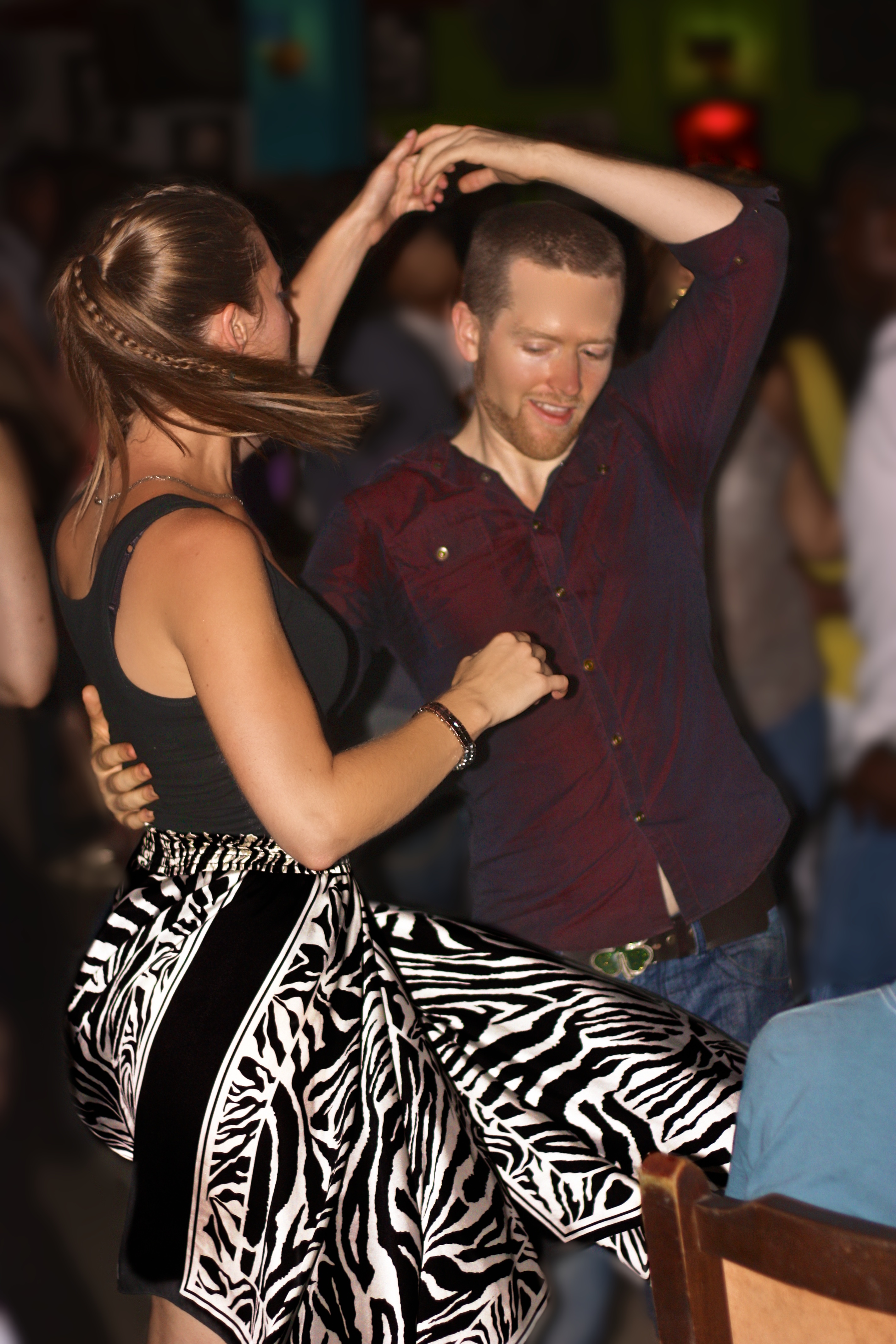
You may have already figured this out but that’s not me in the pic!
I am an Irishman and I dance salsa!
You could interpret this in a couple of ways:
You could think “hmmm, those two things don’t sound like they should go together”, as I used to, before I started and maybe even a little during the beginning of my salsa journey.
Or you could think “Sounds like an new member’s introduction at a Salsaholics Anonymos meeting” as I sometimes feel these days.
In any case, the fact is that a little over three years ago I didn’t dance at all (besides an occasional, embarrassed Irishman-shuffle when it couldn’t be avoided) and now I can’t imagine my life without dance. How things change!
What I hope to accomplish with this post is to show you how I, a mild mannered, arrhythmical, introvert “defied the odds” and became a salsa dancing machine, a salsero! I hope that this may encourage those of you starting out in salsa (or any dance for that matter) and make the whole process even more enjoyable and a whole lot faster.
(Note: the following guide speaks mostly about lineal salsa i.e. LA or New York style and from a mans (known as the lead) perspective but can be applied to any style of salsa, indeed most styles of pair dance and of course to women (known as the followers).
So, let’s rock and roll.
Step 1: Find a dance class
You can watch as many videos on YouTube as you want but without someone to correct your mistakes and form, progress will be slow. At the very least find someone who can dance and get them to go through the basics with you until you’re comfortable with the rhythm and can find the beat yourself (which comes with plenty of time and practice listening to salsa).
In my case, this is the reason I was so slow at improving during my first year of salsa. The most regular salsa classes in my area in Japan, which were run by the famous (at least in the Miyazaki salsa world) Yano mama & papa, were every two weeks on a Sunday and because of my weekend surfing habit I initially only made it there once every two months. Yeah, that’s right, every 60 or so days.
I did however find another class, for ballroom dancing in fact, which included an hour of salsa once a week. I would usually hop in for the salsa and duck out when it came time for things like the foxtrot and the Charleston, much to the disdain of the instructor.
She was an older Japanese lady who all the students respected without question but as the weeks went by I realized that her teaching methods weren’t the best. What I mean is that her explanations of moves and combinations were a little ambiguous and relied a lot on her doing the move for the students to see and expecting them to imitate it without much referral to the timing of moves within the context of the salsa beat (I’ll write more about this in the future).
So I learned a few new moves that I could “kind of” do although often it would be hit and miss. The important thing was that I was practicing and listening to salsa music and improving my basic step, which brings me to…
Step 2: Master the basic steps
I can’t stress the importance of mastering the basic step in salsa. Until you can do this without thinking, that is, until it becomes as natural as walking, doing additional hand movements and patterns is going to be very difficult indeed.
When I hear salsa music these days my body automatically starts swaying to the rhythm (thankfully I live in Colombia where it’s a little more acceptable to “get your dance on” when waiting in line at the supermarket, where they’re always playing salsa. When I lived in Japan there was one store I visited occasionally which was always playing salsa music in the background for some reason. I couldn’t help breaking into a little salsa shuffle whenever I was there, despite the protests of my girlfriend at the time).
You should aim to become as comfortable with salsa as you can, make it automatic. The best way to do this is plenty of repetitive practice. Yano papa, who was manager of a bank, told me he used to practice his salsa basic step under his desk while sitting in his office and that was how he “automated” his footwork. You shouldn’t have to do that yourself but you should find as many opportunities as you can during the week to practice so you no longer need to think about what your feet are doing when you dance.
Step 3: Find a dance partner
You should try and find someone to practice with during the week to help consolidate any new moves or steps that you’ve “learned”. Learning a new move and doing it relatively well at the end of a one hour dance class means absolutely nothing if you forget it by the end of the week (I forgot the vast majority of moves I learned when I first started salsa for this reason). Having a dance partner allows you to practice those moves again and again at your own pace to make sure you remember them.
I’ve been very lucky over the past few years to have been blessed with many amazing dance partners (and friends). From Yano mama and Chihoko, the original members of my salsa group in Japan, to all my beautiful partners in Dublin and here in Cali, I’ve always actively sought out someone to practice and improve with.
I also think having multiple partners is a fantastic idea (minds out of the gutter people, you all know what I’m talking about!). Practicing with different people teaches you how to adapt and react to different dancing styles ( and everyone develops their own style and idiosyncrasies) which is something you need to be able to do in the real world, especially when you dance with someone for the first time.
Try and find a partner that’s a little (or a lot better) than you too. Just like in martial arts where sparring with someone above your level leads to quick improvement, the same can be said for dancing. A good partner (and plenty of practice) will help you to “up” your salsa level in no time and will help you make some amazing friends along the way.
Step 4: Record to remember
Record new salsa moves (with a video camera) and keep them all together so you can review them after your class and practice them again. This will also help you remember moves that you may not have tried on the dance floor in a while and thus have temporarily “forgotten”.
You may of course be one of those savants that can remember something forever after seeing it only once, in which case, good for you! However, if you’re anything like me you have a mind like a spaghetti strainer and have a lot of trouble keeping track of new salsa moves.
I solved this problem by outsourcing the task of memory retention to my computer hard-drive. Whenever I learn a new move I record a video of it (mobile phone cameras mean I don’t have to carry a separate camera around with me) and load it onto my computer (remember to try and get whoever is doing the move to do it relatively slowly and if possible calling out the step-counts as they’re doing it).
I also download salsa videos from sites like YouTube using keepvid and keep all my dance related videos together in a file on my computer. This means that whenever I’m practicing with my partners I can just open this file, watch a video and practice any move that I want to (and I don’t have to worry about forgetting it).
Step 5: Dance
“You learn the moves in class, you learn to dance on the floor!”
This step is by far the most important step of all. You can spend hours practicing the same move over and over again with your partner but that all means nothing if you can’t lead someone new to do it out on the dance floor.
The only way to really perfect a combination is to try it over and over again with new partners, constantly tweaking and refining your form, learning what works and what doesn’t, getting better every time.
Unfortunately, this happens to be the the step that most salsa newbies find the most emotionally traumatic. I’ll admit, at the beginning it’s not easy asking someone new out for a dance. Your mind is full of “what ifs”; what if I forget my basic step? what if I lose my place in the music? what if they get bored with my lack of combinations? what if I try a turn and accidentally hit them in the head with my elbow sending them into a 5 year coma after which they wake up unable to handle all the changes that have happened and seek me out for cold blooded revenge?
My attitude to this is “it happens”. All of those “what ifs” have happened to me at one time or another (except that last one, it was actually more like a 5 minute coma…no revenge…yet).
This is where you’ve got to bite the bullet, confront your fears and take the bull by the horns. It’s time to man-up and dance!
Easier said than done right? I’ll be honest, I had a lot of trouble getting over this fear when I started. I was afraid that I would be repeating the same moves over and over again and the person I was dancing with would get bored and never want to dance with me again. The first time I went to a real salsa party (Salson in Fukuoka) I was very green in salsa terms. I went with my girlfriend and apart from her I only managed to work up the courage to ask one other person out to dance (after 3 hours and near the end of the night). Obviously I felt pretty stupid for being such a chicken.
However, after that, I came up with the ultimate method for getting over this fear, a method that I am happily going to share with you as I know it will get your beginner salsa progress off to a flying start.
Here it is: all you need to do is wait for a song to start, wait a further 2-3 minutes and then invite someone out to dance for the last minute! That’s it. You’ll have about one minute of pure, unadulterated dance time. If you don’t know many moves, you won’t have to worry about boring someone for a full 4 minute (approx.) song and if you feel that you suck, all will be over in about 60 seconds. You’ll have gained valuable dance experience and (hopefully) your ego will still me intact
That’s it! For a beginner, if you follow the steps here you’ll improve quickly and will be a salsaholic in no time. Of course this is only the beginning, the first baby steps on the road to salsa super-stardom (which I’m slowly trying to follow myself) and there are many more aspects to salsa that you’ll become familiar with yourself and which I hope to introduce to you in upcoming posts.
I hope you’ve found this post helpful or at least it has taken down a few of the barriers that might have been preventing you from giving dancing a try.
If you have any tips of your own or any questions that you think I might be able to answer, right them in the comments below and I’ll try and reply as soon as possible.
Keep dancing.
********************************************************************** If you like this article please share it with your friends via the Facebook or Twitter buttons below and if you use Stumbleupon please give it a “Thumbs Up”. I’d really appreciate it 🙂
First off, don’t worry, the title will make sense eventually. I promise.
I moved to Colombia in September, 2011 arriving first in Bogota and then, after 3 days of rain and cold far too similar to Irish weather for my liking, taking the 12 hour bus through the Andes to Cali, the world capital of Salsa. My Mecca.
That off course neither explains why I went there nor the title of this post. For that we need to go back, way back to my chubby childhood. To a period lost in the annals of mediocrity. Back to the nineteen nineties!
I like many easily influenced kids at the time used to spend my evenings after school sat in front of the telly watching cartoons until the children’s programming ended and that waste of air-time known as “the news” started. One day, a new cartoon began that was to captivate me every subsequent Friday afternoon and affect me profoundly (albeit unknowingly, initially) for the rest of my life. That show was the Teenage Mutant Ninja Turtles.
The show had everything; crime fighting, turtles, comedy, sci-fi and most importantly, martial arts. I was hooked. I managed to get my parents to buy me turtle video games and even a turtle costume complete with super-breakable plastic swords that I used with my younger brother who had a pair of super-breakable (although super-painful) plastic nunchuks. I didn’t manage to get them to buy me the pet turtles I wanted which in retrospect is probably a good thing, considering I would probably have tried to mutate them with something in an attempt to have my own mutant play friends (I loved science too which meant it was a genuine possibility).
However, I did manage to get them to send me to the local Shotokan Karate club so I too could be a crime fighter (I would have to try and work on the mutation stuff later). I imagine that many martial arts clubs at the time saw a jump in enrollment when the Turtles first aired, with so many kids wanting to emulate their heroes. A jump that was probably as short-lived as it was sudden.It was the first sport I ever really gave a go at and I did it for a couple of years, getting my purple belt after which I just stopped going, as children are wont to do.
The next stage of my journey with karate began in my 4th year of secondary school (1999-2000). I went through a lot of changes that year. I had decided that I no longer wanted to be the chubby kid who regularly got bullied by the other kids so I started to eat healthily, bought a cheap set of barbells and dumbbells and returned with a new passion to Karate. I practiced diligently and became relatively decent, winning a few trophies in competitions, getting my brown belt and gaining a new found confidence in myself that I never had before.
It was during secondary school that I started reading books about karate and other martial arts and this obviously led me to learning about the history and culture of Japan. I began to understand the origins of many of the things I did in my karate training and most importantly I learned and really came to appreciate the Japanese concept of “dou” (written in Japanese kanji as 道) which means road or way and is used as a suffix to signify the “the way of…” in numerous Japanese art forms such as sadou (茶道) “the way of tea” for the study of the Japanese tea ceremony or shodou (書道) “the way of writing” for Japanese calligraphy and of course in martial arts like karate-dou (空手道) “the way of the empty hand”.
I liked the fact that in Japan there was traditionally a correct process, a way, to do things and this left me with a strong desire to go there and experience it for myself. So strong in fact that I even asked the school guidance counselor about it and she let me know about a teaching programme called JET that paid university graduates to go to Japan and immerse themselves in Japanese cultures (this also happened to be the only time that the guidance counselor provided me with anything useful in my six years at that school). I was 16 years old and completely sold on the idea. Once I graduated from university, in 5 years, I was going to Japan.
When my final year of secondary school came around I decided to focus on my studies (as I was I good boy and deep-down, a total nerd) so I put Karate on hold. I did well in my final exams and got into the university I wanted, University College Cork, studying biological sciences (the sci-fi aspect of the Turtles leaving its mark in yet another way I believe. I also learned that mutation in real life was nowhere near as cool as it had been portrayed in the Turtles).
In college, I took the opportunity to try out the various clubs that were available; boxing, scuba-diving, gymnastics, break dancing and I even went to a couple of salsa classes thanks to their clever advertising campaign pointing out the shockingly large ratio of women to men (in my 2 classes I neither learned to dance nor met any girls, imagine that!). I did however become a pretty dedicated member of the kickboxing club and to a lesser extent, due to scheduling conflicts, of the karate club. I remained a brown belt throughout college, as I never took the opportunity to try and advance further while I was there (i.e. like many college students, I was just too lazy).
During my 4 years at college I had almost forgotten about going to Japan although the idea must have kept hold somewhere in the back of my mind. Luckily, at the careers exposition of my final year I stumbled across the JET information booth, remembered my teenage dream, applied and was eventually accepted (it was not quite as easy as I’ve made it sound and MAY have involved lots of scrambling for deadlines and a little bit of crying. MAY!)
So in late July of 2006 I was shipped out to Japan and to my final destination of Miyazaki prefecture (which I had never heard of in my life) where I would spend 4 of the best years of my life.
At this stage you’re probably wondering “What does any of this have to do with salsa or living in Colombia?”. It’s coming, bear with me.
In Japan, I did so many new things; learning Japanese, Japanese archery, calligraphy, surfing, organizing Irish cooking classes and phenomenal St. Patrick’s Day parties that I almost completely forgot about Karate until my final year there when I found a great club with some great people, started training again and finally got my black belt, almost 15 years after I started karate for the first time (never let it be said that I don’t get the job done… eventually).
While in Japan, one of my best friends, Nahoko, a very international girl who was very socially active invited me to a salsa party that she was hosting at a local bar. I went, a little reluctantly, with my girlfriend at the time. There was an introductory lesson given by two people who were to become very important in my life; Yano-papa and Yano-mama (as they like to call themselves).
Here’s the thing, I had always wanted to learn to dance as I always watched jealously whenever I saw a couple dancing on TV, moving in perfect unison and harmony with the music and pretty much just looking much cooler than I ever could with two-step, back and forth, Irishman sway. My girlfriend at the time had danced ballet when she was younger and so had no problem picking up the rhythm instantly during the lesson and I have to be honest, watching her dancing in front of me, smiling and gently swaying her hips with to the music was one of the most beautiful things I had ever seen (I, however, was a little less than coordinated).
We had a blast at the party, and “danced” (as well as an Irishman with no rhythm can) until the party ended. I made a pledge to myself that night that I was going to get better at salsa, dance well with my girlfriend and impress the hell out of her.
Now, as you can imagine, finding regular salsa classes in a rural prefecture in Japan is not the easiest of tasks but I managed to do a few classes, kept secret from my girlfriend, where I picked up a couple of new “moves” and some “dodgy” rhythm. Over the next year and a half, thanks to new found motivation and few journeys abroad for “training”, I improved a lot (how and why I’ll explain in some other posts) eventually organizing and teaching at a monthly salsa class and party in my city to try and promote salsa to the masses. I can proudly say that that party is still going strong in Miyazaki city thanks to the help of my Japanese salsa friends.
In my final year in Japan, after breaking up with my girlfriend, I began to look for new challenges (filling the void that develops after a breakup is something I’m sure many of you are aware of). I was pretty happy with how I had progressed with Japanese so I wanted to try a new language and Spanish was the obvious choice thanks to my desire to actually understand the lyrics of all the salsa songs I regularly listened to. I gave it a shot (without much dedication) and began to think about what I might do after I left Japan, where I would go etc. and all the signs (Salsa, Spanish and a desire to experience a culture completely different from Japan’s) pointed to South America.
Around the same time I met a very beautiful Colombian woman, living in the neighbouring prefecture, who I mentioned my idea to. She told me straight away that I had to go to her hometown, Cali, the world capital of salsa, to truly live the “cultura de la rumba”. After asking my reliable and knowledgeable friend, Wikipedia, all about Cali, my mind was made up. I was moving to Cali, to learn Spanish and real salsa (I also learned that Cali is apparently home to some of the most beautiful women in the world and that didn’t hurt either).
I finished my contract in Japan and moved back to Ireland where I worked for a year after managing to get a great job at the Japanese Embassy that I thought would look nice on my CV and would help me smoothly readjust to western culture. It did.
I was more than happy to discover, when I moved back, that there was a very healthy salsa scene in Dublin and I became a regular at the various events and parties around the city and was very lucky to befriend some amazing salseros and salseras, both from Ireland and abroad. I learned and improved my salsa a lot that year and really came to appreciate Dublin (as it was my first time living there). However, my mind had been made up and I made all the arrangements to travel to Colombia as soon as my one-year contract at the embassy finished.
And so, after a little holiday back to Japan to visit my friends and get my fill of sushi I returned back to the family farm for a couple of weeks to get my affairs in order and say goodbye to my family and friends once again.
After a week’s layover in New York, relishing the chance to reconnect with some old friends, enjoying good food and dancing salsa I arrived in Bogota and then made my way here, to Cali where I’ve been ever since, bailando, rumbeando y gozando all that this very special city has to offer.
There’s a great deal more to tell you about but I guess that’s what a blog is for. I can’t wait to write the next post. Stay tuned.
********************************************************************** If you like this article please share it with your friends via the Facebook or Twitter buttons below and if you use Stumbleupon please give it a “Thumbs Up”. I’d really appreciate it 😉
I live in Cali, Colombia, the world capital of Salsa.
I dance.
Basically I am living my life the way I want to live it right now and I am very happy the way it’s working out.
Everything that has happened to me in my life has brought me to where I am right now and I am enjoying being taken along for the ride (while making sure I’m staying on the right track). I’ve lived around the world, met many incredible people, seen some unforgettable sights and taken up some really fun hobbies.
So, on the advice of some friends and out of feeling the necessity to share some of my insights and experiences with the world (which apparently is waiting for me) I’ve started this blog.
I hope to talk about everything that interests me, everything that makes me tick so I’ll be covering a lot of topics. From food to world travel, language learning to skill acquisition, nutrition to exercise science and maybe even how to make a good cup of tea (because I am, after all is said and done, an Irishman).
Oh yeah, and I’ll probably mention something about dancing too.
********************************************************************** If you like this article please share it with your friends via the Facebook or Twitter buttons below and if you use Stumbleupon please give it a “Thumbs Up”. I’d really appreciate it 😉











 The Dancing Irishman