Up your numbers! The August Challenge

2 Aug

Start dancing and watch those numbers soar!

It is a new month and I’ve decided to make it a month of challenges.

A few posts back I wrote about the rule of 10,000 hours and how the best way to get good at something is through huge amounts of conscious practice.

Around the time of writing that piece I also happened to come across this article written by a kindred spirit who goes by the name of Chilly (he’s got lot’s of other great articles too so check them out).  Chilly had the clever idea of challenging himself to a variation of the 10,000 hour rule whereby, instead of putting in 10,00o hours of dancing, he set out to have 1000 social dances in June and July.

The idea is to get as much practice as possible and setting yourself a goal (such as 1000 dances) is a fantastic way to motivate yourself. In fact, achieving the goal is irrelevant. What matters is getting out there and getting as much practice as you can possibly get.

If you think 1000 dances is unachievable why not set yourself a slightly lower goal. If your just a beginner why not say that you’re going to try and get 100 dances in your first month. If you easily achieve it, just aim higher for your next month.

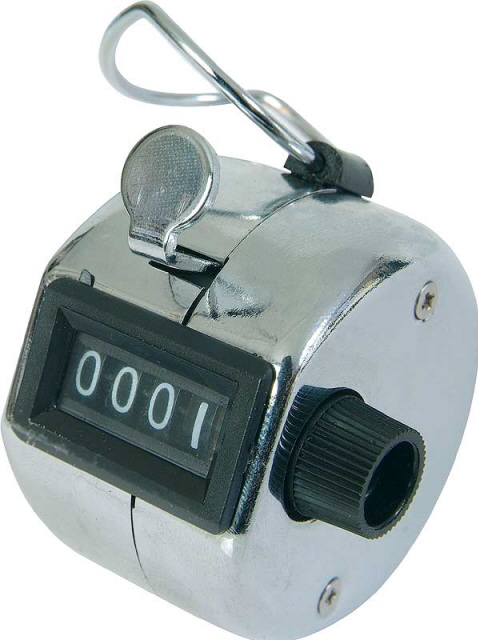
I’m a huge fan of recording stats in order to monitor progress “what gets measured gets managed”. Chilly decided to use a tally-counter (like in the picture above) to record all of his dances. That way he knew exactly how many dances he got in the time frame he gave himself. If you do the same yourself you can try to beat your own record and don’t have to worry about comparing with anyone else.

I doesn’t have to be used just for dancing either. Try setting yourself a goal for doing sit-ups or push-ups to get fit; starting conversations with complete strangers to get over shyness; writing pages of that book you’ve been meaning to finish. Whatever you want to do, set yourself a challenge and use that motivation to achieve it.

Why not mention your own challenge in the comments below?

I’m starting my dance challenge tonight. What about you?

My salsa is better than yours!

12 Jul

Why limit yourself to dancing just one style of salsa (or to just one partner for that matter)?

The world is full of salsas: On 1, On 2, Cuban, Caleña, Lineal, Verde, Picante… with so many types it’s no wonder that things can be confusing for a budding salsero.

Almost everyone you talk to will tell you:

  • their style of salsa is the best
  • that it’s the most widely danced
  • that it’s the easiest to learn
  • that it looks the most spectacular
  • that it will help you meet the most beautiful women!

All I can say about this is: BULLS#!T, BULLS#!T, BULLS#!T.

Salsa is a dance that has evolved over the years from it’s 0riginal form in Cuba to the many diverse and beautiful styles that we see today. Just like with languages, every distinct type has something unique and beautiful to offer so it’s impossible to say that there is a “best” type. English is not the “best” language on Earth just because it is the most widely spoken nor is French because it is considered the most romantic (by some). The same applies to the different styles of salsa.

I’m very lucky in that living in many different places over the years has given me exposure to and appreciation for many different types of salsa. I started dancing LA style in Japan and got to practice Cuban style when I moved to a new city there, I was introduced to New York style in Hong Kong and later in Dublin and now I dance Cali style every week right in the World Capital of Salsa. Over the years I’ve learned to piece the different styles together helping to give my salsa it’s own particular flavor and I think that everyone should at least experiment with doing the same.

What’s your salsa?
The 4 main styles of salsa are:

  • Los Angeles (LA)
  • New York
  • Cuban
  • Caleña (Cali style)

Of these, the first 3 are probably the most widely danced internationally. I’ve included Cali style because I consider it (or at least variations of it) to be very popular in South America and because of some of its characteristics which make it unique.

LA and New York style are lineal salsas i.e. salsa that is danced forward and back in a line (or slot) whereas Cuban and Cali style are non-lineal salsas i.e. they are danced in a more circular or side-to-side fashion.

And before anyone calls me on it and tells me there are many more styles of salsa; stop right there. I’m well aware that there are other styles but they are not as widely practiced as the styles above and I don’t really have the time to research and write about them all! Maybe in another article.

LA Style
LA style salsa is also commonly known as On 1 because the “break” (i.e. the change in direction from forward to back) occurs on the 1 count (and on the 5 count when returning) with the lead starting by stepping forward.

It is probably the most popular style of salsa internationally (i.e. outside of South America). Any large, developed city in Europe, Asia, North America or Australia probably has an LA salsa community.

It features complicated hand combinations and “swing” style movements as can be seen in this video:

New York Style
Also called On 2 or Mambo, this style breaks on the 2 count (and 6 when returning) with the lead starting by stepping back which allows for a “smoother” looking dance.

It is the most popular style of salsa danced in New York (obviously) but there tends to be On 2 “sub-communities” anywhere LA style is danced.

Dancing On 2 is often seen as an evolution from dancing LA style On 1 with many advanced dancers sticking with On 2 after making the switch. Frankie Martinez gives a great quote about the transition from On1 to On 2 in this interview.

Music for On 2 dancing is influenced heavily by jazz (lost of brass and piano) resulting in a very elegant dance style that often features “shines” i.e. a time during the dance when the partners separate and dance by themselves, interpreting the music in their own ways.

Cuban Style
Salsa Cubana, also known as “Casino” is probably the second most widely danced form of salsa internationally. It developed from Cuban “Son” and the African influence in salsa can easily be seen with the freedom of movement and focus on shoulder motion.

Cuban salsa, unlike lineal salsa, is danced in a much more circular manner with the partners changing positions constantly during a dance. It also features many complicated “knot-like” hand combinations with the lead often ducking in and out of different closed hand positions. Salsa Cubana does not have a cross body lead but has a similar movement known as “Dile que no”.

Rueda de Casino: is the name for a Cuban salsa group-dance that features 2 or more pairs of dancers performing synchronized combinations and exchanging partners while dancing in a circle (rueda). The moves are directed by a “caller” who calls out the next combination to be performed. Rueda de casino circles can be huge!

Cali Style
Salsa Caleña, is the style of salsa most commonly danced in Colombia and from what I’ve seen myself, in many parts of South America. It takes a great deal of influence from another popular Colombia dance called Cumbia.

It is a non-lineal salsa with a lot of diagonal “back-step” movements and huge focus on exceptionally fast footwork and hip twisting. The basic objective is for partners to move their feet together in a synchronized fashion which can be as simple as just stepping on the same counts or it can involve very complicated leg flicks and kicks with not a huge amount of focus on arm work. There is no movement similar to the cross body lead or “Dile que no” in salsa Caleña.

Salsa Caleña also features an interesting “false” double step where the dancer taps his foot down and quickly raises his heal up and then down again which makes Cali style footwork look incredibly fast. Apparently professional dancers in Cali practice this step for hours on end supporting themselves with their hands against a wall to make themselves faster.

I’m confused! Which style should I pick?
That depends on a lot of things:

  • What styles of classes do you have available to you in your area?
  • What is the most popular style danced in your town?
  • Do you plan on learning to dance in preparation for visiting a particular country?

Do some research, and find out about your nearest salsa scene. There may not be much point in learning how to dance New York style salsa if you’re going on a two week vacation to some place in South America where no one can dance it.

But…why bother picking?
I can’t think of any logical reason why someone would want to dance only one type of salsa (apart from wanting to dedicate their time to get really good at a particular style).

Learning different styles of salsa enriches the style that you already dance and allows you to dance with even more people (just like learning a new language).

For example, in both Japan and Ireland I’ve danced with latin women (who danced salsa but never took a single dance class in their lives) and I noted straight away that they couldn’t follow a linear style of salsa. However I had taken a few Cuban salsa classes before and knew how to guide them through a more circular style of salsa that they were used to.

I spoke a little of their salsa language and because of that I could communicate better with them than if I had just continued “speaking” in my own. Have you ever been abroad and had a local shout at you in their language, hoping you’d understand if they continued long enough? Well it didn’t work then and it won’t work in salsa (at least not in the time it takes to complete a song).

Be proud of your style
People who know me know I dance a particular way and that I throw in a few extra kicks and foot flicks for flourish, which I picked up from the few classes of Cuban salsa I’ve taken and I also frequently add Cuban style turns to my mostly lineal dances. Since I moved to Cali I’ve added a lot of Cali-style moves to my toolbox too.

I’m proud of the style I’ve developed over the years through my different backgrounds and experiences and I really think everyone should aspire to develop their own unique style of salsa.

So forget about deciding on what’s the best style of salsa out there and just focus on learning as much as you can from as many different sources as you can find. You’ll be a much better dancer for it.

Keep dancing folks!

**********************************************************************
If you like this article please share it with your friends via the Facebook or Twitter buttons below and if you use Stumbleupon please give it a “Thumbs Up”. I’d really appreciate it 😉

How to be stronger than you’ve ever been in your life!

6 Jul

Do you need another reason to start weight training?
I didn’t think so!

Remember the last time you saw a bus of school children stall on a railway crossing with an express train coming and you weren’t able to shove it out of the way? …No?

Well, remember that time when the barn caught fire and you couldn’t carry the heavily pregnant horse to safety on your shoulders? Oh…well…ok!

What about that time you couldn’t move the pile of boulders blocking the entrance to the hospital for sick kittens? Seriously? No?

Ok…so…remember that time you had trouble opening the lid on that jar of mayonnaise?…Bingo!!!

It doesn’t matter if you work as a fireman, professional super hero or career pillow tester, everyday of our lives we rely on our bodies, our muscles and their inherent strength, to do everything from climbing stairs to wrestling livestock (What? You didn’t do that as a kid?).

It’s true that many of us live lives where the heaviest thing we have to move around all day is our own fat ass but there come times in life when we need to be strong, be it moving the washing machine to the other side of the room or carrying a fair maiden up the stairs to her candlelit chamber (I’m still waiting for something like that to happen).

So I think that we all owe it to ourselves to be as strong and fit as we can to help us deal with whatever life may throw at us because life, just like a spoiled 4 year old, likes to throw things. We may not have the opportunity to rip the door off of a burning car but at least we can make moving the TV from one room to another look like a piece of cake.

Getting stronger than ever
I’ve been lifting weights on and off (this phrase fails to express the true irregularity of my routine over the years) since I was a chubby 15 year old when I finally decided to take some initiative and lose weight. I’ve tried different routines with different levels of success from high reps to super slow sets and many things in between. Most of the time I was focused on simple weight management and looking fit so it’s no surprise that I never made any real strength gains although I was most certainly stronger than your average Joe.

However, after finding the information I’m going to show you today and deciding that I wanted a new challenge, I set myself the goal of getting stronger than I have ever been in my life which I reached after only 4 weeks and I have continued to get stronger on a weekly basis. In the 3 months I had been doing this program I increased my 5 rep max (the heaviest weight you can lift for 5 continuous exercise repetitions) by 12-18% in all of my lifts. This may not sound like much but at my, intermediate, level this is a huge improvement!

The Pros & Cons of Weight Training?
Pros

  • You can build functional strength that you can apply to your everyday life be it climbing the stairs or carrying your groceries.
  • Building muscle is probably the most effective way to reduce excess body fat without dieting. More muscle means a faster metabolism.
  • It’ll bring about serious changes in your physique in a very time efficient manner. This routine takes only about 1 hour, 3 times a week.
  • Intense weight training releases growth hormone, which not only keeps you lean and healthy but also is documented to have profound anti-aging effects.
  • Whether you’re a man or a woman, MUSCLE IS SEXY! (and everyone could do with more sexy)

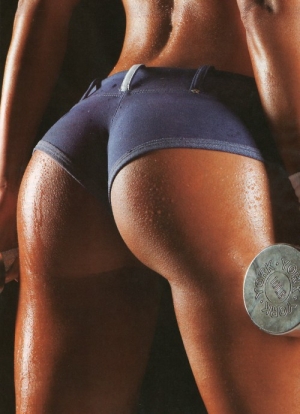
    You only get an ass like this after doing a hell of a lot of squats.
    (BTW if you have an ass like this, call me!)

Cons

  • You may become just TOO SEXY and have to carry a stick around with you to keep the opposite sex at bay.

Seriously, you have nothing to lose and a whole hell of a lot to gain. Start pumping iron!

Ladies are not exempt
Seriously girls, why rely on guys to do all the heavy lifting around the house? Girls can be strong and feminine at the same time and in my opinion, there is nothing sexier!

If you’re worried about lifting weights and looking like She-Hulk, fear not! I’m working on an article aimed at explaining the benefits of and clearing up some of the myths about strength training for ladies. For the time being all you need to know is that you’re not going to look like you eat “Steroid-Pops” for breakfast if you lift weights. You’re going to look toned and sexier than any “skinny” model-types you see in Vogue.

Enter Bill Starr
The program I used is called the Bill Starr 5X5 routine. Bill Starr is a former Olympic lifter and power-lifting competitor who also has written extensively about strength and conditioning. His most famous book “The Strongest Shall Survive” became something of a bible in the world of American Football strength training (and those guys know what they’re talking about when it comes to being strong).

You need to read the detailed explanation of the routine here (best) and here (use as a supplement) and before you even consider doing the routine you should understand it on paper thoroughly, so read it fully and then read it again. If you find any of it difficult to understand show it to an instructor at a gym and get them to break it down for you (If they tell you to do a different routine, that Bill Starr 5X5 isn’t for you, then tell them that you’re grateful for their suggestion but no thanks, you want to do this routine!).

I followed the routine almost to the letter. The only differences are that I do the Standing Military Press instead of the Seated Incline Press and I do Underhand-grip Bent Over Rows instead of Overhand-grip Bent Over Rows.

You can also download a very handy spreadsheet here, that not only helps you plan your routine but also helps you figure out what your 5 rep max is.

Intermediate Lifters
It’s very important to remember that this is a routine for intermediate lifters i.e. someone with at least a year of regular weight training under their belt. You need to know how to do these lifts well because if you don’t you could seriously hurt yourself, destroying any progress you’ve made.

If you’re a beginner, start a good beginner’s routine (I’ve heard very good things about Mark Rippetoes book) in a gym where the instructors know what they’re talking about. If the trainer looks skinny or overweight try and find one who actually looks like he works out.

You can also watch videos of all the lifts in the routine at the following links:

Squat
Bench Press
Bent Over Row
Military Press
Deadlift

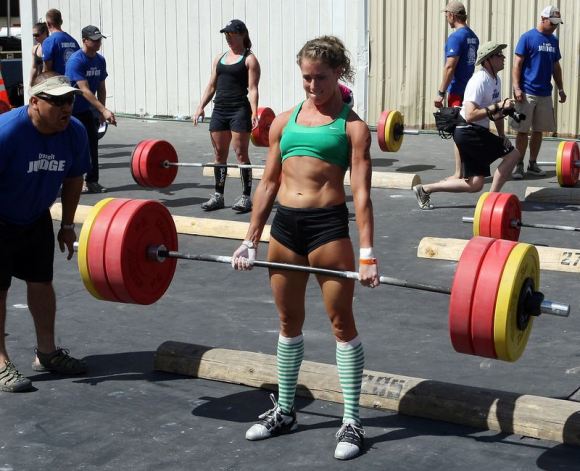
Correct form is essential for movements such as the deadlift.
But you were already checking this photo out for correct form, right!

Watch the videos and get someone who knows what they’re doing to coach you so can perform them with perfect form. Learn how to do these lifts well and you will greatly reduce your risk of injury.

If you work hard, rest hard
This routine will put a serious stress on your body so in order to get the absolute most out of it make sure you help yourself along with adequate rest and nutrition.

What is adequate rest? I would say at least 8 hours of quality sleep at night. When I train on a day after a night of poor sleep I can clearly see it’s effects on my performance. It can make reaching my goals for that day very difficult or even impossible (especially so with my deadlift)

Eat well. Make sure you’re getting sufficient calories and protein (here’s a great link that breaks down what you should be consuming on training and non-training days). I’ve also written an article with some great tips on what constitutes healthy eating.

Remember if you don’t give your body what it needs to recover after these workouts, don’t expect to make as much progress as you possible could. Be good to yourself!

Get out there and break your own records!
There is no better person to be compared with than with yourself. Follow this routine as it’s described, monitor your progress by recording the weights and repetitions you use and experience how good it feels to break all of your old strength records in such a short time.

For example, I have to admit that when I reached my deadlift goal last week I couldn’t wipe the smile off my face all day. Everyone should feel what it’s like to better themselves, it’s euphoric.

So what are you waiting for? Get out there and show the old you how far you can go. I guarantee you’ll impress the hell out of yourself (and let’s face it, you’re the only person that matters).

**********************************************************************

Have you been working-out lately? Because you look spectacular 🙂 If you liked this article go ahead and share it with your friends via the Facebook or Twitter buttons below and if you use Stumbleupon please give it a “Thumbs Up”I’d really appreciate it 😉

How NOT to get mugged in Colombia (A Guide for idiots) Part 2

20 Jun
Robbery not allowed

We need more signs like this here

If you haven’t done so already you can read Part 1 of this article here.

My second mugging (May, 2012)
The second time I was mugged left me a lot more shaken up than the first time for reasons which I’ll explain a little later.

It was a Thursday night and almost every Thursday I go to a salsa bar near my house called “Tin Tin Deo” which is a bit of a salsa institution here in Cali. It is located on the one of the main transport arteries through the city, La 5 and about 2 km south of my house. I can walk there in less than 20 minutes but I normally go by bicycle because it’s much faster (and because I hate walking). I have never seen someone else go by bicycle, ever.

That week I had a couchsurfer staying with me and she wanted to experience some real Colombian salsa so I brought her along. We went together on my bike, again because it’s faster and because it’s fun with two people on one bike. I’ve done it many times before with other friends.

We had a great night of dancing and the club closed at 1am ( as it was Thursday). There is usually a very big group of people standing outside the club at that stage, chatting, waiting on taxis (of which there are plenty) etc. We said goodbye to our friends and hopped on my bike and I started pedaling up the street. Literally seconds later I heard a moto (a scooter) slowly coming up behind me and I heard the driver start to say something. Now, this has happened many times before when I’ve had someone else on my bike with me. Usually people find it funny and say some some sort of a joke about it. So it was natural that I thought that this was what the driver that night was going to say, so I started smiling and turned my head to the left to look at him.

It was at this stage that I actually “heard” what he was saying. I missed the first part but I heard him say “We want your money and your cellphones. Stop the bike”. I looked around and realized that we were surrounded by 3 motos on our left; one belonging to the guy who spoke to us, one a little bit in front of us with another male rider and one a little further to the left with a male and female riding it together. For some reason seeing woman riding the other moto phased me a little, it made the situation a little harder to accept (I don’t know why, but it did). The guy continued to say “stop the bike, stop the bike, stop the bike” each time his voice getting more and more frustrated/angry.

So what was my reaction? I kept pedaling. I was mentally frozen with shock and felt unable to do anything else. I had noticed that he hadn’t shown a gun which meant he “probably” didn’t have one because in the situation we were in it would have been to his advantage to show it. I knew that if I stopped they’d have us so I kept pedaling until I could think of something. It sounds like I was thinking logically but that couldn’t have been further from the truth. I was reacting and my reaction was for my body to continue doing what it was doing; pedal.

Up ahead on the right was a small dark side street (so dark in fact that a little salsa club there is called “El Escondite” (the hiding place)). I could see that the guy on the moto in front was trying to divert us down there by blocking the way ahead of us. All I could think was that if they got us down there they could do whatever they wanted with us and no one would see anything and I didn’t like the thought of that. I sped up and managed to avoid the side street and pull in front of the guy trying to divert us. I still don’t know how I managed to do it with someone else sitting on the back of my bike (the guy in front must have been totally incompetent).

Suddenly, the speaker ( who I assumed was the leader) shouted something and all 3 motos accelerated and took off ahead of us. I stopped the bike and shouted at my passenger to get off and run back the direction we came from, to Tin Tin Deo (this whole incident happened in the space of between 10 and 15 seconds so we were still very close to the club.

I stayed where I was, straddling my bike, filled with more adrenalin and fear than I have ever felt in my life. My eyes were fixed on the 3 motos driving into the distance. I wanted to see what direction they were doing and wanted to make sure they didn’t turn around and come back at us again. When I saw them round a corner and felt (somewhat) confident they weren’t coming back I turned around and saw my couchsurfer friend not far behind looking at me. She was scared and confused (although I think I was more so).  She told me how she initially thought they were friends of mine pulling up alongside us, just as I had done.

We continued to walk up the street to where I knew there was a CAI (a mini police station/police box) and I told the cop on duty what had happened. It was at that point that I realized that I hadn’t taken note of any of the license plates on the motos. In Colombia, if you drive a motorbike or scooter you also have to wear a luminous vest with the license  plate number printed on it but I hadn’t even noticed it. Everything happened so fast that I didn’t even think of noting their license plate numbers (I’m not even sure I’d have been able to remember it with that amount of adrenalin flowing through my veins). The cop said that I should have noted the plate number and I promised him I’d do it the next time it happened. We chuckled (which made me feel a bit better) and then we returned to my apartment. I was pretty shaken that night and somewhat the next day too. But the important thing was that we were both ok and they hadn’t taken anything from us.

Post Mugging Analysis
This, unlike my first mugging in January, was not simply a crime of opportunity. The 4 people on their 3 motos had clearly been waiting outside or near the club. Waiting for the right target to make its move. Unfortunately, that target was us. We were two obvious foreigners (the fair hair and light skin is a dead giveaway) and a lot of Colombians tend to associate foreigners with money. We were traveling alone on a slow moving bike when there were no other vehicles on the road. Even though I didn’t have a bag with me, my friend was carrying a small handbag which would be another attraction. We were sitting ducks.

This time, I most certainly did not take the right course of action. Fair enough, we got away with absolutely no harm but only because we were very, very lucky. I should have stopped the bike as soon as they demanded it and given them everything that we had. We were outnumbered and alone at night, they could have done anything to us. My only defense is that what I did was simply a reaction and I didn’t consciously decide to defy our assailants. I was in shock and my body just reacted and kept pedaling.

Even though we were both ok, I feel terrible for what happened (or for what could have happened). My actions put someone else in danger and that’s what shook me up so badly. It was my decision to cycle home together at that hour of the night (although I had done it many times before). If anything had happened to my friend I would never have forgiven myself.

Why did they just speed up and disappear?
To tell you the truth, I just don’t know for sure. All I can say is that we were very lucky that they did.

The only possible reason is that the whole incident took longer than they had planned on due to my refusing to stop the bike. They took the opportunity to rob us when they did because there were no other cars on the road at the time. I assume they felt that they had run out of time and that another car could have come up the road at any second. On top of that, I think that when I avoided the side street they tried to divert us down I basically robbed them of their best chance at getting us completely alone. Once that chance was gone they cut their losses and took off. At least that’s what I assume!

How I’m dealing with this now?
I don’t take my mobile phone with me when I go to Tin Tin Deo (TTD) anymore. I don’t need it because I know my friends will be there when or a little after I arrive and if I need to note someone’s phone number I can just write it down.

I only take enough cash to cover the entrance fee to the club. I don’t drink alcohol or soft drinks and waters free to I don’t need anymore.

I am planning on buying a dummy phone. I can just buy a small, cheap, second hand phone and hand it to a thief if it ever happens again in the future. It probably would assuage them better than if I tell them that I have nothing to give them.

If I ever travel with someone to TTD again, I’m going to go by taxi. It’s a hell of a lot safer.

If I walk back home I’ll do it in a group (luckily some of my dance friends live really close to me which makes this possible).

I used to take my laptop with me when I taught English classes in the evenings (I travel to my classes by bike). Obviously that has stopped!

This whole incident shook me up a lot and has really made me feel uneasy at night in Cali. I noticed this about a week later when I walked to a different club, at night, by myself (it’s ok, you can call me an idiot for doing it. I am). I kind of wanted to prove to myself that I could do it and while I went and came back safely, the whole time I was on the street I felt like something bad was going to happen. I was physically profiling every group of people I passed on the street and my body tensed whenever they got near. That’s not a good way to feel about the city you live in.

I even thought twice about taking my bike to TTD the next time I went, 2 weeks later. However I decided to follow the advice of my friend Tyler who lives in the same neighbourhood as me and shares some of my concerns for safety. I now cycle home in the Mio (bus) lane which is physically separated from the rest of the road with a small raised barrier (just big enough to keep cars and motos out). It’s well lit, provides a good view of my surroundings and the Mio doesn’t run that late at night so it’s all mine.

Thankfully I feel much better now but the incident has made me much more conscious of taking care of myself in Cali.

Do what I say, not what I do!
I do a lot of things which I wouldn’t consider to be the safest of options, just for the sake of convenience. This is downright stupid so I’m going to recommend some things that I may not actually always do myself but I think anyone concerned for there safety should. Underneath are a few general safety tips which I recommend anyone follow when traveling in a place where security is a little bit dodgy.

  • Travel in groups, especially at night. Muggers are much more likely to pick on people who are alone.
  • Ask locals where is safe and where isn’t, they know best. Also ask them the safest routes to get from one place to another.
  • “Don’t give papaya”. This is a Colombian saying that means don’t give someone a reason to rob you. Don’t wear fancy jewelery on the street, don’t walk around with a big fancy camera hung around your neck etc.
  • Don’t carry valuable objects in back pockets as these are much easier to pick-pocket. Tighter side pockets are better. Better yet, don’t carry valuable objects.
  • Only carry the amount of cash that you need while you’re out. Keep some in your pocket or purse and hide the rest somewhere else on your person (in your sock, bra etc.)
  • Don’t carry credit or ATM cards if you don’t need them. This gives muggers a reason to take you captive and clean out your accounts at a number of different ATMs.
  • Call taxis from reputable companies to come pick you up. Here in Colombia this is considered much safer than hailing a taxi on the street.
  • If you do get mugged, and there is no one around to help just hand over everything you have and don’t give the mugger a reason to hurt you.
  • Carry a cheap, crappy cell phone to handover straight away if you do get mugged.
  • Don’t look a mugger in the face. This seems to give them a reason to hurt you as you would be able to identify them to police.

As I’ve already said, I don’t mean to destroy the image of Colombia or Cali but you really do need to be careful here and I’d prefer you were a little scared and cautious here than being completely oblivious and careless. If you know the risks you have a much better chance of avoiding them.

Let me know if you think I should add anything else to this list, I’m sure there’s plenty I haven’t thought of.

Stay safe and keep dancing.

**********************************************************************
If you like this article please share it with your friends via the Facebook or Twitter buttons below and if you use Stumbleupon please give it a “Thumbs Up”. I’d really appreciate it 😉

How NOT to get mugged in Colombia (A Guide for idiots) Part 1

13 Jun
Robbery not allowed

The do’s and don’ts of muggery!

Important: to any of you who know my parents I beg, on bended knee, that you don’t tell them about the contents of this post nor even of  its existence. It’s not that I’m lying to them it’s just that I feel withholding the truth keeps them from worrying too much. PLEEEEEEEEEASE!

The title of this post has two intended meanings:
1: What NOT to do if you get mugged
2. How to AVOID getting mugged in the first place

An unfortunate stereotype that Colombia has is that it is a dangerous country. Obviously that reputation developed in the days of the drug cartels ala Pablo Escobar and by all accounts Colombia was an exceptionally dangerous place to live. Thankfully things have greatly improved and Colombia is probably safer now than it has been in the past 30 or 40 years.

That does not, however, mean that it is completely safe.

I have lived here in Cali for 9 months now and I have been “mugged” twice (mugged is written in inverted comas because the people who tried to mug me didn’t actually get anything, thanks to one occasion of quick thinking and another occasion of pure, frightened idiocy and luck on my part). I had never been mugged before coming here.

I have heard many of my friends tell me stories of how they were mugged at knife point or gun point; I have heard stories of people getting mugged by taxi drivers who take them down a side street where they and their friends take everything; I have heard stories of delivery men and people at ATM’s getting shot in the middle of the day; I have heard stories of what is called “El Paseo Millonario” (let’s translate that as “the millionaire’s roundabout”) where you get abducted and taken by your captors to numerous ATM machines until you’ve emptied your account; and actually I have heard of much worse.

I really want to stress that I’m not trying to demonize Cali or Colombia in this post. You can get mugged virtually anywhere, in any country in the world. I just, unfortunately, got the incentive to write this post and I think that some people will benefit from learning about this from my blog as opposed to learning it the hard and scary way like I did.

I’m going to tell you what happened to me both times I was mugged, why it happened, what I did, what I should (and shouldn’t) have done and what I do now to make sure it doesn’t happen again.

My first mugging (January, 2012)
I was having some repairs done in my apartment and my landlord told me I should go to Cali’s downtown district (El Centro) to get some materials. He gave me the address of a store and told me how to get there. I hopped of the Mio (Cali’s bus service) on a busy street (La 15) I had been on many times before. To the west of this busy street was a busy shopping district where I regularly go to buy clothes and stuff for my house. It is always bustling with people during the day. To the east of this street is an area I had never been to before. It’s made up of warehouses and smaller stores selling building supplies.

I was always cautious when I went to El Centro because everyone told me to do so. That day I dressed very casually, jeans and a T-shirt, I had a courrier-bag over my shoulder and I had my mobile phone (an iPhone 4) in my front pocket. I dressed casually so that I wouldn’t stick out too much, although being as white as I am that is next near to impossible here. The phone was in my front pocket because that pocket is very tight and even I have difficulty getting it out so a pickpocket wouldn’t have a chance of taking it unnoticed.

As I proceeded east down the side street, away from the main street, I noticed there were much less people and the further I went the less safe it felt (I can’t explain where the feeling came from but it had to do with the people I saw and the poor state of repair the area was in). As I walked down the street (on the left side) two young men (in their early 20’s) approached me and one held out his hand to shake mine. They were speaking fast and heavily accented and not only was my Spanish poor but I didn’t even want to understand what they were saying. I didn’t accept the handshake (something I had been advised on many years ago) and kept walking. They disappeared.

As I continued walking down the street (I was bout 3 blocks from the main street at this stage) I felt very uncomfortable due to the lack of activity and so crossed the street to the other side and started walking back towards the main street. The two men who had approached me previously reappeared and started speaking to me again but I tried to ignore them and kept walking. Then, one of them, from behind, put his hand on my shoulder. I wrenched my shoulder forward sharply to get lose his grip but he immediately put it back and with a lot more force. I span around. My back was facing a car and the two men were in front of me slightly to my left and right. I was effectively trapped. It was only then that I realized what was happening; I was getting mugged.

One of them launched his hand towards my front pocket (towards my phone) and I “reacted” by blocking his hand away with my forearm. I say reacted because I didn’t consciously think about it. Years of Karate training have made that movement automatic. He reached for my pocket again and once more I blocked him. They both were saying something to me but I think I was too frightened to understand.

I looked around and tried to take in the situation as best I could; it was broad daylight, there were other people on the street and there were people standing in the shop entrances nearby. I figured I needed to draw attention to what was going on so I started shouting, very loudly, in English (I had learned at a safety seminar for foreigners in Japan that shouting in a foreign language tends to draw much more attention than shouting in the local language). It had just the effect I was looking for; everyone nearby started looking in my direction and as soon as the two guys realized that they were the focus of everyone’s attention they turned around and took off in the other direction. I’ll never forget the look of one of them just before he turned around; pure pissed-off!

I turned and headed, shakily but quickly back towards the main street, checking over my shoulder every now and then to make sure I wasn’t being followed. Along the way one guy told he he saw what had happened and told me to be careful there. Back on the main street I looked around for a cop (there is a considerable police presence in Cali) but as luck would have it, couldn’t find one.

I quickly hopped back on the Mio, feeling very shaken up, got off at a shopping center near my house and proceeded to calm my nerves the only way I knew; Chocolate cake.

Post Mugging Analysis
This was a crime of opportunity. Those two guys saw a really white guy, looking slightly lost in a bad neighbourhood. My clothes were all Colombian but my physical appearance is clearly not. They saw a bag and possible the outline of my phone in my front pocket. They saw an opportunity and went for it. They didn’t show any weapons (which doesn’t mean they didn’t have any) so that gave me the incentive to do what I did.

In this case, I think my actions were pretty sound. It was broad daylight and their were other people around which meant these guys “probably” weren’t going to attempt anything crazy. Drawing attention to the situation by shouting saved my ass without me getting physical (which would just have made the situation much more dangerous). When everyone was looking at them they realized they had lost their prize of juicy little Irishman and they took off.

How I’m dealing with this now?
For one thing, I’m never going to that area alone again. I told my landlord what happened and we went back, together, a week later to pick up what I needed. I’m still pissed-off that he sent me there in the first place!

I carry much less money with me when I go to El Centro (and most places in general); just enough for what I think I need to get and I often hide most of it in my sock with just a little in my pocket (I hope the readers of this blog won’t use this information to rob my socks in the future).

IF they had had a gun, my actions (I hope) would have been very different. I would have shut the F@$K up and given them absolutely everything they asked for and prayed they wouldn’t shoot me. A gun is a game changer. You see one, you have already lost. Give them what they want and fast.

Next post
In Part 2 of this post I’ll talk about my second experience with the criminal underbelly of Cali. It was an experience that could very easily have gone, but thankfully didn’t go VERY, VERY BADLY!

I’ll talk a little more about the effect that experience has had on my current behaviour in my day to day life in Colombia and I’ll give a more detailed list of safety do’s and don’ts that I hope will keep you safer in the future.

**********************************************************************
If you like this article please share it with your friends via the Facebook or Twitter buttons below and if you use Stumbleupon please give it a “Thumbs Up”. I’d really appreciate it 😉

How to be Great at Anything (Obliterating racial stereotypes in 10,000 hours)

6 Jun
English: Frankie Martinez performing "The...

Could I ever dance as well as my hero, Frankie Martinez?      With enough practice, you bet I could.

Dublin
Foreign girl: Where are you from?
Me: Ireland
Foreign girl: No your not, hahaha!

Cali
Local girl: De donde es usted? (Where are you from?)
Me: Irlanda (Ireland)
Local girl: jajaja, mentira (hahaha, lies)

I was dancing with both of these girls when they asked me these questions.

Apparently it’s common knowledge that I, as an Irishman shouldn’t be able to dance well. Apparently, I do not have the genetic material that would provide me with the bone structure and joints needed to move smoothly nor the ear for beat that would let me react intuitively to the music. Apparently, these genes can only be found in Latin and African populations which is why they’re the best dancers.

BULL S#!T

This is a lie that has been perpetuated throughout the world and especially so in the dance community for far too long. Preconceived notions like this are what stop people from even attempting new things. If we listen to them we WRONGLY believe that we are destined to fail at a certain activity because we lack a certain characteristic, be it physical or mental, that is necessary to excel in that endeavor. How many times have you heard someone say something like “Oh I could never learn Japanese, I’m no good with languages” or “I’d never be able to play the guitar. Music just isn’t my thing” or the classic “You can’t teach an old dog, new tricks”? BULL S#!T BULL S#!T BULL S#!T

I’m going to put all those lies to rest today by saying this: “I am an Irishman and I dance salsa”.

Don’t worry. I’m not going to base my entire case on that one comment. It’s time to elaborate.

When I first started dancing in Japan, I was constantly told by the people who got me into the scene in the first place, how latinos were the best dancers, that they could move better than Japanese people and really express themselves with the music. I was told this by people who danced salsa well, by the people who were teaching me how to dance. I later remember going to salsa clubs in big cities in Japan on a few occasions and seeing Japanese people dancing spectacularly with passion and rhythm and everything else that dance should be. Every bit as good as their latino counterparts.

When I returned to Ireland and started on the scene there I lost count of the times that people would tell me things like “I’ll never be as good as “so and so” because he’s black and they just move better”. One of my own dance partners (you know who you are ;-)) even told me that I would never be as good as a latino dancer because I was Irish. She was convinced that her own latin heritage meant she could feel the music differently and dance better. Yet despite this I still managed to get many comments like those at the beginning of this post in Ireland, Japan, the US and even here in Colombia, a latin country. Despite being Irish, I still dance well. (I know it sounds like I’m blowing my own horn here but I’m trying to make a point. I know for a fact that I have a very long way to go before I’m a great dancer, but that doesn’t mean I can’t dance WELL now).

Some of the best compliments I ever got were when I went with my friend “la Mulata” (introducing a new character folks) to a party held by some friends of her uncle. La Mulata is, obviously, black as is her uncle and the vast majority of the people who were at the party. I, on the other hand, am super-white so I tend to stick out “a little” at such parties. I’m used to it at this stage. The lifeblood of Colombian parties is of course salsa, so the time came and I took la Mulata out on the floor and started doing what I do. It was a great dance as I had danced with la Mulata many times before but I also felt that every eye in the room was on me. It’s easy enough to justify; the white guy in a house of black people trying to dance salsa in the world capital of salsa. Everyone was dying to see if I’d be able to keep up with the beautiful black girl I was dancing with. The song ended and we walked back to our seats smiling. What came next was a stream of compliments from my hosts about how well I danced. They all expressed their surprise and told me things like “you move so well” and “you’re really able to get the rhythm”. I blushed hard (as everyone who knows me knows I do often) and went on to dance plenty more songs during the night.

A little later the only other white people at the party (a married couple and their daughter) told me how impressed they were by my dancing and I continued talking with the father for a while. He told me that he had never been able to dance, that instead he preferred to to just listen to the music and chat at parties. He thought it was really amazing that a non-Latino like me could dance salsa so well. As we were talking we watched his teenage daughter dance with her friends. She danced just like them. She moved her body, especially her hips, beautifully and in perfect rhythm with the music, just like all the other girls dancing around her. I asked her father about it and he told me that he didn’t really understand why his own daughter danced so well. Neither he nor his wife were big dancers but she simply had always been able to dance well, since she was a child.

Let’s think about this a little: a white girl whose parents can’t dance, grows up in a mostly black community, with black friends, and ends up being able to dance just like them!

Is it possible that the ability to dance doesn’t actually come from some innate genetic ability that varies among races and is in fact something that can be simply learned? YOU BET YOUR SWEET ASS IT IS!

Here’s the thing, in general (I have to say in general because I have encountered plenty of exceptions over the years) people of African descent and latinos are amazing dancers. Is it because their bodies move differently, because they have “dancing genes”? I’m going to say “NO”. Then why do they dance so well? I firmly believe it is all down to cultural exposure and the resulting practice.

Latino culture (at least here in Colombia) is full of music and dancing. Children are exposed to this music from a young age and start dancing salsa in primary school and continue to dance it at virtually every social function they go to during their lives. They spend a huge amount of time “practicing” so it’s no wonder they’re such good dancers. Black people in Cali often live in black neighbourhoods where they have an even stronger music and dance culture than non-afro-descended Caleños. Due to all of this exposure many of them end up being spectacular dancers. This explains how the white girl at the party was able to dance so well. She grew up in an Afro-colombian neighbourhood surrounded by its culture and “learned” to dance in exactly the same way as all her friends.

How to be Great at Anything

How can we use this, in practical terms, to improve our own dancing (or anything else for that matter)? We’ve established that even if your not of African or Latin decent you can still become an excellent dancer just by immersing yourself in the culture. So all you need to do is travel back in time and convince your parents to move to a Latin neighbourhood to raise you, right?

Thankfully it’s a little easier than that (no time travel required).

This brings me to the concept of 10,000 hours popularized by Malcolm Gladwell in his book Outliers. I first heard of this concept while studying Japanese after discovering a great website with the snappy title of alljapaneseallthetime.com. The whole concept of “10,000 Hours” is that anyone who has ever mastered or excelled in a particular field, be it sports, arts or business, has done so only after putting in a huge amount of time (for example 10,000 hours or so) “practicing”.

Why is Tiger Woods one of the greatest golfers on Earth? Because his father introduced him to golf when he was 18 months old and encouraged him to practice constantly. By the time he was ranked world number one he had racked up years worth of experience. The Beatles honed their concert skills over four years and 1,200 live concerts in Hamburg, Germany leading them to become one of the greatest music groups the world has ever seen. Think about it, how many times have you heard of some prodigy child musician on the news? Do you think it’s a coincidence that the kid started playing the piano or whatever when he was two and practiced 3 hours a day for 10 years? Not at all!

CONSTANT, DELIBERATE PRACTICE MAKES MASTERS. IN ANY FIELD!

But hold on, if you do the math, it would take almost 14 years of practicing everyday for 2 hours a day to reach 10,000 hours!
Yes…if you want to become one of the greatest in the world.

Some people, however, have less lofty goals. The whole point of this article is to point out the importance of practicing frequently to improve your chosen skill. Practice and you will get better. If you want to dance like a latino, increase your “cultural exposure”; listen to the music every chance you get and dance to it like it’s going out of fashion. Move with the music, make it part of your life and watch how you improve.

My own personal experience with the power of constant practice came about a year after I “started” dancing salsa. As I’ve stated in an earlier post when I first started dancing salsa I had trouble getting to regular classes (due to my schedule, location and interference from other hobbies) so my initial progress was slow. So in September of 2009 after deciding I wanted a holiday and wanted to improve my salsa at the same time I booked a trip to Manila in the Philippines and Hong Kong. My logic was that I could get some private coaching there much cheaper than I could in Japan and there was a more developed salsa scene in both cities so I could dance regularly while I was there. I booked a number of private lessons with some instructors who I found by searching on the net, packed my bags and left on what is known in Japan as Shugyou (修行) (training or the pursuit of knowledge).

A birthday prank by my friends that ended up becoming the symbol for my monthly salsa parties in Miyazaki. Everyone was well aware of how big a part of my life salsa had become.

My holiday lasted about 10 days of which I had a number of hours of private salsa instruction (maybe 6) and I also went out social dancing almost every night (amounting to maybe 24 hours of practice). So when I came back to Japan 10 days later I had an extra 30 hours of practice under my belt. It showed. My salsa friends in Japan noticed straight away a huge improvement in my leading skills and general movement. I moved smoother and more easily and my lead became lighter but more definitive. In less than 2 weeks I had returned a different dancer.

I needed to increase the amount of time I spent practicing so I took matters into my own hands. I started organizing a monthly salsa class and party to get more people interested in salsa and so I could dance more. It took off and once a month my salsa friends and I would teach beginners the basic salsa steps and then dance for hours on end until our feet ached. I tried to practice with a partner on occasion too and I tried to occasionally make the 4 hour bus ride to Fukuoka to dance in the salsa parties there. I improved a huge amount because of all the new practice and because I needed to learn to adapt my style to that of all the other new dancers I was dancing with.

All of this taught me the real value of constant practice. I now know that if I want to improve in Salsa, or anything else, I just need to put in the hours. If I want to learn to dance like a latino dancer I just need to dance (a lot) with latino dancers, to watch and imitate what they do and practice it (a lot) for myself.

Since I’ve come to Colombia on my current salsa adventure I’ve noticed 2 things:
1: My LA style salsa (that is, my technical salsa) has taken a slight nosedive because I don’t have access here to partners that can dance LA (I’m currently training some in to remedy this).
2: My body movement and my ability to feel and react to music has improved significantly. I dance salsa regularly here in much closer contact than I ever have before and that has given me that opportunity to work on isolation in my shoulders and hips that I felt I was lacking in before.

With lack of practice one skill has deteriroated while with added practice a different skill has improved. It’s all about the number of hours you dedicate to a given skill. Simple as that.

So if you want to be great at something (or even just want to improve a little) there really is nothing stopping you except yourself. The only thing keeping you from being as good (or even better) a dancer as Africans or Latinos is time. Go take every salsa class you can find. Practice your basic step while you’re cooking in the kitchen. Get a good partner and practice together as often as you can. Fill your iPod with salsa music and listen to it when you drive to work. Dance socially at every, single opportunity you get. Show the world that you don’t need magical dancing genes to be a great dancer. Put in your hours and reap the benefits.

If you’re not practicing, you’re not getting better!
Use every chance you get.

How many hours have you put in this week?

**********************************************************************
If you like this article please share it with your friends via the Facebook or Twitter buttons below and if you use Stumbleupon please give it a “Thumbs Up”. I’d really appreciate it 😉

What I love about Cali, Colombia

30 May

As the lyrics to Cali Pachanguero go, “Que Cali es Cali, Señoras, Señores, Lo demás es loma”

I’ve been living here in Cali, Colombia for almost 9 months now and I can happily say that although it hasn’t been totally smooth sailing, at ALL times it has been an overwhelmingly positive experience.

I feel I’ve developed as good a feel for the place as one can in the amount of time I’ve been here and I’ve wanted to write about the things I like for a while, both to share with my readers and to help me appreciate my experiences here a little more definitively (I try to be thankful for all I have as much as possible).

So, here we go, what I love about my new home

Colombians
They’re friendly, easy going, love to joke around, extroverted and on top of that they love dancing. They’re a really welcoming people who know how to have a good time.

Weather
There’s a lot to be said for living in the tropics. Here in Cali, the temperature hovers around 29C most days at mid-day which is a little hot for my Irish blood but it’s not too humid and the early mornings and late afternoons are deliciously cool. Apart from 2 short rainy seasons I don’t have to worry about carrying an umbrella too much either.

Free, Live Music
I have really been spoiled here in Cali with the amount of live music events that one just finds randomly on the street or at larger events around the city, many of them completely free. I’ve so far had the pleasure of seeing La 33, currently one of Colombia’s most popular salsa groups, Choquib Town, a hugely popular group playing a mix of hip-hop and pacifico music) and Habana con Kola (of “Vente Negra” fame) all without spending a penny.

Caleñas
When I learned that Cali was famed in South America for it’s beautiful women I can honestly say that it didn’t put me off coming here. With mixes of European, African and indigenous South American blood, Cali produces some of the most beautiful and diverse women I have ever seen.

Fruit
With more varieties than I can remember (including plenty of fruits I’ve never even seen before) along with the universal availability of cheap, fresh and delicious fruit salads and smoothies, Cali’s tropical environment keeps me supplied with all the vitamins and antioxidants I could ever need.

Salsa
This really is the world capital of salsa. With virtually every radio in every home, store and taxi spouting out Latin beats, it’s no surprise that virtually everyone here dances salsa (or bachata or merengue or reggaeton or pacifico) on a night out.

Pacifico culture
The pacifico culture is the culture of the African-descended people who populate the pacific coast and make up a large proportion of Cali. Discovering their music, dance and food was one of my most pleasant surprises here in Colombia. Have a look a my favourite song by one of my favourite groups, Herencia de Timbiqui

Respect for the elderly
Whenever riding on public transport, if an elderly person gets on board and there are no seats available, someone will always offer them their seat. The way it should be.

Friendly advice on safety
If I ever have my phone out on the street or even at a streetside table in a café, someone will always tell me to be careful with it or let me know if I should put it away completely. Also, because I stand out so much if I ever wander into a dodgy neighbourhood, the locals will warn me about it pretty quickly.

Coffee
For the record, I hate coffee (true to my Irish roots I’m a tea drinker). However, I have discovered the godsend that is coffee’s energizing properties (essential for early mornings after a late night salsa session) and the coffee they serve here is cheap, plentiful and a lot smoother than the stuff I’ve had back home which I would consider reminiscent of what Satan’s blood might taste like.

Diminutives
Here in Colombia they use diminutive forms of words like it’s gong out of fashion. You never order “un cafe” it’s “un cafecito”, nothing ever happens “ahora” it’s “ahorita”. I really just love being able to call girls “mamacita” and hearing them call me “papacito”. Makes my day.

Never needing to know someone’s name
Don’t know someone’s name but want to talk to them anyway? Take your pick; mami (mommy), papi (daddy), nena (girl), chico (boy), niño (kid), joven (youth), linda (cutey), hermosa (beautiful), flaca (skinny), gordo (fatty), the list goes on. In my case, everywhere I go I’m known as mono (blondie)!

Street food everywhere
While I am not a fan of Colombian food in general, I’ll never have difficulty finding something quick and cheap on the street. I just wish the menu was a little more varied than arepas, empanadas and chorizos.

Relaxed political correctness
Excessive political correctness is a pain in the ass an has made people (at least in the English speaking world) way too sensitive. Here you say things as they are and people don’t get offended. I call my black friends negrito and they call me blanquito, I call my skinny friends flaco and they call me mono. We are what we are and have to realize there’s no need to be upset by it.

Mornings in my barrio
The sun shines, people sit in the local panaderias (bakeries) drinking café and eating pandebono, things are relaxed and it never seems like anyone is in a rush to start the day. I am getting really used to this.

Champús, looks like vomit but thankfully doesn’t taste like it.

Champús
A “drink” I had never heard of before made of a fermented mixture of fruits and corn and seasoned with cloves and cinamon. This is sold by the glass from huge vats carted around the street on special bicycles. It may look a little like vomit (just like salpicon and mazamora) but it is delicious.

Haggling
I have loved haggling since I first tried my hand at it in Ethiopia 12 years ago and (when I have the energy) I feel I’m pretty good at it. Like when the asking price for a pair of knock-off Nikes was COL$190,000 (this was most certainly the “Gringo” price) and I managed to get them for $35,000, I have to admit I felt pretty pleased with myself.

Feria de Cali
Starting on Christmas day, begins a week long party in Cali that you simply cannot escape. With parades, concerts, food, music and of course salsa dancing every night it certainly is a different way to spend the Christmas holidays.

Hugs and Kisses for everyone
I love the affectionate culture and different perspective on physical contact that people have here. You greet and say goodbye to women with a kiss on the cheek and to men with a hug or at least a good handshake (if you run into a big group of people this can take quite a while to get through). People aren’t uneasy about touching each other (which took a little getting used to) which is something I feel we really lack in Northern Europe and North America.

There’s much more that I could mention but I’ll probably add to the list as time goes by and I remember other things that I love about this place.

I’ll leave you with a nice, little song by Orquestra Guayacán called “Oiga, Mire, Vea” all about this great little city. I hope it gives you the incentive to come and visit.

If you’ve been to Cali before or want to come visit, let me know in the comments

**********************************************************************
If you like this article please share it with your friends via the Facebook or Twitter buttons below and if you use Stumbleupon please give it a “Thumbs Up”. I’d really appreciate it 😉

The Etiquette of Salsa (All the stuff you need to worry about besides the dancing)

27 May

I take my “Golden Rule” to extremes as I don’t even refuse dance requests from men.
(Even if I don’t appear too pleased when I realize one of my friends is taking photos)

Salsa is not just a dance but a social outlet.

Be it the ubiquitous night out dancing that salsa represents here in Cali or the seemingly hidden sub-culture of salseros in non-Latin countries like Ireland and Japan, salsa is a way to enjoy yourself with other people, to socialize and to make friends.

And, as with any other social phenomena, there are certain rules that, to a greater of lesser degree, one must abide by.

Of course, these rules never get written down nor are they ever explained to you at your first salsa class or at the start of your first social night. You learn them yourself, over time, sometimes through trial and error, sometimes through the words of a friend and they begin to form part of your behaviour whenever you step out on the dance floor.

I write them down here today so that you won’t have to go through the whole (embarrassing) procedure of trial and error, hopefully helping you integrate into your local salsa scene much more smoothly.

Obviously the rules will vary depending on the social norms of the country/culture where you are but I feel that these pointers here represent a pretty decent guideline to follow wherever you are in the world. Feel free to add more to your own list if need be.

Shower
The very nature of dance means you are going to be in close physical contact with other human beings. There is nothing worse than beginning to dance with someone only to catch the whiff of BO and have to endure it for the next 4 minutes or so.

Shower well before you plan on going out dancing, put on some deodorant (I use baking soda) and wear clean clothes. Otherwise you risk developing a reputation as a “smelly dancer” and let’s face it, no one wants to dance with that guy.

Brush your teeth
For the exact same reason as above, it is not pleasant dancing with someone who has breath bad enough to strip paint off walls. Brush those pearly whites.

Carry a Salsa Survival Kit (SSK)
To combat issues with the above two points I started to bring a salsa survival kit with me whenever I go out dancing. While you can wash yourself as much as you like before hand, the fact of the matter is that you are going to dance, which means you are going to sweat (if you are like me, you are going to sweat a lot). Thus, you may not smell that same as you did at the start of the night. This is where the SSK comes in. It consists of the following 3 items:

  • Handkerchief: (or any small cloth you can fit in your back pocket or handbag) You will sweat and you will touch other people’s sweat when you dance. It simply can’t be helped. It is nice though, if you can wipe the sweat from your face and hands after every dance. Carrying a “sweat-rag” is a handy little habit I picked up to deal with the shockingly humid Japanese summers.
  • Antibacterial wet-wipes: If you notice that you’re starting to smell as the night goes on, you may have to take emergency action, run to a toilet cubicle and give your underarms a quick cleaning. Antibacterial wipes should help ensure that you don’t start to smell again for a few hours. Nowadays you can get wet-wipes in handy pocket size packs, perfect to carry along on a night out.
  • Chewing gum: (preferably sugar-free) If you go out to eat with friends before you dance or if you smoke, you may need to freshen your breath during the night. Chewing gum is so portable too that you have no excuse not to bring it along.

This is my SSK and is probably one of the simplest there is. I know of other people who add other “essentials to their list; cologne/perfume, a spare shirt, deodorant, make-up etc. (my friend Imi recommended that I also include Pepper Spray! I’ll leave that choice up to you). It all depends on your own necessities and how much you can carry. Men obviously don’t have the luxury of a handbag, although I rarely leave the house without my courier bag (notice how I didn’t call it a man-bag!!!).

Asking for a dance
Both men and women should make the effort to ask out the people they want to dance with. It should not be left up entirely to the men and thankfully in Europe and the U.S.  women feel a lot more comfortable asking men out to dance.

It’s not rocket science either, just remember to be polite and smile. Simply approach the person you want to dance with, smile, say something along the lines of “Excuse me, would you like to dance” and when they say yes, take them by the hand and gently lead them out to the dance floor. You may now begin to dance. That’s it.

If you know the person already you might get a little playful and do what I do; from a distance, grab their attention with your eyes, give a cheeky little wink and a little head nod in the direction of the dance floor and voilà, time to get your dance on. This is guaranteed to make you feel like pro.

DO NOT REFUSE A DANCE! (The Golden Rule)
I would prefer to say “NEVER refuse a dance” but I rarely use the word “never”, as life is full of exceptions. However, my sentiments on this point verge on those conveyed by the word “never”.

The reason; IT HURTS!

For those of you who are more experienced dancers, try to imagine how nervous you were when you first started dancing. For beginners, it takes a hell of a lot of courage to work up the nerve to ask someone out for a dance. Imagine yourself trying to work up all that courage and finally asking that person you’ve been wanting to dance with all night, only to get shot down. For guys, it ranks pretty close to castration (at least it did for me) and I’d imagine it feels worse for ladies who have the extra hurdle to get over, of not being the sex that normally requests a dance (which I personally believe shouldn’t be the case. I love it when a girl asks me out for a dance).

I remember the first time I was refused a dance all too well. I was in a salsa club in Lan Kwai Fong in Hong Kong on the second leg of my first salsa training expedition. I was pretty green but I knew a few moves so I decided do ask a dance of a girl I’d seen dancing really well earlier. I walked up to her, smiled and politely asked “Would you like to dance?” to which she responded, without so much as a smile to dull the blow, with “no”, followed by a halfhearted “maybe later”.

After recoiling form the initial shock of (what felt like) having my internal organs ripped out and stepped on in front of me, I picked up what was left of my testicles and scurried away to a dark corner to hide my shame. I did however recover and go on to have plenty more dances that night but I will never forget how I felt.

Beginning salseros need to be encouraged especially  by dancers with more experience. I will dance with anyone (I’ve even danced with men who want to practice their following. That usually gets a few odd looks) because I know how it feels to be refused a dance. I’ll even dance with someone who tells me before hand that they’re not the best dancer or that they’re only a beginner. I’ll just modify what I do to make sure they have as fun a dance as possible.

There are a few situations, however, where it’s ok to say “no”, for example if you don’t like dancing a particular style (like merengue for me), if your last dance was particularly vigorous and you want to take a breather, if you need to go to the restroom etc. You should always smile and explain the reason and tell the person that you will dance the next song with them instead. Be nice.

I try to imagine myself in the shoes of beginners and I try to encourage them with salsa as much as possible along with trying to help them avoid any of the “unpleasant” situations I’ve experienced in the past.

Don’t pester people for dances
One of the great things about social dancing is the chance to dance with many other people.

However, even if you’ve really enjoyed a dance with someone, that doesn’t give you an excuse to repeatedly ask them out over the course of the night. Give them and yourself the chance to enjoy dancing with different people. They may even come and ask you for a dance later, saving you from doing it. If not, wait for a while after your last dance and then ask again.

Also, on the rare chance that someone says “no” the first time (or any time) you ask them, just leave it at that and don’t ask them again that night. It’s their loss.

Don’t clog up the dance floor

If the dance floor looks full, just “F#$K @FF” (I don’t normally swear at all but this point really gets to me).

I’m feeling particularly livid about this point as I write this post right now as someone did it to me last night (which was otherwise a spectacular night of dancing). There is nothing worse than when, while your enjoying a dance with your partner, some inconsiderate idiot decides to “squeeze in” next you and suddenly all that lovely space you had to do your tricks and patterns (along with that of everyone else’s around you), disappears.

I’m a fairly easy going guy but when this happens I feel like rolling up my sleeves and unleashing pure, unadulterated fury on the eejit who just did the salsa equivalent of “cutting me off”.  Not only does it mean that both pairs (probably more) have less room to perform certain moves but it also increases the risk of collisions. This is more relevant in LA or New York style salsa as they both require a relatively long “slot” and room at the sides for complex hand movements and turns. In Latin America, people are used to dancing much more closely so the style of salsa (i.e. lack of intricacy) accommodates this.

So, do everyone a favor and either, find an area with more room to move or sit it out, wait for the next song and grab a space on the dance floor early. Otherwise you’ll have an angry Irishman to deal with.

If you’re not dancing, stay off the dance floor

Don’t be that rude, clumsy idiot who forces his way through a dance floor full of quick spinning couples, bumping into every one of them along the way and basically pissing everyone off.

I will admit, that depending on the salsa club itself sometimes traversing the floor to get to the bar, the restroom or even the exit , is unavoidable but you should always try to move around the outskirts of the dance floor avoiding the dancers as much as possible.

The same has to be said for people hanging out on the fringes of the dance floor; make yourself as small as possible, avoid the dancers and don’t get annoyed if some of them bump into you. Remember, you’re in their territory.

Acknowledging and Apologizing for a collision

Salsa is a free-moving, high-speed activity carried out by multiple pairs in a confined space. Collisions will happen.

The best way to deal with this is to acknowledge it, apologize and keep on dancing. Usually both pairs are, at least partially, to blame so both usually apologize to each other. When I say apologize I don’t mean that you need a long winded verbal apology either. When a collision happens simply catch the eye of the other pair, give them an apologetic look and mouth the word “sorry”, end the interaction with a smile and keep on dancing. An apology should not require you to stop dancing (unless someone is sprawled out convulsing on the floor, which is quite rare).

The rudest thing you could do is not to acknowledge it. This is not the case in Latin American culture where in general the dance floors are much more tightly packed and light collisions are much more common.

Amongst a dancing couple, incidents (stepping on someones toes, the odd elbow to the head etc.) happen too. In this case, providing you haven’t incapacitated your partner, just apologize, smile and keep dancing. Stopping would just draw too much attenuation to the incident. Also, you only need to apologize once as constant apologies during a dance can be really annoying and take away from the fun.

It is always the man’s fault

The lead is the one responsible for guiding the dance and the lead is virtually always a man, thus logic states that if something goes wrong, it’s the man’s fault.

Usually if something goes wrong (an ill-timed move, a collision with another couple etc.) it is due to a lack of foresight or planning on part of the guy so gentlemen, just accept it and don’t get into an argument over it. This is why it’s usually the men who apologize to each other when something happens.

I will admit that there are occasions where the follow is clearly to blame for an “incident” but my policy is just to accept the blame and keep on dancing (anything for a quiet life). Suck it up guys, you’ll be taking the fall a lot.

Tie up your loose ends

This is one for the ladies (mostly). Although I think that hair spinning freely during a dance looks beautiful it can be a serious safety hazard. Do your partner a favour and tie it up or otherwise keep it under control. Getting a face-full of hair moving at full spinning speed during a dance really stings (and a plaited ponytail in the face feels somewhat similar to getting hit with padded nunchuks). This can really mess up a leads concentration not to mention the risk of hair getting caught in someone’s fingers or watch strap during a spin. Keep it under control ladies.

While on the point of wildly spinning hazards I should mention this;
DO NOT DANCE WITH A HANDBAG.
They are not only a hell of a lot harder than the most unruly ponytails but their long straps mean they pose a risk to surrounding couples too. Either leave it with a friend or, as salsa scenes in Europe, Asia and the U.S. are quite safe and friendly places, leave it at your table, maybe under a coat and go and enjoy your dance without the deadly weapon. Really, handbags have no place on the dance floor.

Help your fellow man

If someone ever asks you for your advice or guidance on salsa matters, consider it a compliment that they admire your abilities or style of dancing and do what you can to help them out.

I know that when I started out, I was full of questions (I still am) and I am very grateful to all the people who have helped me to improve my salsa over the years. The same is probably true for you so do the right thing; be friendly and help out the next generation of salseros.

Don’t start teaching on the dance floor

I’ve witnessed this scene many a time; a couple are dancing together, usually for the first time, when suddenly one of the partners notices the other is not behaving the way they would like them too and decides to stop the dance to “teach” them how to do it correctly. They have just ruined a perfectly good dance.

I know one particular guy on the Dublin dance scene, a spectacular dancer and highly regarded amongst other dancers in Dublin, who does this constantly. So much so that the image of him stopping a dance to “teach” his “inexperienced” partner, is burned into my mind. I’ve spoken with some of these girls after the fact and all of them have said the exact same thing “It’s nice to learn something new but it’s so annoying when he stops the dance”.

I’m not innocent of doing this myself, but only when I’m asked to explain it by my partner and usually the most “teaching” I’ll do during a dance is to say “try relaxing you shoulders a little”.

A dance is supposed to be enjoyed and it’s hard to do that when your partner keeps stopping the dance to point out how badly you’re dancing. There is a time and a place for it but it most certainly is not during a social dance.

Smile

Salsa is meant to be fun so show your partner that you’re enjoying yourself with the easiest method possible; smiling.

For a lot of people, however, it’s not as easy as it sounds. When I first started dancing I used to concentrate so much on getting the moves right that I constantly needed to be reminded by my partners to smile (I still forget to do it sometimes).

It may not seem like much but showing your partner that you’re enjoying the dance makes them feel more secure that they’re dancing well.

Off the dance floor, smiling also makes you a lot more approachable and increases the chance that someone will ask you to dance. I know one regular on the scene in Dublin who I have never asked to dance because she never smiles (and because she scares me a little).

Don’t dance TOO close

Pair dancing, by it’s very nature, means that 2 people need to move together in close physical proximity while holding on to each other. This is not an excuse to take advantage. When dancing with someone for the first time you should always be more conservative and maybe later, if your partner gives you an indication that it’s ok to do so, gradually move a little bit closer.

I learned to dance salsa and bachata in a small city in Japan where close physical contact is not the norm. So, you can imagine my surprise when I first saw people dancing bachata, almost erotically, in a club in the metropolis that is Hong Kong. Then I got to experience it first hand with a local woman who insisted on dancing closely. Thank God the dimmed lights in the club hid how much I was blushing.

Here in Cali, dancing close is the norm and it was here that I learned to dance close salsa (Salsa de la alcoba i.e. bedroom salsa) and now I love dancing it with my close friends. But at first, dancing close did make me a little uncomfortable so don’t dance too close to someone that either you don’t know or that is not used to it. Don’t be like the woman who I once danced with at a salsa congress in Ireland who during a dance, suddenly thrust my body towards hers, practically forcing our crotches together and insisted that that was the “real” way to dance bachata.  I finished the dance and quickly shuffled off the dance floor feeling a little dirty and with a face that told anyone who saw it “I have just been violated”. I was so innocent before that dance.

On Flirting

Salsa can be a very sensual dance. I said CAN, not SHOULD.

Unfortunately there are some people who misunderstand the close proximity of dancing as an excuse to “try it on” with every girl who agrees to dance with them. If you’re one of those people, stop being a creep give up dancing and give speed dating (or something like that) a try.

I’ll happily admit that a little bit of flirting can really add to the fun of a dance but I’ll only do it with someone who I know well and who I know is comfortable with it. The truth of the matter is, the vast majority of the people who go dancing are there to dance and not to pick someone up that night (not entirely the case in a lot of places in Colombia where dancing is the social norm).

Adjust your level to your partners

You can never really be sure about someone’s level until you dance with them for the first time, especially if you haven’t even seen them dance before.

You should always start out slowly and with the basics, get a feel for how your partner is reacting and then, gradually and slowly start incorporating more complex moves. If you get the feeling that your partner isn’t handling those complex moves well it’s time to ease off the accelerator and continue the dance with slightly more basic moves. If you don’t control the level you not only risk hurting someone’s pride but you also risk physically hurting them if they don’t know how to react to a certain move.

When dancing with someone with a lower level you should do all you can to ensure that they enjoy the dance so that doesn’t mean you should try as many intricate combinations as possible. This will only end up with them feeling incompetent and disheartened. Lead them through moves they can follow and they’ll finish the dance feeling great and feeling that they’re improving.

Say Thank You

It’s common courtesy. When the song ends and you stop dancing, smile, look your partner in the eye and say a sincere “thank you”. Then take them by the hand or the shoulder and lead them off the dance floor.
Congratulations, you’ve just completed a successful dance… +100 EXP Points.

After reading over this again it’s pretty clear from its frequency of use that “smiling” is one of the most important things you can do while dancing so get those pearly whites working for ya guys.
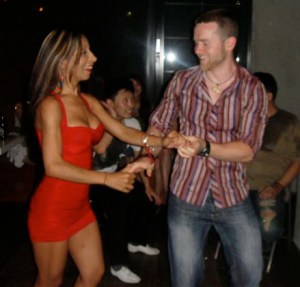
Keep smiling folks (and keep your eyes open!)

What do you think of this list? Is there anything you feel I’ve left out? Let me know in the comments.

Keep dancing folks.

P.S. I spent a fairly solid 5 hours writing the first draft of this post only to lose it all at the click of a mouse. I now know what true rage feels like.

**********************************************************************
If you like this article please share it with your friends via the Facebook or Twitter buttons below and if you use Stumbleupon please give it a “Thumbs Up”. I’d really appreciate it 😉

The Lean Mean Salsa Machine (A concise guide to Eating, Moving and Sleeping)

23 May

No matter what you attempt in life, if your body isn’t in tip-top condition, reaching your goals will be nowhere near as easy as when your at your optimum.

For this reason I try to keep myself as healthy as circumstances allow and I’ve developed a pretty good awareness of what works for me and what doesn’t. I’ve been interested in nutrition and exercise science since I was a chubby, unfit 15 year old who spent his time eating junk, playing video games and watching excessive amounts of TV. Since then I’ve devoured a small library of texts about health and I’ve changed my lifestyle considerably and now, thankfully, feel and look a whole lot better.

Abs: for many, the whole world of fitness and nutrition seems to boil down to a hard, lumpy stomach!

Abs: for many, the whole world of fitness and nutrition seems to boil down to a hard, lumpy stomach! Just in case you’re wondering, these aren’t my abs (I never wear black)!

When I’m running at optimum, it makes everything else I do a breeze and I believe that everyone else should do their utmost to look after their bodies so they can always bring their A-game to the dance floor (and everywhere else in life).

I could (and probably will at some stage) write individual posts for many of the points I’m going to mention here, but for the time-being I’m just going to give a concise guide to some easily modifiable aspects of your lifestyle. There are many people who will disagree with some of these points but that doesn’t bother me in the least. I’m only going to talk about things that I know work or have worked for me and may work for you too.

A note on individuality and self-assessment
Everybody is different (thankfully) and that means what works for one may very well not work for another. Thus, I can’t stress the importance of actively experimenting and trying to find what works best for you.
Please try out the following recommendations (and whatever variations of them which you can come up with) and take note of how your body reacts over time. Keep what works for you and discard whatever doesn’t.
Unfortunately, a lot of us these days have been in a state of suboptimal health for so long that we no longer know what it feels like to be truly healthy. So get some outside help and monitor your progress by measuring whatever values you can (weight, body fat, blood pressure, cholesterol etc.) before and after you make these changes. Give them time (at least 4 weeks) to take effect and hopefully at that stage these healthy habits will have stuck.

The following points are in no particular order. While I consider them all important I will make note of those which I feel have a particularly profound affect on your health. Obviously, the cumulative affect of a number of these together is greater than doing any one on it’s own.

Get enough sleep

This one is incredibly important. Lack of sleep disrupts hormones enormously especially those involved in growth and repair and appetite control. Getting sufficient sleep is essential for your body to reset and repair itself every day so can be ready for what the day throws at you.

I know from experience that when I don’t get enough sleep (for me 7-8 hours) the next day I’ll be rife with food cravings and much more likely to eat something that I shouldn’t, when I shouldn’t. Lack of sleep is one of the major reasons (I believe) that people develop food cravings that sabotage their attempts to eat healthily.

What constitutes enough sleep? This varies for everyone, some need less, some more, but I feel that 7-8 hours is a good starting point. If you have trouble sleeping try to address it as soon as possible (it may be as simple as using earplugs and an eye-mask, which I’ve been doing for years).

Don’t smoke

If you’re still doing this, you’re an idiot. Quit!

Don’t drink

While there may be some minor benefits to a little alcohol, these are far outweighed by the detrimental effects of its consumption in excess (experience tells me that the majority of people who drink, do so in excess).

I’m very lucky in that I never started drinking when I was a teenager and neither have I ever felt the necessity to do so. Do your body and your wallet a favor and either reduce your alcohol consumption significantly or eliminate it altogether.

Learn to read food labels

You can not know what you’re consuming if you don’t what is in your food. Learn to read food labels quickly (just takes a little practice) so you can scan them and eliminate unhealthy choices quickly and efficiently.

A good rule of thumb is; the longer the ingredient list the less likely it is to be a healthy food choice.

Eat enough fruit & vegetables to put a small cow to shame

Your parents were not lying to you when they told you to eat more veggies as a kid. Vegetables are not only full of vitamins, minerals, fiber and antioxidants but they also contains hundreds, even thousands, of so far undocumented substances that can have a profound effect on keeping us healthy and disease free.

This is an example of what I have to lug home from my local supermarket every week! If you're not getting exercise just by carrying your veggies home, you're not eating enough?

This is an example of what I have to lug home from my local supermarket every week! If you’re not getting exercise just by carrying your veggies home, you’re not eating enough?

Eat as many different coloured vegetables as you can every day but focus on dark-green leafy vegetables (like spinach, lettuce, cabbage etc.) and try to get plenty of them raw too. Make it a point to eat one huge, leafy-green salad every day.

Caveat: You should be eating vastly more vegetables than fruit, as veggies are far more nutritionally dense and some fruits contain a lot of sugar (which is fine if your exercising regularly but may not be so good for you if your sedentary). For moderately-active to active people, 3 to 5 pieces of fruit a day is fine (1 piece is equivalent to an apple, a banana, a medium slice of pineapple, a big handful of berries etc.). Dried fruit should be avoided, it’s far too calorie dense.

Cook for yourself

The most surefire way to know exactly what you’re putting into your body is to prepare your own food (or as much of it as possible).

I’ve always loved cooking but if you can’t, now is the time to learn. You don’t need to be a master chef either. Just learn a few healthy recipes that you like and alternate them.

You don’t have time, you say? I’m a time-efficiency freak so I’ve developed a few routines to keep my kitchen time as low as possible. The trick is to cook in bulk. I prepare up to 10 meals worth of food in a gigantic pot, divide it into separate containers, freeze it and then just heat it up when I need it. At any one time, my freezer is full of different chilies, curries and stews ready to be eaten at a moments notice.

Eliminate grains from your diet

I never buy bread, pasta or rice. Grains, especially processed ones are simply sources of calories and provide little nutritional value when compared to other carbohydrate sources such as potatoes, sweet potatoes, plantains and legumes.

Whatever nutrients they do contain are poorly absorbed due to compounds they contain called phytates which bind to minerals in food and prevent their absorption in your gut. So all you get is a hefty dose of carbohydrates that wreaks havoc with your blood sugar and will leave you feeling hungry in a few short hours.

The worst offenders are gluten containing grains such as wheat, rye, barley and oats as the gluten content has a negative effect on digestibility and gut health which, although not having as strong an affect in the general population as in people with coeliac disease, can result in sub-par physical condition. Think of how full you felt the last time you had a heavy meal full of pasta or bread, it probably took quite a while for that uncomfortably full, bloated feeling to subside. That’s more than likely the gluten blocking up your digestive tract.

Do this as a test; entirely eliminate gluten containing grains and their products from your diet for about 3 weeks and then have a meal containing bread or pasta. Do not expect to feel well a few hours later!

Eliminate processed sugar

SUGAR IS THE DEVIL!!! Repeat it until the phrase sticks in your head folks, “Sugar is the devil”.

This one point alone will have a huge affect on your health (and appearance).

The real culprit in sugar is probably fructose which more and more scientific studies are showing has negative affects on health when consumed in excess (which is what most people consume). It has been linked to obesity, liver damage, high blood pressure and even gout. No one wants gout!

Unfortunately, sugar is as addictive as crack (or so I’ve read) and is ubiquitous in modern processed foods. Sugar is pure carbohydrate with absolutely no nutritional value and you should avoid it in all it’s forms so check labels for the following; table sugar, high fructose corn-syrup, honey, raw cane sugar, fructose, sucrose, rice syrup, agave syrup etc. Although some of these are lauded as health foods, they are virtually all identical; almost pure sugar, devoid of fiber and containing only trace amounts (if any) of vitamins and minerals.

I have, in the past, dropped my body-fat significantly by simply eliminating foods containing refined sugar, and nothing else, from my diet.

Remember, “Sugar is the devil!”

Get enough protein

Be it animal or vegetable protein, aim for about one gram per kilogram of lean body-weight. Protein helps to repair your body (especially after strenuous exercise) and keeps you feeling fuller for longer than carbs or fat.

Good sources are lean meats, fish, eggs and (if your a vegetarian/vegan) properly cooked legumes like lentils and beans. A simple rule of thumb is that you get between 20-25 grams of protein per 100 grams of uncooked meat or legumes.

Get adequate Omega-3 oils

Diets high in Omega-3 oils have been shown to improve symptoms of chronic inflammation (such as arthritis and psoriasis), depression, heart disease and a whole host of other ailments common in the modern world. Unfortunately they’re not so easy to consume if you don’t eat a lot of oily fish, like trout and salmon, which are amongst the best sources of these healthy fats.

While Omega-3 oils can be found in plant sources like flax and chia seeds, walnuts and hemp oil, they need to be converted to more active forms (EPA and DHA) by the body, which is not very efficient at doing this. So in my opinion the best way to get them is to eat a large portion of fatty fish such as salmon, trout or mackerel once a week. If you’re a fan of salmon sashimi like I am this will be good new for you. If you’re not a big fish fan (like I was before I lived in Japan and Colombia) you can always buy Omega-3 supplements (of which Krill-oil is now supposed to be the best option).

Exercise

Your body was made to move and if your not moving, your doing yourself a great disservice. Doing any type of exercise is better than doing none but I really recommend lifting weights (here’s the routine I recommend that actually made me love going to the gym) for the huge changes it can bring about in your appearance and in how you feel everyday. Lifting weights is a great form of exercise for both men and women (ladies, don’t believe any “lies” you may have heard about women who lift weights ending up looking like the incredible hulk, it just doesn’t happen like that. Some of the most beautiful bodies I have ever seen have been those of women who lift weights regularly).

This is what you look like without exercise. Remember: diet makes you look good in clothes, exercise makes you look good naked!!!

This is what you look like without exercise.
Remember: diet makes you look good in clothes, exercise makes you look good naked!!! (The spelling mistake isn’t mine)

If you can’t find a gym try body weight exercises like push-ups, chin-ups etc at home. If you can’t do anything else, running is fine but you get much more bang for your buck, so to speak, by dedicating your time to more intense exercise like weightlifting.

That said, the effect of regular, low intensity exercise can’t be ignored. I know from experience that I lose weight quickly if I’m social dancing 3 or 4 times a week and when I’m cycling a lot. A bicycle is usually one of the first things I buy when I move to a new city and I try to travel by bike as much as possible so I’m getting some exercise everyday.

Avoid environmental toxins

This one, unfortunately, is not so easy to accomplish in the modern world. Our food, homes, cooking utensils and hygiene products are loaded with chemicals that disrupt hormones and in many cases are linked to cancer and other diseases.

For this, I try to reduce the amount of chemicals I use in my home as much as possible, I never cook with aluminium nor  non-stick cook-wear and I reduce the amount of contact my food has with plastics of all types.

Fast

These days, people eat a lot, so much so that we can rarely truly say that we have an empty stomach. A great deal of research these days is revealing the beneficial effects of fasting, especially in the area of weight loss.

I’ve practiced fasting, in one form or another, since I was in university and have always felt better because of it. It gives your body, especially your digestive system, a chance to rest and reset for itself and it has a hugely beneficial effect on the hormonal systems involved in repair, weight loss and blood sugar control. I used to do a weekly one day fast but now I practice intermittent fasting (eating a late lunch and dinner and no breakfast) almost everyday.

Not only do I feel healthier doing this but I also save a huge amount of time during the day as instead of eating 4 times a day, as I used to, I only eat two big meals daily which means I spend a lot less time preparing food and have more free time to dedicate to things I want/need to do. Hunger pangs are rare and when they do happen they last for less than 5 minutes and then disappear. I also feel an amazing mental clarity while I’m fasting which I can only attribute to much more stable blood sugar and hormones. Give it a try and feel the difference.

Be flexible

The world is not perfect and neither are humans. No one can be expected to eat perfectly all the time. Life gets in the way; parties, dinners, dates, holidays, stress etc. can all mess up the best of intentions. If you slip up, accept it and get back on track as quickly as possible (I find fasting a great way to reset the system after a lapse into poor eating) and remember it’s what you do most of the time that maters rather than what you do 100% of the time.

If you need help sticking to any type of eating habit you can find a whole load of useful tips in these articles here and here.

Looking at this list now, it doesn’t appear to be as concise as I had first expected. Still, I hope you found something useful here and it helps you make your life and your body a little (hopefully a lot) healthier.

I love talking about health so I’d love to hear your comments and questions on this post.

Stay healthy and keep dancing.

**********************************************************************
If you like this article please share it with your friends via the Facebook or Twitter buttons below and if you use Stumbleupon please give it a “Thumbs Up”. I’d really appreciate it 😉

How to dance salsa: My story (or “How to get blood from a stone”)

20 May
Español: Reevolución XIII Festival Internacion...

You may have already figured this out but that’s not me in the pic!

I am an Irishman and I dance salsa!

You could interpret this in a couple of ways:
You could think “hmmm, those two things don’t sound like they should go together”, as I used to, before I started and maybe even a little during the beginning of my salsa journey.
Or you could think “Sounds like an new member’s introduction at a Salsaholics Anonymos meeting” as I sometimes feel these days.

In any case, the fact is that a little over three years ago I didn’t dance at all (besides an occasional, embarrassed Irishman-shuffle when it couldn’t be avoided) and now I can’t imagine my life without dance. How things change!

What I hope to accomplish with this post is to show you how I, a mild mannered, arrhythmical, introvert “defied the odds” and became a salsa dancing machine, a salsero! I hope that this may encourage those of you starting out in salsa (or any dance for that matter) and make the whole process even more enjoyable and a whole lot faster.

(Note: the following guide speaks mostly about lineal salsa i.e. LA or New York style and from a mans (known as the lead) perspective but can be applied to any style of salsa, indeed most styles of pair dance and of course to women (known as the followers).

So, let’s rock and roll.

Step 1: Find a dance class

You can watch as many videos on YouTube as you want but without someone to correct your mistakes and form, progress will be slow. At the very least find someone who can dance and get them to go through the basics with you until you’re comfortable with the rhythm and can find the beat yourself (which comes with plenty of time and practice listening to salsa).

In my case, this is the reason I was so slow at improving during my first year of salsa. The most regular salsa classes  in my area in Japan, which were run by the famous (at least in the Miyazaki salsa world) Yano mama & papa, were every two weeks on a Sunday and because of my weekend surfing habit I initially only made it there once every two months. Yeah, that’s right, every 60 or so days.

I did however find another class, for ballroom dancing in fact, which included an hour of salsa once a week. I would usually hop in for the salsa and duck out when it came time for things like the foxtrot and the Charleston, much to the disdain of the instructor.

She was an older Japanese lady who all the students respected without question but as the weeks went by I realized that her teaching methods weren’t the best. What I mean is that her explanations of moves and combinations were a little ambiguous and relied a lot on her doing the move for the students to see and expecting them to imitate it without much referral to the timing of moves within the context of the salsa beat (I’ll write more about this in the future).

So I learned a few new moves that I could “kind of” do although often it would be hit and miss. The important thing was that I was practicing and listening to salsa music and improving my basic step, which brings me to…

Step 2: Master the basic steps

I can’t stress the importance of mastering the basic step in salsa. Until you can do this without thinking, that is, until it becomes as natural as walking, doing additional hand movements and patterns is going to be very difficult indeed.

When I hear salsa music these days my body automatically starts swaying to the rhythm (thankfully I live in Colombia where it’s a little more acceptable to “get your dance on” when waiting in line at the supermarket, where they’re always playing salsa. When I lived in Japan there was one store I visited occasionally which was always playing salsa music in the background for some reason. I couldn’t help breaking into a little salsa shuffle whenever I was there, despite the protests of my girlfriend at the time).

You should aim to become as comfortable with salsa as you can, make it automatic. The best way to do this is plenty of repetitive practice. Yano papa, who was manager of a bank, told me he used to practice his salsa basic step under his desk while sitting in his office and that was how he “automated” his footwork. You shouldn’t have to do that yourself but you should find as many opportunities as you can during the week to practice so you no longer need to think about what your feet are doing when you dance.

Step 3: Find a dance partner

You should try and find someone to practice with during the week to help consolidate any new moves or steps that you’ve “learned”. Learning a new move and doing it relatively well at the end of a one hour dance class means absolutely nothing if you forget it by the end of the week (I forgot the vast majority of moves I learned when I first started salsa for this reason). Having a dance partner allows you to practice those moves again and again at your own pace to make sure you remember them.

I’ve been very lucky over the past few years to have been blessed with many amazing dance partners (and friends). From Yano mama and Chihoko, the original members of my salsa group in Japan, to all my beautiful partners in Dublin and here in Cali, I’ve always actively sought out someone to practice and improve with.

I also think having multiple partners is a fantastic idea (minds out of the gutter people, you all know what I’m talking about!). Practicing with different people teaches you how to adapt and react to different dancing styles ( and everyone develops their own style and idiosyncrasies) which is something you need to be able to do in the real world, especially when you dance with someone for the first time.

Try and find a partner that’s a little (or a lot better) than you too. Just like in martial arts where sparring with someone above your level leads to quick improvement, the same can be said for dancing. A good partner (and plenty of practice) will help you to “up” your salsa level in no time and will help you make some amazing friends along the way.

Step 4: Record to remember

Record new salsa moves (with a video camera) and keep them all together so you can review them after your class and practice them again. This will also help you remember moves that you may not have tried on the dance floor in a while and thus have temporarily “forgotten”.

You may of course be one of those savants that can remember something forever after seeing it only once, in which case, good for you! However, if you’re anything like me you have a mind like a spaghetti strainer and have a lot of trouble keeping track of new salsa moves.

I solved this problem by outsourcing the task of memory retention to my computer hard-drive. Whenever I learn a new move I record a video of it (mobile phone cameras mean I don’t have to carry a separate camera around with me) and load it onto my computer (remember to try and get whoever is doing the move to do it relatively slowly and if possible calling out the step-counts as they’re doing it).

I also download salsa videos from sites like YouTube using keepvid and keep all my dance related videos together in a file on my computer. This means that whenever I’m practicing with my partners I can just open this file, watch a video and practice any move that I want to (and I don’t have to worry about forgetting it).

Step 5: Dance

“You learn the moves in class, you learn to dance on the floor!”

This step is by far the most important step of all. You can spend hours practicing the same move over and over again with your partner but that all means nothing if you can’t lead someone new to do it out on the dance floor.

The only way to really perfect a combination is to try it over and over again with new partners, constantly tweaking and refining your form, learning what works and what doesn’t, getting better every time.

Unfortunately, this happens to be the the step that most salsa newbies find the most emotionally traumatic. I’ll admit, at the beginning it’s not easy asking someone new out for a dance. Your mind is full of “what ifs”; what if I forget my basic step? what if I lose my place in the music? what if they get bored with my lack of combinations? what if I try a turn and accidentally hit them in the head with my elbow sending them into a 5 year coma after which they wake up unable to handle all the changes that have happened and seek me out for cold blooded revenge?

My attitude to this is “it happens”. All of those “what ifs” have happened to me at one time or another (except that last one, it was actually more like a 5 minute coma…no revenge…yet).

This is where you’ve got to bite the bullet, confront your fears and take the bull by the horns. It’s time to man-up and dance!

Easier said than done right? I’ll be honest, I had a lot of trouble getting over this fear when I started. I was afraid that I would be repeating the same moves over and over again and the person I was dancing with would get bored and never want to dance with me again. The first time I went to a real salsa party (Salson in Fukuoka) I was very green in salsa terms. I went with my girlfriend and apart from her I only managed to work up the courage to ask one other person out to dance (after 3 hours and near the end of the night). Obviously I felt pretty stupid for being such a chicken.

However, after that, I came up with the ultimate method for getting over this fear, a method that I am happily going to share with you as I know it will get your beginner salsa progress off to a flying start.

Here it is: all you need to do is wait for a song to start, wait a further 2-3 minutes and then invite someone out to dance for the last minute! That’s it. You’ll have about one minute of pure, unadulterated dance time. If you don’t know many moves, you won’t have to worry about boring someone for a full 4 minute (approx.) song and if you feel that you suck, all will be over in about 60 seconds. You’ll have gained valuable dance experience and (hopefully) your ego will still me intact

That’s it! For a beginner, if you follow the steps here you’ll improve quickly and will be a salsaholic in no time. Of course this is only the beginning, the first baby steps on the road to salsa super-stardom (which I’m slowly trying to follow myself) and there are many more aspects to salsa that you’ll become familiar with yourself and which I hope to introduce to you in upcoming posts.

I hope you’ve found this post helpful or at least it has taken down a few of the barriers that might have been preventing you from giving dancing a try.

If you have any tips of your own or any questions that you think I might be able to answer, right them in the comments below and I’ll try and reply as soon as possible.

Keep dancing.

**********************************************************************
If you like this article please share it with your friends via the Facebook or Twitter buttons below and if you use Stumbleupon please give it a “Thumbs Up”. I’d really appreciate it 🙂

Fiona Uyema

Japanese Cookbook Author

ZoukSide Down - A journey with Brazilian Zouk

A personal blog aimed at contributing, and paying homage, to the most sensual, beautiful dance of Brazil.

Vocabat

Spanish as it hits my ears

SoraNews24 -Japan News-

Bringing you yesterday's news from Japan and Asia, today.

Rhapsodies of the Barefooted Gypsy

Just another WordPress.com site

Carina Of Devon

Adventures of a family afloat

RebSolomon

Cycling: A Great Excuse to Eat More

Alicia en el País de las Maravillas

Las Maravillas del Mundo

Surfista Travels Siargao, Philippines

The most fun, personalized & professional SURF LESSONS and SURFING EXPERIENCE in the Siargao Island, Philippines!

Zacki Zacki Miyazaki - Sascha's Blog

宮崎在中、ドイツ出身のサシャのブログ

Raymond D. Murphy's Portfolio

My graphic design portfolio, displaying all of my work working in Tokyo

DMS Photograph

Dreams. Memories. Stories.

Oh what a world!

Smile! You’re at the best WordPress.com site ever

My Brailzian Adventure

A record of my time living and teaching in Brazil

Just Dancing Salsa~ Cape Town

Feel. Play. Express.

TheCubanFoodBlog

Cuba reflected through food