Archive | Dance RSS feed for this section

Humble Pie (and why you need it!)

17 Oct

When was your last slice?

To those of you who have been dancing for a while and have reached a decent level, when was the last time that you had a good portion of humble pie?

I recently joined a dance company that has nothing to do with salsa. I joined to learn new styles of dance, new movements, and to meet some new people. The group has a great reputation and a very strict director that maintains it as such.

My first 2 practice sessions  with them weren’t overly challenging as they were going easy on the new guy! However, I arrived late for my third practice session with them and after I warmed up I moved to the back of the room to watch the rehearsal of a particularly fast paced choreography. The room itself was round with windows on all sides so everything could be seen by all the people outside (the practice hall is in a public park). At the back I clumsily tried to copy some of the movements I saw performed in front of me. I was pretty embarrassed as I knew the people outside could see me doing it and and doing it badly at that.

They then did the whole choreography to music. It was fast. So fast that during the 3 times they did it, my jaw hung open somewhere around my ankles.

Then came the moment that I hoped wouldn’t come. The director called my name (actually he called me “Michael” first until someone corrected him) and asked me what part I had been watching. I froze! I had been watching the whole choreography in awe and hadn’t even thought of memorizing the moves. I didn’t answer and just stood there with a look something similar to what I looked like when I realized I was getting mugged for the first time “Is this seriously happening?”, “Oh God no!”.

A friend of mine ran over to me and asked again what part I had watched and I stuttered that I hadn’t watched any one part in particular and that I couldn’t do the dance. She told me with the sternness of a parent to a child who doesn’t want to go to school, that I had to do it. My fate was sealed. I was getting schooled whether I liked it or not!

I walked to the position the director picked for me, looked around and took the pose of the guys around me and then the music sounded and in less time than it takes to say “Dear God No!”, the choreography started.

Quick turn, new pose, start spinning, new position, pose in front of female partner, rotate around her, spin to new partner, take formation with the other men, move around the room, pair up with yet again new partner, spin her a few times, dance around her… and so on. I didn’t have a clue what I was doing. I imagine it looked something like the first few minutes of the D-Day landings in Normandy as viewed by the allied troops… “We’re FU$KED!”

Another member of the group actually chased me around the room shouting directions at me and telling me where to move. All I could think about was how badly I was doing it and all the people outside looking at me, laughing and thinking of me as the uncoordinated foreigner who thought he could join this dance group.

The moment the music stopped was the sweetest sound (or I should say silence) I have ever heard. I was humiliated, I felt like crying, I wanted the earth to open up and swallow me down and I had a whole 15 seconds to feel that way before the choreography started again. Of the 5 times we rehearsed, none were quite as humiliating as the first time but they came shockingly close.

I’ll be honest I really felt like I wanted to give up the idea of dancing with the group, right there and then.

Sucking like a vacuum cleaner
When was the last time you felt that way yourself? Might it have been after your first uncoordinated salsa class? During your first awkward “attempt” at a social dance? Right after you were refused a dance for the first time? That time you dropped your partner on her head?

I’m assuming, however, that you didn’t quit, that you grit your teeth and kept going and because of that you dance the way you do today.

What I’m trying to get at is that before we get good at something, we have to SUCK at it big-time first. We humiliate ourselves, we look like idiots and we feel like quitting but every time we practice we suck a little bit less.

I think that’s the whole point, to suck a little less every time. It’s called practice because the whole idea of it is for you to get better, eventually. If we were automatically good at everything we tried we would never feel that sense of achievement that we get after putting in some hard work and suffering through the embarrassment of sucking for a while.

The demeaning ordeal with the dance group really helped me remember what it felt like when I first started dancing and made me appreciate how far I’ve come since then. I used to actually wait for songs to be almost finished before I asked women to dance to avoid the embarrassment of only knowing a couple of moves. Now I can’t get enough dances in during a night out!

As long as I remember how far I’ve come with salsa (or Japanese or Karate or anything else I’ve achieved for that matter) taking on new challenges doesn’t phase me much. I know from experience that to get to the point where I’m good at something I need to go through a “perceived” humiliating period of seriously sucking at it.

Go out and get a slice
Being humbled every now and then would do us all some good every now and then. Try to remember when you had your last slice of humble pie. I’d you can’t remember it’s probably due time for a big piece so go out and look for a new challenge. Find something you’ve always wanted to do and just do it. And if you suck at the start (as most people will) just eat that portion of humble pie and shout out military style “THANK YOU SIR! CAN I HAVE ANOTHER SIR!”. The slices will get smaller and smaller every time!

As for me, I plan on going back to practice with the dance group this week for my next portion of humble pie. I’m going to suck, but not as bad as the last time, and that’s what it’s all about.

Keep dancing folks.

**********************************************************************
If you like this article please share it with your friends via the Facebook or Twitter buttons below and if you use Stumbleupon please give it a “Thumbs Up”. I’d really appreciate it 😉

The Greatest Salsa Playlist EVER!

10 Oct

YES I DO!

If you’re impatient you can go straight to the playlists here.

First off, my apologies for my lack of posts these last three weeks. It’s been kind of crazy at work during the day, which I’m not so happy about and I’ve been dancing a lot more in the evenings, which I’m very happy about.

Moving on, I’ve been spending a lot of time playing around with my latin music playlists and I think I’ve come up with something spectacular.

There are songs that, as soon as you hear them, make you want to get up and dance. It might be the chorus, the opening or the variation in the rhythms. It might be the lyrics, the percussion, the piano or the brass. What they all have in common is a certain magic that makes my body want to convert that music into pure dance energy. All of the songs on my new playlists have to meet this requirement.

Asking Around
Recently I’ve been asking a lot of friends and readers of this blog for their favourite songs for two reasons:

  1. to remind me of songs that I may have forgotten to include and …
  2. to introduce me to new songs which I hadn’t heard before.

What I’ve come up with is what I feel is an amazing mix of songs for dancing the 4 main styles of salsa: Linear On1, Linear On2, Cuban and Cali style.

Evolution
This list is by no means finished, it is going to constantly grow and evolve. I’m going to add more songs as I encounter more that I like and more importantly, my tastes are going to evolve themselves.

Since I moved to Cali, I’ve been exposed to to much more salsa music (and every other latin genre) than ever before. I’ve come to enjoy really fast salsas that I can really get my feet moving to. On the other end of the scale, I also now love slow salsas which are danced very close and sensually here.

And on top of that, I still love dancing linear (cross-body) salsa to the more medium paced songs that are popular in such salsa communities outside of Latin America.

Learning Spanish and finally understanding the lyrics of songs has affected my taste in music too and has given me great motivation for my Spanish practice.

The Playlists
You can see the lists here on the blog or you can check out all my songs on The Dancing Irishman’s YouTube page which is more up to date and you can also view the individual Salsa, Bachata and Latin Mix (very eclectic mix of very different latin music genres that equally, make me want to get up and dance in one form or another) lists.

It’s my list
You may love the songs I’ve chosen or you may hate them. This is my list and for me it is the Greatest Playlist Ever! If I mixed the salsa, bachata and latin mix lists together and used them in a party I would have the greatest night of dancing ever!

Thankfully, you’re different. You and your style are unique. I do want you to like my lists but more than that I hope this will give you the incentive to go and create your own, to discover more about your own tastes and to learn more about the incredible wealth of music out there. I guarantee it will make you much more complete, not just as a salsero or bachatero but as an all round rumbero.

Keep dancing folks.

**********************************************************************
If you like this article please share it with your friends via the Facebook or Twitter buttons below and if you use Stumbleupon please give it a “Thumbs Up”. I’d really appreciate it 😉

The Dancing Irishman on TV

13 Sep

Hi all.

I don’t have much time to write a post this week but I wanted to share this little video which I managed to sneak into a few weeks back.

The show, “Nuestra Semana Nuestra Tele” is broadcast on Colombia’s national TV station “RCN”. The presenters were in Cali, filming some of the famous sites of the city and at the end of the day they visited one of Cali’s most famous salsa bars, Tin Tin Deo to get a glimpse of the city’s vibrant salsa scene.

A couple of buddies of mine were helping the crew with some of the logistics in the club and they asked me to be one of the background dancers (sounds like I should be in a Justin Timberlake video). So I said why not! The video shows some other great dancers here in Cali, namely Canelo and Dominika dancing the local salsa caleña (which you can learn a little more about here).


You can see me dancing in the back-right, with one of my favourite students, Mafe, a little after the presenters enter the club. It’s great to be able to see a video of myself dancing so I can see what I need to improve. From this video I can see that one thing I definitely need to improve is my awful haircut! I’ll get on it straight away!

Apparently, the presenters are big fans of mine (after reading this post I think) and spent the shoot talking about me while I was dancing behind them. The 100% official subtitles that I was in no way involved in translating and editing, reveal just that.

So yeah, I’m a Colombian superstar now. I will be signing autographs tonight in Tin Tin Deo and anytime you see me on the street.

Today Colombian national television, tomorrow the world!

Keep dancing folks.

**********************************************************************
If you like this article please share it with your friends via the Facebook or Twitter buttons below and if you use Stumbleupon please give it a “Thumbs Up”. I’d really appreciate it 😉

Cali: One year on!

5 Sep

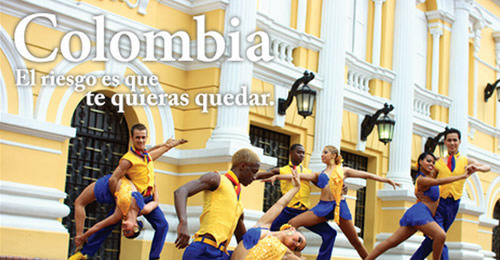
Cali: the only risk is wanting to stay!

This September is a special month for me. On the 8th of this month I will celebrate one whole year in Colombia.

It’s been an amazing year, which doesn’t mean it’s been completely free of “downs” but it certainly has had an overwhelming majority of “ups”.

It’s very difficult for me to to summarize my experience here over the past 12 months but I feel the occasion merits a decent look at some of the many experiences that have been part of my life here in Cali.

Recent time restrictions (because of a new job) and my general lack of writing talent dictate that this will be a rather haphazard amalgamation of thoughts but hopefully I’ll be able to convey a little bit of my feelings to you, my avid (cough cough) readers.

I’ve already spoken about some of the things I love about Cali so you can check those out together with some of the things I have to say in this post.

La Capital Mundial de la Salsa
Seeing as Cali is the “World Capital of Salsa” I suppose the place where you all expect me to start is with salsa. So that’s exactly why I’m not going to… who am I kidding, that’s exactly where I’m gonna start.

Music is the life blood of this city and salsa is the vast quantity of red blood cells with bachata, merengue, regaeton, vallenato, cumbia, bolero and pacifico music filling less prominent though equally important roles like plasma, platelets and white blood cells (can you tell I’ve been teaching high school biology recently? Right, enough of that!).

Everywhere you go you can hear some form of Latin music, mostly salsa, playing. Taxis, shopping centers, bars, restaurants, restrooms, everywhere. Whereas in Europe or the states where you have to look for specific places that play salsa music, the reverse is true here. Here, salsa is the standard and you have to go to specific bars or clubs to hear pop, rock or anything else for that matter.

This ubiquity of salsa (and other latin music styles) is, in my opinion, the real reason why Cali is called the Capital of Salsa! Salsa is the No. 1 social activity here. If you go out with friends to a bar or club you are more than likely going spend the night (apart from drinking and talking) listening and dancing to salsa.

This, at first glance, is great news for a salsero like yours truly. However, certain discrepancies become apparent very quickly.

Going Out
As dancing is the social norm here people generally go out in groups so that they can dance amongst themselves. This means going out dancing solo somewhat of a challenge. In the non-Latin world, when people go out dancing they generally ask every Tom, Dick and Harry (or Harriet) for a dance. Here you usually stick to your group (normally seated at a their own table).

I learned this, much to my disappointment, on my very first night dancing salsa in Cali. It was a Tuesday night and having arrived in Cali early that morning I was raring to go and dance salsa in my Mecca. I arranged a small posse of foreigners (unfortunately none were dancers) in my hostel and asked the receptionist to recommend somewhere good on for a Tuesday night. Cali, just like anywhere else has clubs that are good on specific nights, so he told us to go to a place called “Siboney”

In I went, as excited as a 7 year old about to go to the zoo for the first time in his life. The first thing I noticed was the layout, the majority of the club was made up of booths with tables facing the relatively small dance floor. The club wasn’t empty but it was far from full and there was loads of room to dance, which I love.

When I looked at the clientele, I noticed that most tables consisted of only one or two men surrounded a bevy of beauties (what a great word eh, “bevy”!). The girls were impeccably dressed with near perfect hair and makeup and many were … er… em… enhanced in both the front and the back (to stop them tipping over I’d imagine).

I danced with the one girl from the hostel who I’d managed to convince to come out with us and despite her claims of being “able to dance salsa” I quickly realized that I probably wouldn’t be able to spend the whole night with her flailing around in my arms like a freshly caught fish.

I also realized that the layout of the club didn’t really make asking strangers for a dance all that easy. If I wanted to dance with a woman I would have to walk up to her booth and ask her in front of all the other people there and pray that the guys at the table didn’t take offense to me moving into their territory. That sensation was really overbearing and something kept telling me to bide my time.

I did. I decided to wait for the guy at one of the tables to take one of his girls out for a dance and leave the other girls unaccompanied. Then I pounced. I walked up to the table and asked one of the girls in my best Spanish (which was fairly awful) for a dance. Her reaction most certainly was not what I expected. She looked very surprised and immediately started looking to the two other girls at the table (yeah that’s right, this one guy had four girls), as if for advise. They quickly discussed what to do amongst themselves and the other two then encouraged her to dance with me.

We stepped out on the floor and danced. I could tell she was nervous but the dance was fine, nothing special, but it made me feel better to actually be dancing with someone who could follow (my few Cuban steps at least).

I had a one or two more dances with other girls from other tables deciding to ask the guys if I could dance with their girls, which felt very strange. The next day I confirmed my suspicions that the guys were probably drug dealers and the majority of the girls were prostitutes. Just as well I didn’t make a move on anyone.

So my first night dancing in Cali was a little bit of a let down. I’ve learned to deal with the seeming inaccessibility of other groups in a club by always trying to go out with a group of dancing friends and going to clubs where things are a little more relaxed (and where there’s less drug dealers and prostitutes).

The Dancing
The vast majority of people in Cali “dance” salsa. That does not mean they are good at it.

The majority of Caleños know at least the the Cali-basic back step. Most guys can through in a turn and most girls can follow one or two. For the majority, that’s it. People can spend entire songs repeating the basic step and one or two turns over and over again.

In all honesty and not intending any disrespect to Cali and my friends here… it’s really boring.

In non-latin countries we learn salsa in order to get good at it. We love adding new moves and combinations to our individual repertoires. I honestly expected that salsa in the World Capital of Salsa would be mind blowing and that most people would be able to put us non-latino dancers to shame. Not the case.

As I said, salsa is part of the social fabric here and as such, people don’t take it as “seriously” (for want of a much more appropriate word) here. What that means is that people generally don’t see any need to practice nor do they dance as much on a night out as dancers do back home. In Ireland or Japan, if I go out dancing I will spend the vast majority of my time doing just that. Here however people spend most of there time sitting down or standing at a bar drinking and talking and only go out to dance every now and then.

All this said, there are “some” spectacular dancers in Cali. Apparently there are more than 100 salsa academies here and according to some sources more than 7000 professional dancers here. And these people can dance!

The people who do know how to dance Salsa Celeño to it’s full potential really are amazing dancers. They speed at which they move their feet and the way in which they interpret the music is simply jaw-dropping. I’m very lucky too to have a great group of friends who are great dancers and really inspire me to learn more of the local style although I’m still pretty poor at dancing Caleño myself.

Check out this video of Cali’s most famous dance troupe, Swing Latino.

Dancing Close
Although I said that I find dancing the same moves over and over again a little boring I have to admit that this does not apply to the slow salsa that is danced here in Cali.

Slow salsa is, obviously enough, salsa danced to music with a slower tempo, a good example being Vente Negra by Havana con Kola. It is danced very close with the hips touching and arms around your partner, just like a close bachata. The movement too is very fluid and sensual too and people often dance without even moving their feet, just moving their hips together in time with the music.

With the right partner it’s a great way to dance!

The People
What can I say. Caleños are great. In the short amount of time I’ve been here I have made some incredible friends, people who I genuinely feel close to, some of whom have left Cali for other parts and I genuinely feel very sorry to see them go. They’re fun loving, happy and they always think of you when they go out, be it for a bite to eat or to dance.

I genuinely think that it’s because of Caleños that so many people decide to stay in Cali without being able to put their fingers on “why”. Cali doesn’t offer much in the line of tourist attractions, beautiful architecture or mouthwatering gastronomy but the people here are warm and friendly and caring and a hell of a lot of fun and that’s very important for me.

My Goals
I came to Cali eager to do many things but the most important of those were to improve my salsa and to learn Spanish.

Unfortunately, the best laid plans of mice and men often go awry and neither have improved the way I had hoped.

I spent a great deal of my time when I first arrived trying to settle into life here: finding work, finding an apartment, finding stuff to put in the apartment, meeting people and enjoying myself instead of focusing on what I came here to do.

I worked most of my time here as an English teacher working in the evenings when most salsa classes are held so that was my “excuse” for not taking more salsa classes and my job required that I spent a lot of my time speaking English and thus by default, not learning Spanish. To be honest I made far too many excuses to cover up my poor time management.

That said, I do speak Spanish now, not as well as I want but definitely a lot better than I should for the amount of time I’ve actually put into learning it. To give you an idea of where my level is, I have no problem with one on one conversations (if I don’t understand a word I can infer from context) and I can follow most group conversations amongst native speakers. I do have trouble with some movies and TV shows but have absolutely no problem with flirting in Spanish which is great because Caleños just like the Irish are serial-flirts.

My LA salsa has gone downhill considerably from lack of a consistent partner who can dance LA but I have picked up quite a few new moves from salsa caleña. Most importantly I feel that I’ve developed a much better appreciation for changes in the music allowing me to react much more naturally to it. My body movement too, I feel, has improved and I feel much freer to interpret music with the movement of my entire body. Which is nice.

All in all, despite the loss of some technical salsa (which I’m currently working on countering) I feel that my time here has rounded me out as a dancer, knocked off some of the rough edges so to speak (still plenty more to knock off though!)

Colombianization
I feel I’m quite good at adapting to new environments. In my four years in Japan I integrated well and took on many Japanese mannerisms that even now, more than two years since I left Japan, manifest whenever I’m around Japanese people.

I feel I’ve done a pretty good job adapting to life here in Cali too (although it may not have been the smoothest transition). When I decided to come here two and a half years ago I wanted to experience a culture completely different from Japan and that’s exactly what I got!

When people tell me a time to meet them I’m fairly certain that if I arrive on time I’ll be waiting a while. I’ve had to get used to that. Actually, on the night of my first date in Cali I was waiting almost 2 hours before she showed up. The next day I met the same girl for lunch and she had me waiting 2 hours again. Before you say “Well you’re a bit of an eejit for waiting that long” I have to say that she was worth every second of the wait! Nuff said!

Public transport is slow and usually overcrowded which in reality is the reason for most people being late so I understand but it doesn’t mean I don’t feel like punching someone’s internal organs when I get squeezed into a bus like a sardine every morning.

I’ve learned to let things happen knowing that I have much less control here. I think that’s a skill that everyone should try to acquire in their life.

I’ve become more cautious when I’m in the streets, something that I’ve learned to do from a couple of bad experiences that you can read about here and here. Colombia is definitely the most dangerous place I have ever lived but with a little experience, common sense and the advice of many locals I’ve learned how to avoid the danger as much as possible but I am always aware of it. Much like I’d imagine many Caleños are.

But I love it here
I know I’ve mentioned many negatives in this post but I think that only stresses how good the positives are. I’m having a great time here in Cali. I’m enjoying learning the language and the dance and the lifestyle. I love meeting the people here, spending my time with them and becoming more and more caleño myself.

I’ll be honest when I say that Cali is not what I expected before coming here but the unexpected can lead to some really great experiences and some amazing friends.

Gracias Cali!

P.S. this turned out a hell of a lot longer than expected, my apologies!

**********************************************************************
If you like this article please share it with your friends via the Facebook or Twitter buttons below and if you use Stumbleupon please give it a “Thumbs Up”. I’d really appreciate it 😉

The Cloudy Dancer

22 Aug

“The wind blows gently and the cloud follows,
one giving its force
one giving its form
together, united, as one,
The wind blows gently and the cloud follows.”

A dance with a “Cloudy Dancer” is nothing short of magical!

For me, it’s the ultimate dance. A dance where you barely feel your partner while at the same time feeling everything! The guide is light as is the contact between each dancer but a light touch is all that’s needed. Just enough for the idea, the intention to be understood between each other.

It doesn’t have to be the most complicated dance ever, nor the most spectacular. What’s important is that everything just works; no tugs, no false leads, no off timing… pure dance magic!

I first started using the term “cloudy dancer” to describe some wonderful salseras I had the pleasure of dancing with when I moved to Dublin. Dancing with a cloudy dancer is just how it sounds. Their touch you barely feel yet they respond to your lightest lead with a precision that astounds me!

Clearly, the name I went with isn’t that original, nor does it sound particularly catchy but it describes exactly what I feel when I dance with a “Cloudy Dancer”. Like a wisp of vapor; I’m aware of her presence only by the lightest of sensations on my fingertips.

What’s even more special about them is that they’re not all that common but, by God, once you dance with one you’ll thank the heavens for their existence.

As soon as the music plays and you both start dancing you’ll feel it. The connection without resistance, the flow without force, the magic. You won’t be able to hide the smile on your face and you won’t want to. Your confidence will skyrocket, inexplicably knowing that whatever you do will just work… and work beautifully at that. Adrenaline will flow and hearts will race and when the music comes to an end you’ll want to embrace her… or kiss her… but you won’t.

You’ll thank her and walk away, your feet as light as her touch when you danced, feeling a euphoria which only comes from the near perfect orchestration of two individuals moving as one. At this stage you won’t mind going home. It’s the type of dance that fulfills your whole night, the type of dance you can retire on.

At least that’s how it feels for me!

I also know (although I don’t know why) that I’ve barely scratched the surface of what it’s like to dance with a cloudy dancer. My salsa still leaves a huge amount of room for improvement and as I get better I know that I’m going to feel the dance like I’ve never felt it before… and I can’t wait.

This post hasn’t really offered anything in the line of advice but if anything I hope it motivates you go out and dance with more people in the hopes that you’ll get to experience a dance like that for yourself, that will fill you with a reinvigorated love for salsa or bachata or whatever. It really is something very special.

Thank you, Cloudy Dancer!

**********************************************************************
If you like this article please share it with your friends via the Facebook or Twitter buttons below and if you use Stumbleupon please give it a “Thumbs Up”. I’d really appreciate it 😉

Up your numbers! The August Challenge

2 Aug

Start dancing and watch those numbers soar!

It is a new month and I’ve decided to make it a month of challenges.

A few posts back I wrote about the rule of 10,000 hours and how the best way to get good at something is through huge amounts of conscious practice.

Around the time of writing that piece I also happened to come across this article written by a kindred spirit who goes by the name of Chilly (he’s got lot’s of other great articles too so check them out).  Chilly had the clever idea of challenging himself to a variation of the 10,000 hour rule whereby, instead of putting in 10,00o hours of dancing, he set out to have 1000 social dances in June and July.

The idea is to get as much practice as possible and setting yourself a goal (such as 1000 dances) is a fantastic way to motivate yourself. In fact, achieving the goal is irrelevant. What matters is getting out there and getting as much practice as you can possibly get.

If you think 1000 dances is unachievable why not set yourself a slightly lower goal. If your just a beginner why not say that you’re going to try and get 100 dances in your first month. If you easily achieve it, just aim higher for your next month.

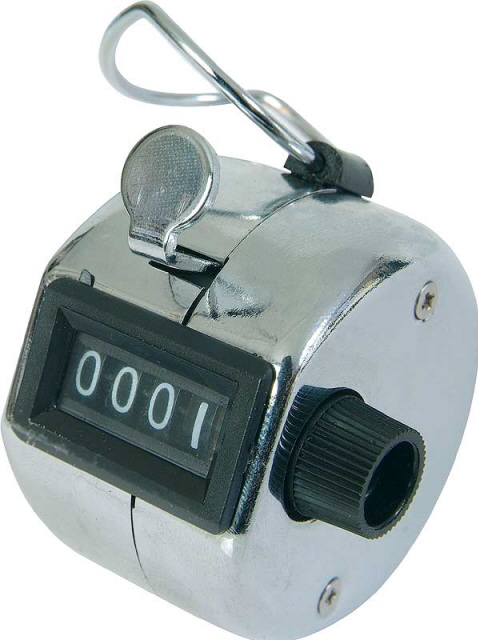
I’m a huge fan of recording stats in order to monitor progress “what gets measured gets managed”. Chilly decided to use a tally-counter (like in the picture above) to record all of his dances. That way he knew exactly how many dances he got in the time frame he gave himself. If you do the same yourself you can try to beat your own record and don’t have to worry about comparing with anyone else.

I doesn’t have to be used just for dancing either. Try setting yourself a goal for doing sit-ups or push-ups to get fit; starting conversations with complete strangers to get over shyness; writing pages of that book you’ve been meaning to finish. Whatever you want to do, set yourself a challenge and use that motivation to achieve it.

Why not mention your own challenge in the comments below?

I’m starting my dance challenge tonight. What about you?

My salsa is better than yours!

12 Jul

Why limit yourself to dancing just one style of salsa (or to just one partner for that matter)?

The world is full of salsas: On 1, On 2, Cuban, Caleña, Lineal, Verde, Picante… with so many types it’s no wonder that things can be confusing for a budding salsero.

Almost everyone you talk to will tell you:

  • their style of salsa is the best
  • that it’s the most widely danced
  • that it’s the easiest to learn
  • that it looks the most spectacular
  • that it will help you meet the most beautiful women!

All I can say about this is: BULLS#!T, BULLS#!T, BULLS#!T.

Salsa is a dance that has evolved over the years from it’s 0riginal form in Cuba to the many diverse and beautiful styles that we see today. Just like with languages, every distinct type has something unique and beautiful to offer so it’s impossible to say that there is a “best” type. English is not the “best” language on Earth just because it is the most widely spoken nor is French because it is considered the most romantic (by some). The same applies to the different styles of salsa.

I’m very lucky in that living in many different places over the years has given me exposure to and appreciation for many different types of salsa. I started dancing LA style in Japan and got to practice Cuban style when I moved to a new city there, I was introduced to New York style in Hong Kong and later in Dublin and now I dance Cali style every week right in the World Capital of Salsa. Over the years I’ve learned to piece the different styles together helping to give my salsa it’s own particular flavor and I think that everyone should at least experiment with doing the same.

What’s your salsa?
The 4 main styles of salsa are:

  • Los Angeles (LA)
  • New York
  • Cuban
  • Caleña (Cali style)

Of these, the first 3 are probably the most widely danced internationally. I’ve included Cali style because I consider it (or at least variations of it) to be very popular in South America and because of some of its characteristics which make it unique.

LA and New York style are lineal salsas i.e. salsa that is danced forward and back in a line (or slot) whereas Cuban and Cali style are non-lineal salsas i.e. they are danced in a more circular or side-to-side fashion.

And before anyone calls me on it and tells me there are many more styles of salsa; stop right there. I’m well aware that there are other styles but they are not as widely practiced as the styles above and I don’t really have the time to research and write about them all! Maybe in another article.

LA Style
LA style salsa is also commonly known as On 1 because the “break” (i.e. the change in direction from forward to back) occurs on the 1 count (and on the 5 count when returning) with the lead starting by stepping forward.

It is probably the most popular style of salsa internationally (i.e. outside of South America). Any large, developed city in Europe, Asia, North America or Australia probably has an LA salsa community.

It features complicated hand combinations and “swing” style movements as can be seen in this video:

New York Style
Also called On 2 or Mambo, this style breaks on the 2 count (and 6 when returning) with the lead starting by stepping back which allows for a “smoother” looking dance.

It is the most popular style of salsa danced in New York (obviously) but there tends to be On 2 “sub-communities” anywhere LA style is danced.

Dancing On 2 is often seen as an evolution from dancing LA style On 1 with many advanced dancers sticking with On 2 after making the switch. Frankie Martinez gives a great quote about the transition from On1 to On 2 in this interview.

Music for On 2 dancing is influenced heavily by jazz (lost of brass and piano) resulting in a very elegant dance style that often features “shines” i.e. a time during the dance when the partners separate and dance by themselves, interpreting the music in their own ways.

Cuban Style
Salsa Cubana, also known as “Casino” is probably the second most widely danced form of salsa internationally. It developed from Cuban “Son” and the African influence in salsa can easily be seen with the freedom of movement and focus on shoulder motion.

Cuban salsa, unlike lineal salsa, is danced in a much more circular manner with the partners changing positions constantly during a dance. It also features many complicated “knot-like” hand combinations with the lead often ducking in and out of different closed hand positions. Salsa Cubana does not have a cross body lead but has a similar movement known as “Dile que no”.

Rueda de Casino: is the name for a Cuban salsa group-dance that features 2 or more pairs of dancers performing synchronized combinations and exchanging partners while dancing in a circle (rueda). The moves are directed by a “caller” who calls out the next combination to be performed. Rueda de casino circles can be huge!

Cali Style
Salsa Caleña, is the style of salsa most commonly danced in Colombia and from what I’ve seen myself, in many parts of South America. It takes a great deal of influence from another popular Colombia dance called Cumbia.

It is a non-lineal salsa with a lot of diagonal “back-step” movements and huge focus on exceptionally fast footwork and hip twisting. The basic objective is for partners to move their feet together in a synchronized fashion which can be as simple as just stepping on the same counts or it can involve very complicated leg flicks and kicks with not a huge amount of focus on arm work. There is no movement similar to the cross body lead or “Dile que no” in salsa Caleña.

Salsa Caleña also features an interesting “false” double step where the dancer taps his foot down and quickly raises his heal up and then down again which makes Cali style footwork look incredibly fast. Apparently professional dancers in Cali practice this step for hours on end supporting themselves with their hands against a wall to make themselves faster.

I’m confused! Which style should I pick?
That depends on a lot of things:

  • What styles of classes do you have available to you in your area?
  • What is the most popular style danced in your town?
  • Do you plan on learning to dance in preparation for visiting a particular country?

Do some research, and find out about your nearest salsa scene. There may not be much point in learning how to dance New York style salsa if you’re going on a two week vacation to some place in South America where no one can dance it.

But…why bother picking?
I can’t think of any logical reason why someone would want to dance only one type of salsa (apart from wanting to dedicate their time to get really good at a particular style).

Learning different styles of salsa enriches the style that you already dance and allows you to dance with even more people (just like learning a new language).

For example, in both Japan and Ireland I’ve danced with latin women (who danced salsa but never took a single dance class in their lives) and I noted straight away that they couldn’t follow a linear style of salsa. However I had taken a few Cuban salsa classes before and knew how to guide them through a more circular style of salsa that they were used to.

I spoke a little of their salsa language and because of that I could communicate better with them than if I had just continued “speaking” in my own. Have you ever been abroad and had a local shout at you in their language, hoping you’d understand if they continued long enough? Well it didn’t work then and it won’t work in salsa (at least not in the time it takes to complete a song).

Be proud of your style
People who know me know I dance a particular way and that I throw in a few extra kicks and foot flicks for flourish, which I picked up from the few classes of Cuban salsa I’ve taken and I also frequently add Cuban style turns to my mostly lineal dances. Since I moved to Cali I’ve added a lot of Cali-style moves to my toolbox too.

I’m proud of the style I’ve developed over the years through my different backgrounds and experiences and I really think everyone should aspire to develop their own unique style of salsa.

So forget about deciding on what’s the best style of salsa out there and just focus on learning as much as you can from as many different sources as you can find. You’ll be a much better dancer for it.

Keep dancing folks!

**********************************************************************
If you like this article please share it with your friends via the Facebook or Twitter buttons below and if you use Stumbleupon please give it a “Thumbs Up”. I’d really appreciate it 😉

How to be Great at Anything (Obliterating racial stereotypes in 10,000 hours)

6 Jun
English: Frankie Martinez performing "The...

Could I ever dance as well as my hero, Frankie Martinez?      With enough practice, you bet I could.

Dublin
Foreign girl: Where are you from?
Me: Ireland
Foreign girl: No your not, hahaha!

Cali
Local girl: De donde es usted? (Where are you from?)
Me: Irlanda (Ireland)
Local girl: jajaja, mentira (hahaha, lies)

I was dancing with both of these girls when they asked me these questions.

Apparently it’s common knowledge that I, as an Irishman shouldn’t be able to dance well. Apparently, I do not have the genetic material that would provide me with the bone structure and joints needed to move smoothly nor the ear for beat that would let me react intuitively to the music. Apparently, these genes can only be found in Latin and African populations which is why they’re the best dancers.

BULL S#!T

This is a lie that has been perpetuated throughout the world and especially so in the dance community for far too long. Preconceived notions like this are what stop people from even attempting new things. If we listen to them we WRONGLY believe that we are destined to fail at a certain activity because we lack a certain characteristic, be it physical or mental, that is necessary to excel in that endeavor. How many times have you heard someone say something like “Oh I could never learn Japanese, I’m no good with languages” or “I’d never be able to play the guitar. Music just isn’t my thing” or the classic “You can’t teach an old dog, new tricks”? BULL S#!T BULL S#!T BULL S#!T

I’m going to put all those lies to rest today by saying this: “I am an Irishman and I dance salsa”.

Don’t worry. I’m not going to base my entire case on that one comment. It’s time to elaborate.

When I first started dancing in Japan, I was constantly told by the people who got me into the scene in the first place, how latinos were the best dancers, that they could move better than Japanese people and really express themselves with the music. I was told this by people who danced salsa well, by the people who were teaching me how to dance. I later remember going to salsa clubs in big cities in Japan on a few occasions and seeing Japanese people dancing spectacularly with passion and rhythm and everything else that dance should be. Every bit as good as their latino counterparts.

When I returned to Ireland and started on the scene there I lost count of the times that people would tell me things like “I’ll never be as good as “so and so” because he’s black and they just move better”. One of my own dance partners (you know who you are ;-)) even told me that I would never be as good as a latino dancer because I was Irish. She was convinced that her own latin heritage meant she could feel the music differently and dance better. Yet despite this I still managed to get many comments like those at the beginning of this post in Ireland, Japan, the US and even here in Colombia, a latin country. Despite being Irish, I still dance well. (I know it sounds like I’m blowing my own horn here but I’m trying to make a point. I know for a fact that I have a very long way to go before I’m a great dancer, but that doesn’t mean I can’t dance WELL now).

Some of the best compliments I ever got were when I went with my friend “la Mulata” (introducing a new character folks) to a party held by some friends of her uncle. La Mulata is, obviously, black as is her uncle and the vast majority of the people who were at the party. I, on the other hand, am super-white so I tend to stick out “a little” at such parties. I’m used to it at this stage. The lifeblood of Colombian parties is of course salsa, so the time came and I took la Mulata out on the floor and started doing what I do. It was a great dance as I had danced with la Mulata many times before but I also felt that every eye in the room was on me. It’s easy enough to justify; the white guy in a house of black people trying to dance salsa in the world capital of salsa. Everyone was dying to see if I’d be able to keep up with the beautiful black girl I was dancing with. The song ended and we walked back to our seats smiling. What came next was a stream of compliments from my hosts about how well I danced. They all expressed their surprise and told me things like “you move so well” and “you’re really able to get the rhythm”. I blushed hard (as everyone who knows me knows I do often) and went on to dance plenty more songs during the night.

A little later the only other white people at the party (a married couple and their daughter) told me how impressed they were by my dancing and I continued talking with the father for a while. He told me that he had never been able to dance, that instead he preferred to to just listen to the music and chat at parties. He thought it was really amazing that a non-Latino like me could dance salsa so well. As we were talking we watched his teenage daughter dance with her friends. She danced just like them. She moved her body, especially her hips, beautifully and in perfect rhythm with the music, just like all the other girls dancing around her. I asked her father about it and he told me that he didn’t really understand why his own daughter danced so well. Neither he nor his wife were big dancers but she simply had always been able to dance well, since she was a child.

Let’s think about this a little: a white girl whose parents can’t dance, grows up in a mostly black community, with black friends, and ends up being able to dance just like them!

Is it possible that the ability to dance doesn’t actually come from some innate genetic ability that varies among races and is in fact something that can be simply learned? YOU BET YOUR SWEET ASS IT IS!

Here’s the thing, in general (I have to say in general because I have encountered plenty of exceptions over the years) people of African descent and latinos are amazing dancers. Is it because their bodies move differently, because they have “dancing genes”? I’m going to say “NO”. Then why do they dance so well? I firmly believe it is all down to cultural exposure and the resulting practice.

Latino culture (at least here in Colombia) is full of music and dancing. Children are exposed to this music from a young age and start dancing salsa in primary school and continue to dance it at virtually every social function they go to during their lives. They spend a huge amount of time “practicing” so it’s no wonder they’re such good dancers. Black people in Cali often live in black neighbourhoods where they have an even stronger music and dance culture than non-afro-descended Caleños. Due to all of this exposure many of them end up being spectacular dancers. This explains how the white girl at the party was able to dance so well. She grew up in an Afro-colombian neighbourhood surrounded by its culture and “learned” to dance in exactly the same way as all her friends.

How to be Great at Anything

How can we use this, in practical terms, to improve our own dancing (or anything else for that matter)? We’ve established that even if your not of African or Latin decent you can still become an excellent dancer just by immersing yourself in the culture. So all you need to do is travel back in time and convince your parents to move to a Latin neighbourhood to raise you, right?

Thankfully it’s a little easier than that (no time travel required).

This brings me to the concept of 10,000 hours popularized by Malcolm Gladwell in his book Outliers. I first heard of this concept while studying Japanese after discovering a great website with the snappy title of alljapaneseallthetime.com. The whole concept of “10,000 Hours” is that anyone who has ever mastered or excelled in a particular field, be it sports, arts or business, has done so only after putting in a huge amount of time (for example 10,000 hours or so) “practicing”.

Why is Tiger Woods one of the greatest golfers on Earth? Because his father introduced him to golf when he was 18 months old and encouraged him to practice constantly. By the time he was ranked world number one he had racked up years worth of experience. The Beatles honed their concert skills over four years and 1,200 live concerts in Hamburg, Germany leading them to become one of the greatest music groups the world has ever seen. Think about it, how many times have you heard of some prodigy child musician on the news? Do you think it’s a coincidence that the kid started playing the piano or whatever when he was two and practiced 3 hours a day for 10 years? Not at all!

CONSTANT, DELIBERATE PRACTICE MAKES MASTERS. IN ANY FIELD!

But hold on, if you do the math, it would take almost 14 years of practicing everyday for 2 hours a day to reach 10,000 hours!
Yes…if you want to become one of the greatest in the world.

Some people, however, have less lofty goals. The whole point of this article is to point out the importance of practicing frequently to improve your chosen skill. Practice and you will get better. If you want to dance like a latino, increase your “cultural exposure”; listen to the music every chance you get and dance to it like it’s going out of fashion. Move with the music, make it part of your life and watch how you improve.

My own personal experience with the power of constant practice came about a year after I “started” dancing salsa. As I’ve stated in an earlier post when I first started dancing salsa I had trouble getting to regular classes (due to my schedule, location and interference from other hobbies) so my initial progress was slow. So in September of 2009 after deciding I wanted a holiday and wanted to improve my salsa at the same time I booked a trip to Manila in the Philippines and Hong Kong. My logic was that I could get some private coaching there much cheaper than I could in Japan and there was a more developed salsa scene in both cities so I could dance regularly while I was there. I booked a number of private lessons with some instructors who I found by searching on the net, packed my bags and left on what is known in Japan as Shugyou (修行) (training or the pursuit of knowledge).

A birthday prank by my friends that ended up becoming the symbol for my monthly salsa parties in Miyazaki. Everyone was well aware of how big a part of my life salsa had become.

My holiday lasted about 10 days of which I had a number of hours of private salsa instruction (maybe 6) and I also went out social dancing almost every night (amounting to maybe 24 hours of practice). So when I came back to Japan 10 days later I had an extra 30 hours of practice under my belt. It showed. My salsa friends in Japan noticed straight away a huge improvement in my leading skills and general movement. I moved smoother and more easily and my lead became lighter but more definitive. In less than 2 weeks I had returned a different dancer.

I needed to increase the amount of time I spent practicing so I took matters into my own hands. I started organizing a monthly salsa class and party to get more people interested in salsa and so I could dance more. It took off and once a month my salsa friends and I would teach beginners the basic salsa steps and then dance for hours on end until our feet ached. I tried to practice with a partner on occasion too and I tried to occasionally make the 4 hour bus ride to Fukuoka to dance in the salsa parties there. I improved a huge amount because of all the new practice and because I needed to learn to adapt my style to that of all the other new dancers I was dancing with.

All of this taught me the real value of constant practice. I now know that if I want to improve in Salsa, or anything else, I just need to put in the hours. If I want to learn to dance like a latino dancer I just need to dance (a lot) with latino dancers, to watch and imitate what they do and practice it (a lot) for myself.

Since I’ve come to Colombia on my current salsa adventure I’ve noticed 2 things:
1: My LA style salsa (that is, my technical salsa) has taken a slight nosedive because I don’t have access here to partners that can dance LA (I’m currently training some in to remedy this).
2: My body movement and my ability to feel and react to music has improved significantly. I dance salsa regularly here in much closer contact than I ever have before and that has given me that opportunity to work on isolation in my shoulders and hips that I felt I was lacking in before.

With lack of practice one skill has deteriroated while with added practice a different skill has improved. It’s all about the number of hours you dedicate to a given skill. Simple as that.

So if you want to be great at something (or even just want to improve a little) there really is nothing stopping you except yourself. The only thing keeping you from being as good (or even better) a dancer as Africans or Latinos is time. Go take every salsa class you can find. Practice your basic step while you’re cooking in the kitchen. Get a good partner and practice together as often as you can. Fill your iPod with salsa music and listen to it when you drive to work. Dance socially at every, single opportunity you get. Show the world that you don’t need magical dancing genes to be a great dancer. Put in your hours and reap the benefits.

If you’re not practicing, you’re not getting better!
Use every chance you get.

How many hours have you put in this week?

**********************************************************************
If you like this article please share it with your friends via the Facebook or Twitter buttons below and if you use Stumbleupon please give it a “Thumbs Up”. I’d really appreciate it 😉

What I love about Cali, Colombia

30 May

As the lyrics to Cali Pachanguero go, “Que Cali es Cali, Señoras, Señores, Lo demás es loma”

I’ve been living here in Cali, Colombia for almost 9 months now and I can happily say that although it hasn’t been totally smooth sailing, at ALL times it has been an overwhelmingly positive experience.

I feel I’ve developed as good a feel for the place as one can in the amount of time I’ve been here and I’ve wanted to write about the things I like for a while, both to share with my readers and to help me appreciate my experiences here a little more definitively (I try to be thankful for all I have as much as possible).

So, here we go, what I love about my new home

Colombians
They’re friendly, easy going, love to joke around, extroverted and on top of that they love dancing. They’re a really welcoming people who know how to have a good time.

Weather
There’s a lot to be said for living in the tropics. Here in Cali, the temperature hovers around 29C most days at mid-day which is a little hot for my Irish blood but it’s not too humid and the early mornings and late afternoons are deliciously cool. Apart from 2 short rainy seasons I don’t have to worry about carrying an umbrella too much either.

Free, Live Music
I have really been spoiled here in Cali with the amount of live music events that one just finds randomly on the street or at larger events around the city, many of them completely free. I’ve so far had the pleasure of seeing La 33, currently one of Colombia’s most popular salsa groups, Choquib Town, a hugely popular group playing a mix of hip-hop and pacifico music) and Habana con Kola (of “Vente Negra” fame) all without spending a penny.

Caleñas
When I learned that Cali was famed in South America for it’s beautiful women I can honestly say that it didn’t put me off coming here. With mixes of European, African and indigenous South American blood, Cali produces some of the most beautiful and diverse women I have ever seen.

Fruit
With more varieties than I can remember (including plenty of fruits I’ve never even seen before) along with the universal availability of cheap, fresh and delicious fruit salads and smoothies, Cali’s tropical environment keeps me supplied with all the vitamins and antioxidants I could ever need.

Salsa
This really is the world capital of salsa. With virtually every radio in every home, store and taxi spouting out Latin beats, it’s no surprise that virtually everyone here dances salsa (or bachata or merengue or reggaeton or pacifico) on a night out.

Pacifico culture
The pacifico culture is the culture of the African-descended people who populate the pacific coast and make up a large proportion of Cali. Discovering their music, dance and food was one of my most pleasant surprises here in Colombia. Have a look a my favourite song by one of my favourite groups, Herencia de Timbiqui

Respect for the elderly
Whenever riding on public transport, if an elderly person gets on board and there are no seats available, someone will always offer them their seat. The way it should be.

Friendly advice on safety
If I ever have my phone out on the street or even at a streetside table in a café, someone will always tell me to be careful with it or let me know if I should put it away completely. Also, because I stand out so much if I ever wander into a dodgy neighbourhood, the locals will warn me about it pretty quickly.

Coffee
For the record, I hate coffee (true to my Irish roots I’m a tea drinker). However, I have discovered the godsend that is coffee’s energizing properties (essential for early mornings after a late night salsa session) and the coffee they serve here is cheap, plentiful and a lot smoother than the stuff I’ve had back home which I would consider reminiscent of what Satan’s blood might taste like.

Diminutives
Here in Colombia they use diminutive forms of words like it’s gong out of fashion. You never order “un cafe” it’s “un cafecito”, nothing ever happens “ahora” it’s “ahorita”. I really just love being able to call girls “mamacita” and hearing them call me “papacito”. Makes my day.

Never needing to know someone’s name
Don’t know someone’s name but want to talk to them anyway? Take your pick; mami (mommy), papi (daddy), nena (girl), chico (boy), niño (kid), joven (youth), linda (cutey), hermosa (beautiful), flaca (skinny), gordo (fatty), the list goes on. In my case, everywhere I go I’m known as mono (blondie)!

Street food everywhere
While I am not a fan of Colombian food in general, I’ll never have difficulty finding something quick and cheap on the street. I just wish the menu was a little more varied than arepas, empanadas and chorizos.

Relaxed political correctness
Excessive political correctness is a pain in the ass an has made people (at least in the English speaking world) way too sensitive. Here you say things as they are and people don’t get offended. I call my black friends negrito and they call me blanquito, I call my skinny friends flaco and they call me mono. We are what we are and have to realize there’s no need to be upset by it.

Mornings in my barrio
The sun shines, people sit in the local panaderias (bakeries) drinking café and eating pandebono, things are relaxed and it never seems like anyone is in a rush to start the day. I am getting really used to this.

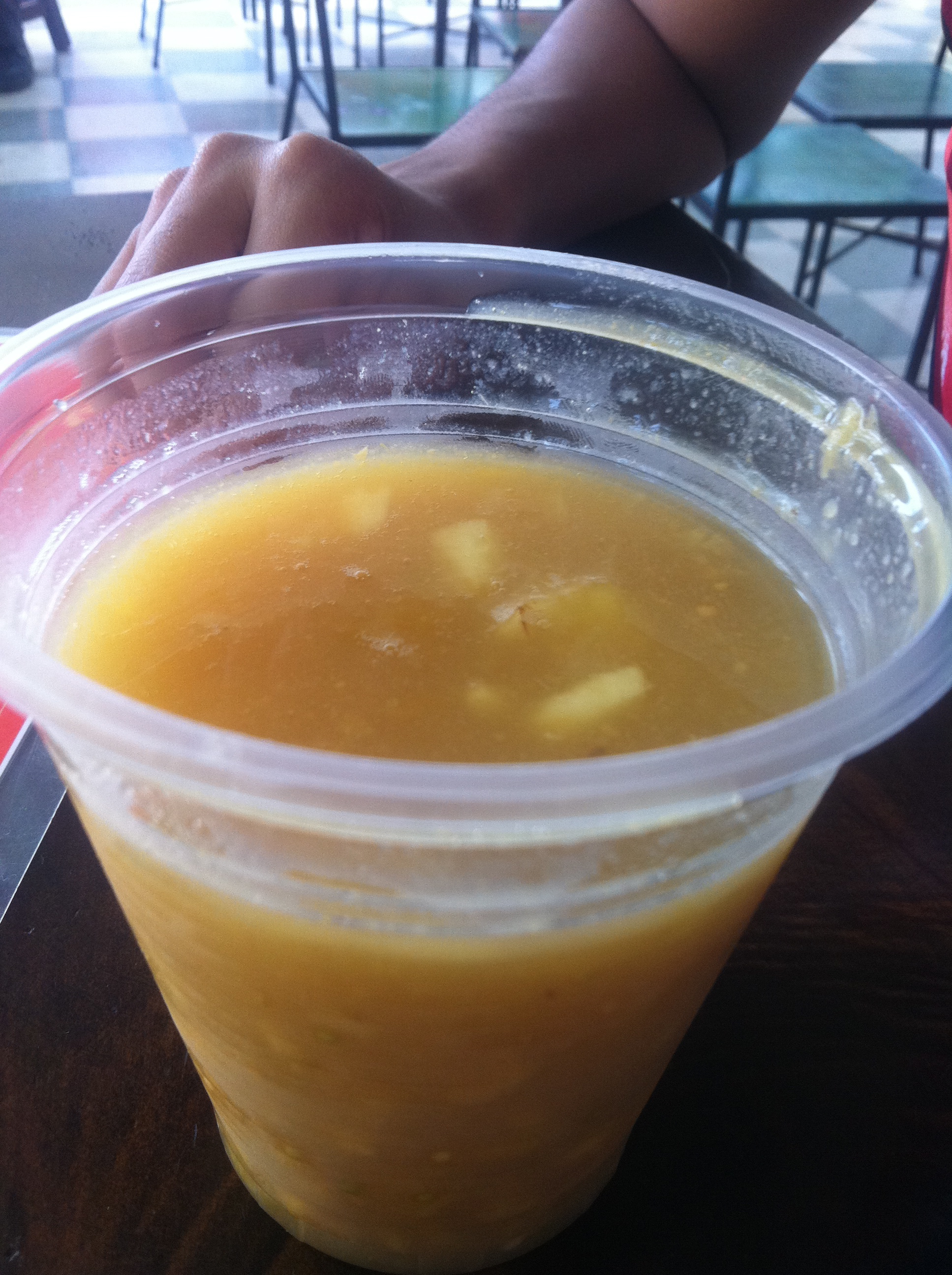
Champús, looks like vomit but thankfully doesn’t taste like it.

Champús
A “drink” I had never heard of before made of a fermented mixture of fruits and corn and seasoned with cloves and cinamon. This is sold by the glass from huge vats carted around the street on special bicycles. It may look a little like vomit (just like salpicon and mazamora) but it is delicious.

Haggling
I have loved haggling since I first tried my hand at it in Ethiopia 12 years ago and (when I have the energy) I feel I’m pretty good at it. Like when the asking price for a pair of knock-off Nikes was COL$190,000 (this was most certainly the “Gringo” price) and I managed to get them for $35,000, I have to admit I felt pretty pleased with myself.

Feria de Cali
Starting on Christmas day, begins a week long party in Cali that you simply cannot escape. With parades, concerts, food, music and of course salsa dancing every night it certainly is a different way to spend the Christmas holidays.

Hugs and Kisses for everyone
I love the affectionate culture and different perspective on physical contact that people have here. You greet and say goodbye to women with a kiss on the cheek and to men with a hug or at least a good handshake (if you run into a big group of people this can take quite a while to get through). People aren’t uneasy about touching each other (which took a little getting used to) which is something I feel we really lack in Northern Europe and North America.

There’s much more that I could mention but I’ll probably add to the list as time goes by and I remember other things that I love about this place.

I’ll leave you with a nice, little song by Orquestra Guayacán called “Oiga, Mire, Vea” all about this great little city. I hope it gives you the incentive to come and visit.

If you’ve been to Cali before or want to come visit, let me know in the comments

**********************************************************************
If you like this article please share it with your friends via the Facebook or Twitter buttons below and if you use Stumbleupon please give it a “Thumbs Up”. I’d really appreciate it 😉

The Etiquette of Salsa (All the stuff you need to worry about besides the dancing)

27 May

I take my “Golden Rule” to extremes as I don’t even refuse dance requests from men.
(Even if I don’t appear too pleased when I realize one of my friends is taking photos)

Salsa is not just a dance but a social outlet.

Be it the ubiquitous night out dancing that salsa represents here in Cali or the seemingly hidden sub-culture of salseros in non-Latin countries like Ireland and Japan, salsa is a way to enjoy yourself with other people, to socialize and to make friends.

And, as with any other social phenomena, there are certain rules that, to a greater of lesser degree, one must abide by.

Of course, these rules never get written down nor are they ever explained to you at your first salsa class or at the start of your first social night. You learn them yourself, over time, sometimes through trial and error, sometimes through the words of a friend and they begin to form part of your behaviour whenever you step out on the dance floor.

I write them down here today so that you won’t have to go through the whole (embarrassing) procedure of trial and error, hopefully helping you integrate into your local salsa scene much more smoothly.

Obviously the rules will vary depending on the social norms of the country/culture where you are but I feel that these pointers here represent a pretty decent guideline to follow wherever you are in the world. Feel free to add more to your own list if need be.

Shower
The very nature of dance means you are going to be in close physical contact with other human beings. There is nothing worse than beginning to dance with someone only to catch the whiff of BO and have to endure it for the next 4 minutes or so.

Shower well before you plan on going out dancing, put on some deodorant (I use baking soda) and wear clean clothes. Otherwise you risk developing a reputation as a “smelly dancer” and let’s face it, no one wants to dance with that guy.

Brush your teeth
For the exact same reason as above, it is not pleasant dancing with someone who has breath bad enough to strip paint off walls. Brush those pearly whites.

Carry a Salsa Survival Kit (SSK)
To combat issues with the above two points I started to bring a salsa survival kit with me whenever I go out dancing. While you can wash yourself as much as you like before hand, the fact of the matter is that you are going to dance, which means you are going to sweat (if you are like me, you are going to sweat a lot). Thus, you may not smell that same as you did at the start of the night. This is where the SSK comes in. It consists of the following 3 items:

  • Handkerchief: (or any small cloth you can fit in your back pocket or handbag) You will sweat and you will touch other people’s sweat when you dance. It simply can’t be helped. It is nice though, if you can wipe the sweat from your face and hands after every dance. Carrying a “sweat-rag” is a handy little habit I picked up to deal with the shockingly humid Japanese summers.
  • Antibacterial wet-wipes: If you notice that you’re starting to smell as the night goes on, you may have to take emergency action, run to a toilet cubicle and give your underarms a quick cleaning. Antibacterial wipes should help ensure that you don’t start to smell again for a few hours. Nowadays you can get wet-wipes in handy pocket size packs, perfect to carry along on a night out.
  • Chewing gum: (preferably sugar-free) If you go out to eat with friends before you dance or if you smoke, you may need to freshen your breath during the night. Chewing gum is so portable too that you have no excuse not to bring it along.

This is my SSK and is probably one of the simplest there is. I know of other people who add other “essentials to their list; cologne/perfume, a spare shirt, deodorant, make-up etc. (my friend Imi recommended that I also include Pepper Spray! I’ll leave that choice up to you). It all depends on your own necessities and how much you can carry. Men obviously don’t have the luxury of a handbag, although I rarely leave the house without my courier bag (notice how I didn’t call it a man-bag!!!).

Asking for a dance
Both men and women should make the effort to ask out the people they want to dance with. It should not be left up entirely to the men and thankfully in Europe and the U.S.  women feel a lot more comfortable asking men out to dance.

It’s not rocket science either, just remember to be polite and smile. Simply approach the person you want to dance with, smile, say something along the lines of “Excuse me, would you like to dance” and when they say yes, take them by the hand and gently lead them out to the dance floor. You may now begin to dance. That’s it.

If you know the person already you might get a little playful and do what I do; from a distance, grab their attention with your eyes, give a cheeky little wink and a little head nod in the direction of the dance floor and voilà, time to get your dance on. This is guaranteed to make you feel like pro.

DO NOT REFUSE A DANCE! (The Golden Rule)
I would prefer to say “NEVER refuse a dance” but I rarely use the word “never”, as life is full of exceptions. However, my sentiments on this point verge on those conveyed by the word “never”.

The reason; IT HURTS!

For those of you who are more experienced dancers, try to imagine how nervous you were when you first started dancing. For beginners, it takes a hell of a lot of courage to work up the nerve to ask someone out for a dance. Imagine yourself trying to work up all that courage and finally asking that person you’ve been wanting to dance with all night, only to get shot down. For guys, it ranks pretty close to castration (at least it did for me) and I’d imagine it feels worse for ladies who have the extra hurdle to get over, of not being the sex that normally requests a dance (which I personally believe shouldn’t be the case. I love it when a girl asks me out for a dance).

I remember the first time I was refused a dance all too well. I was in a salsa club in Lan Kwai Fong in Hong Kong on the second leg of my first salsa training expedition. I was pretty green but I knew a few moves so I decided do ask a dance of a girl I’d seen dancing really well earlier. I walked up to her, smiled and politely asked “Would you like to dance?” to which she responded, without so much as a smile to dull the blow, with “no”, followed by a halfhearted “maybe later”.

After recoiling form the initial shock of (what felt like) having my internal organs ripped out and stepped on in front of me, I picked up what was left of my testicles and scurried away to a dark corner to hide my shame. I did however recover and go on to have plenty more dances that night but I will never forget how I felt.

Beginning salseros need to be encouraged especially  by dancers with more experience. I will dance with anyone (I’ve even danced with men who want to practice their following. That usually gets a few odd looks) because I know how it feels to be refused a dance. I’ll even dance with someone who tells me before hand that they’re not the best dancer or that they’re only a beginner. I’ll just modify what I do to make sure they have as fun a dance as possible.

There are a few situations, however, where it’s ok to say “no”, for example if you don’t like dancing a particular style (like merengue for me), if your last dance was particularly vigorous and you want to take a breather, if you need to go to the restroom etc. You should always smile and explain the reason and tell the person that you will dance the next song with them instead. Be nice.

I try to imagine myself in the shoes of beginners and I try to encourage them with salsa as much as possible along with trying to help them avoid any of the “unpleasant” situations I’ve experienced in the past.

Don’t pester people for dances
One of the great things about social dancing is the chance to dance with many other people.

However, even if you’ve really enjoyed a dance with someone, that doesn’t give you an excuse to repeatedly ask them out over the course of the night. Give them and yourself the chance to enjoy dancing with different people. They may even come and ask you for a dance later, saving you from doing it. If not, wait for a while after your last dance and then ask again.

Also, on the rare chance that someone says “no” the first time (or any time) you ask them, just leave it at that and don’t ask them again that night. It’s their loss.

Don’t clog up the dance floor

If the dance floor looks full, just “F#$K @FF” (I don’t normally swear at all but this point really gets to me).

I’m feeling particularly livid about this point as I write this post right now as someone did it to me last night (which was otherwise a spectacular night of dancing). There is nothing worse than when, while your enjoying a dance with your partner, some inconsiderate idiot decides to “squeeze in” next you and suddenly all that lovely space you had to do your tricks and patterns (along with that of everyone else’s around you), disappears.

I’m a fairly easy going guy but when this happens I feel like rolling up my sleeves and unleashing pure, unadulterated fury on the eejit who just did the salsa equivalent of “cutting me off”.  Not only does it mean that both pairs (probably more) have less room to perform certain moves but it also increases the risk of collisions. This is more relevant in LA or New York style salsa as they both require a relatively long “slot” and room at the sides for complex hand movements and turns. In Latin America, people are used to dancing much more closely so the style of salsa (i.e. lack of intricacy) accommodates this.

So, do everyone a favor and either, find an area with more room to move or sit it out, wait for the next song and grab a space on the dance floor early. Otherwise you’ll have an angry Irishman to deal with.

If you’re not dancing, stay off the dance floor

Don’t be that rude, clumsy idiot who forces his way through a dance floor full of quick spinning couples, bumping into every one of them along the way and basically pissing everyone off.

I will admit, that depending on the salsa club itself sometimes traversing the floor to get to the bar, the restroom or even the exit , is unavoidable but you should always try to move around the outskirts of the dance floor avoiding the dancers as much as possible.

The same has to be said for people hanging out on the fringes of the dance floor; make yourself as small as possible, avoid the dancers and don’t get annoyed if some of them bump into you. Remember, you’re in their territory.

Acknowledging and Apologizing for a collision

Salsa is a free-moving, high-speed activity carried out by multiple pairs in a confined space. Collisions will happen.

The best way to deal with this is to acknowledge it, apologize and keep on dancing. Usually both pairs are, at least partially, to blame so both usually apologize to each other. When I say apologize I don’t mean that you need a long winded verbal apology either. When a collision happens simply catch the eye of the other pair, give them an apologetic look and mouth the word “sorry”, end the interaction with a smile and keep on dancing. An apology should not require you to stop dancing (unless someone is sprawled out convulsing on the floor, which is quite rare).

The rudest thing you could do is not to acknowledge it. This is not the case in Latin American culture where in general the dance floors are much more tightly packed and light collisions are much more common.

Amongst a dancing couple, incidents (stepping on someones toes, the odd elbow to the head etc.) happen too. In this case, providing you haven’t incapacitated your partner, just apologize, smile and keep dancing. Stopping would just draw too much attenuation to the incident. Also, you only need to apologize once as constant apologies during a dance can be really annoying and take away from the fun.

It is always the man’s fault

The lead is the one responsible for guiding the dance and the lead is virtually always a man, thus logic states that if something goes wrong, it’s the man’s fault.

Usually if something goes wrong (an ill-timed move, a collision with another couple etc.) it is due to a lack of foresight or planning on part of the guy so gentlemen, just accept it and don’t get into an argument over it. This is why it’s usually the men who apologize to each other when something happens.

I will admit that there are occasions where the follow is clearly to blame for an “incident” but my policy is just to accept the blame and keep on dancing (anything for a quiet life). Suck it up guys, you’ll be taking the fall a lot.

Tie up your loose ends

This is one for the ladies (mostly). Although I think that hair spinning freely during a dance looks beautiful it can be a serious safety hazard. Do your partner a favour and tie it up or otherwise keep it under control. Getting a face-full of hair moving at full spinning speed during a dance really stings (and a plaited ponytail in the face feels somewhat similar to getting hit with padded nunchuks). This can really mess up a leads concentration not to mention the risk of hair getting caught in someone’s fingers or watch strap during a spin. Keep it under control ladies.

While on the point of wildly spinning hazards I should mention this;
DO NOT DANCE WITH A HANDBAG.
They are not only a hell of a lot harder than the most unruly ponytails but their long straps mean they pose a risk to surrounding couples too. Either leave it with a friend or, as salsa scenes in Europe, Asia and the U.S. are quite safe and friendly places, leave it at your table, maybe under a coat and go and enjoy your dance without the deadly weapon. Really, handbags have no place on the dance floor.

Help your fellow man

If someone ever asks you for your advice or guidance on salsa matters, consider it a compliment that they admire your abilities or style of dancing and do what you can to help them out.

I know that when I started out, I was full of questions (I still am) and I am very grateful to all the people who have helped me to improve my salsa over the years. The same is probably true for you so do the right thing; be friendly and help out the next generation of salseros.

Don’t start teaching on the dance floor

I’ve witnessed this scene many a time; a couple are dancing together, usually for the first time, when suddenly one of the partners notices the other is not behaving the way they would like them too and decides to stop the dance to “teach” them how to do it correctly. They have just ruined a perfectly good dance.

I know one particular guy on the Dublin dance scene, a spectacular dancer and highly regarded amongst other dancers in Dublin, who does this constantly. So much so that the image of him stopping a dance to “teach” his “inexperienced” partner, is burned into my mind. I’ve spoken with some of these girls after the fact and all of them have said the exact same thing “It’s nice to learn something new but it’s so annoying when he stops the dance”.

I’m not innocent of doing this myself, but only when I’m asked to explain it by my partner and usually the most “teaching” I’ll do during a dance is to say “try relaxing you shoulders a little”.

A dance is supposed to be enjoyed and it’s hard to do that when your partner keeps stopping the dance to point out how badly you’re dancing. There is a time and a place for it but it most certainly is not during a social dance.

Smile

Salsa is meant to be fun so show your partner that you’re enjoying yourself with the easiest method possible; smiling.

For a lot of people, however, it’s not as easy as it sounds. When I first started dancing I used to concentrate so much on getting the moves right that I constantly needed to be reminded by my partners to smile (I still forget to do it sometimes).

It may not seem like much but showing your partner that you’re enjoying the dance makes them feel more secure that they’re dancing well.

Off the dance floor, smiling also makes you a lot more approachable and increases the chance that someone will ask you to dance. I know one regular on the scene in Dublin who I have never asked to dance because she never smiles (and because she scares me a little).

Don’t dance TOO close

Pair dancing, by it’s very nature, means that 2 people need to move together in close physical proximity while holding on to each other. This is not an excuse to take advantage. When dancing with someone for the first time you should always be more conservative and maybe later, if your partner gives you an indication that it’s ok to do so, gradually move a little bit closer.

I learned to dance salsa and bachata in a small city in Japan where close physical contact is not the norm. So, you can imagine my surprise when I first saw people dancing bachata, almost erotically, in a club in the metropolis that is Hong Kong. Then I got to experience it first hand with a local woman who insisted on dancing closely. Thank God the dimmed lights in the club hid how much I was blushing.

Here in Cali, dancing close is the norm and it was here that I learned to dance close salsa (Salsa de la alcoba i.e. bedroom salsa) and now I love dancing it with my close friends. But at first, dancing close did make me a little uncomfortable so don’t dance too close to someone that either you don’t know or that is not used to it. Don’t be like the woman who I once danced with at a salsa congress in Ireland who during a dance, suddenly thrust my body towards hers, practically forcing our crotches together and insisted that that was the “real” way to dance bachata.  I finished the dance and quickly shuffled off the dance floor feeling a little dirty and with a face that told anyone who saw it “I have just been violated”. I was so innocent before that dance.

On Flirting

Salsa can be a very sensual dance. I said CAN, not SHOULD.

Unfortunately there are some people who misunderstand the close proximity of dancing as an excuse to “try it on” with every girl who agrees to dance with them. If you’re one of those people, stop being a creep give up dancing and give speed dating (or something like that) a try.

I’ll happily admit that a little bit of flirting can really add to the fun of a dance but I’ll only do it with someone who I know well and who I know is comfortable with it. The truth of the matter is, the vast majority of the people who go dancing are there to dance and not to pick someone up that night (not entirely the case in a lot of places in Colombia where dancing is the social norm).

Adjust your level to your partners

You can never really be sure about someone’s level until you dance with them for the first time, especially if you haven’t even seen them dance before.

You should always start out slowly and with the basics, get a feel for how your partner is reacting and then, gradually and slowly start incorporating more complex moves. If you get the feeling that your partner isn’t handling those complex moves well it’s time to ease off the accelerator and continue the dance with slightly more basic moves. If you don’t control the level you not only risk hurting someone’s pride but you also risk physically hurting them if they don’t know how to react to a certain move.

When dancing with someone with a lower level you should do all you can to ensure that they enjoy the dance so that doesn’t mean you should try as many intricate combinations as possible. This will only end up with them feeling incompetent and disheartened. Lead them through moves they can follow and they’ll finish the dance feeling great and feeling that they’re improving.

Say Thank You

It’s common courtesy. When the song ends and you stop dancing, smile, look your partner in the eye and say a sincere “thank you”. Then take them by the hand or the shoulder and lead them off the dance floor.
Congratulations, you’ve just completed a successful dance… +100 EXP Points.

After reading over this again it’s pretty clear from its frequency of use that “smiling” is one of the most important things you can do while dancing so get those pearly whites working for ya guys.
Keep smiling folks (and keep your eyes open!)

What do you think of this list? Is there anything you feel I’ve left out? Let me know in the comments.

Keep dancing folks.

P.S. I spent a fairly solid 5 hours writing the first draft of this post only to lose it all at the click of a mouse. I now know what true rage feels like.

**********************************************************************
If you like this article please share it with your friends via the Facebook or Twitter buttons below and if you use Stumbleupon please give it a “Thumbs Up”. I’d really appreciate it 😉

Fiona Uyema

Japanese Cookbook Author

ZoukSide Down - A journey with Brazilian Zouk

A personal blog aimed at contributing, and paying homage, to the most sensual, beautiful dance of Brazil.

Vocabat

Spanish as it hits my ears

SoraNews24 -Japan News-

Bringing you yesterday's news from Japan and Asia, today.

Rhapsodies of the Barefooted Gypsy

Just another WordPress.com site

Carina Of Devon

Adventures of a family afloat

RebSolomon

Cycling: A Great Excuse to Eat More

Alicia en el País de las Maravillas

Las Maravillas del Mundo

Surfista Travels Siargao, Philippines

The most fun, personalized & professional SURF LESSONS and SURFING EXPERIENCE in the Siargao Island, Philippines!

Zacki Zacki Miyazaki - Sascha's Blog

宮崎在中、ドイツ出身のサシャのブログ

Raymond D. Murphy's Portfolio

My graphic design portfolio, displaying all of my work working in Tokyo

DMS Photograph

Dreams. Memories. Stories.

Oh what a world!

Smile! You’re at the best WordPress.com site ever

My Brailzian Adventure

A record of my time living and teaching in Brazil

Just Dancing Salsa~ Cape Town

Feel. Play. Express.

TheCubanFoodBlog

Cuba reflected through food